
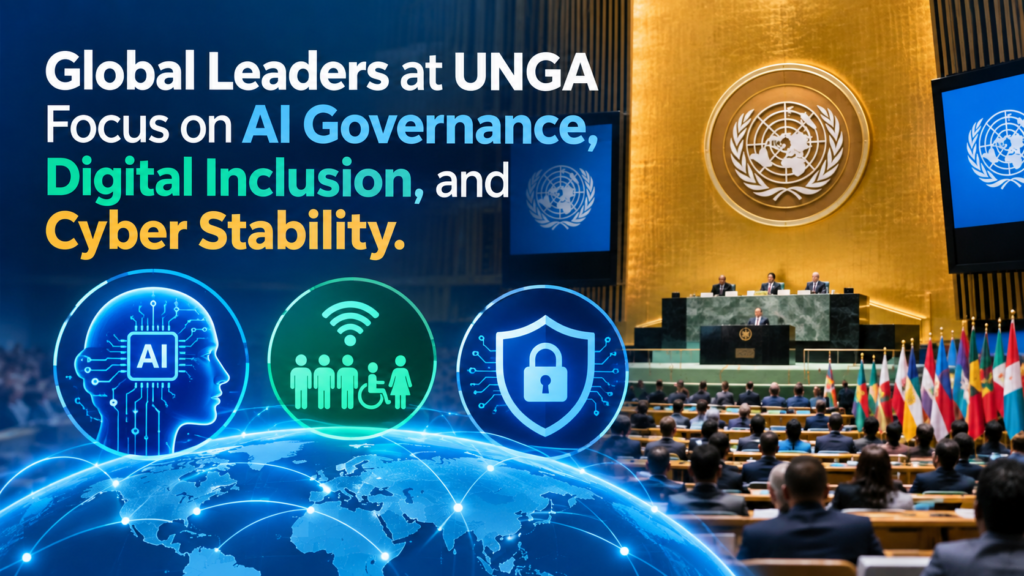
NEW YORK — As the General Debate of the UN General Assembly continued into its second day, technology policy and digital governance dominated speeches at the UN headquarters. Emerging artificial intelligence risks, digital divides between the Global North and South, and the protection of critical digital infrastructure took center stage.
Core Highlights from Day 2
1. AI Regulation & Superintelligence Risks
Heads of state and multilateral envoys emphasized the urgent need for internationally binding frameworks to manage frontier artificial intelligence models. Key discussions focused on:
- Intergovernmental Oversight: Accelerating the mandate for global governance mechanisms to ensure AI alignment and safety.
- Ethics and Sovereignty: Balancing global technical standards with national sovereignty to prevent biased AI deployments.
2. Bridging the Global Digital Divide
Representatives from developing nations underscored that AI advancements remain concentrated in a handful of economies. Priorities highlighted during the sessions included:
- Digital Public Infrastructure (DPI): Calling for investments in open-source DPI, cloud computing access, and local data centers across the Global South.
- Capacity Building: Scaling multilateral initiatives for tech literacy and AI skill development to ensure equal access to benefits.
3. Cybersecurity & Peaceful Behavior in Cyberspace
Deterring cyber threats against essential services remained a major focus. Interventions called for:
- Norms of Responsible State Behavior: Reaffirming commitment to international law and UN cyber agreements.
- Infrastructure Protection: Strengthening global defenses against ransomware and state-sponsored attacks on healthcare, energy grids, and financial networks.
Key Takeaway
Day 2 of the high-level debate demonstrated a growing consensus: digital transformation cannot be treated as a secondary economic issue. From AI containment to equitable infrastructure, global tech governance is now a core pillar of international peace, security, and sustainable development.
About The Author

More Stories
The EU KIDS Act Should Make Services Safer, Not Create an Internet Badge
Community Snapshot—September
Why Internet Infrastructure Decisions Rarely Stay Localized