
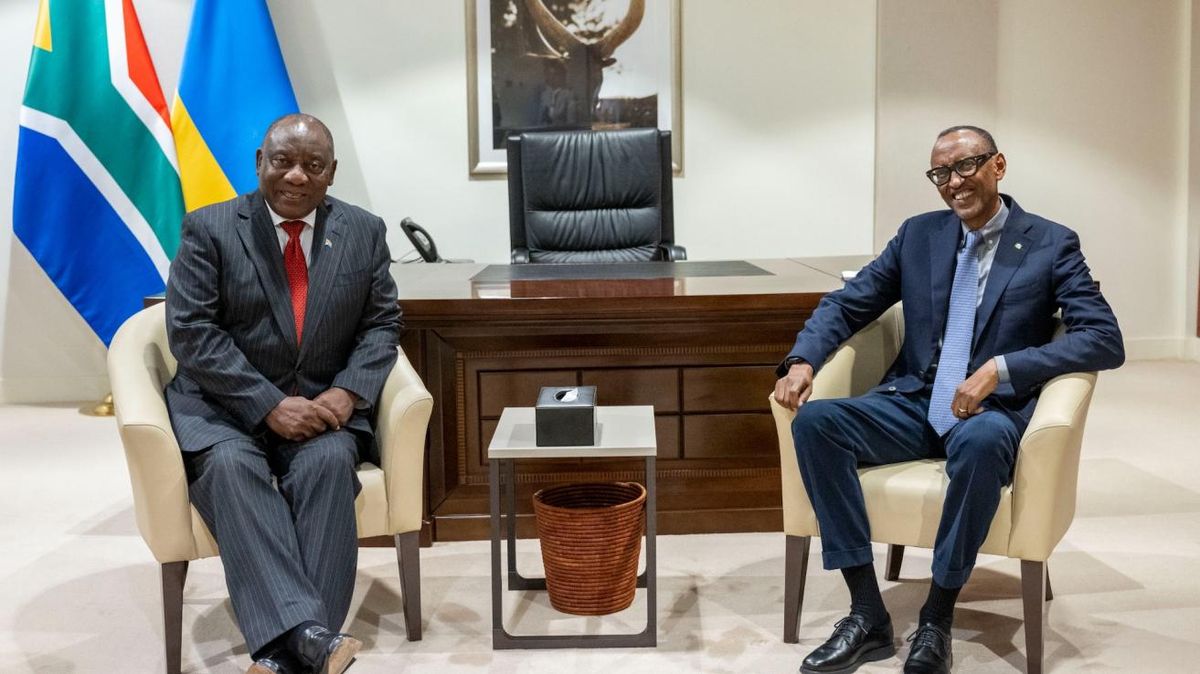
Diplomatic tensions between South Africa and Rwanda have escalated sharply amid the intensifying conflict involving M23 rebels in the Democratic Republic of the Congo (DRC). President Cyril Ramaphosa of South Africa and President Paul Kagame of Rwanda have engaged in a war of words, each accusing the other of exacerbations aimed at raising tensions
Recent interactions between the two leaders have raised concerns, especially following the death of 13 South African soldiers during United Nations peacekeeping operations. Kagame has openly accused Ramaphosa of deception, declaring, “Of course, we will see what threats they are talking about.” This exchange highlights the fraught nature of their recent communications, where both leaders have attempted to stake moral high ground. Dr. Oscar Van Heerden from the Centre for Diplomacy and Leadership at the University of Johannesburg described this as “a diplomatic spat,” indicating the delicate balancing act both nations must navigate.
Analyst Kingsley Makhubela urged South Africa to reconsider its approach. According to him, rather than retaliate for the fallen soldiers, South Africa should strengthen its ties with Rwanda through diplomacy. He stated, “South Africa should not overreact on this matter; instead, it should send a special envoy to Rwanda to start rebuilding the relationship between the two countries.” Makhubela’s viewpoint reflects growing concerns over a possible escalation of military tensions, which could drag nations like the United States and Russia_into the turmoil as they take sides.
South Africa’s previous military engagements have involved casualties without sufficient support and resources for its soldiers. The South African National Defence Union (SANDU) has voiced criticism of the government’s failure to properly equip its forces. They indicated, “This crisis highlights the severe risks our soldiers are facing without sufficient support and resources.” This criticism has intensified discussions on how military actions may not yield the intended peace but rather invite greater conflict.
International Relations Minister Ronald Lamola’s recent comments urged Rwanda to cease its backing of the M23 rebel group, pointing out several reports by the United Nations supporting these claims. He stressed the importance of addressing the underlying issues between the DRC and Rwanda through mediation rather than military posturing. Lamola stated, “The current conflict will not stop without the concerns of both the DRC and Rwanda being addressed through mediation and negotiations.”
With both countries successfully engaging diplomatically, analysts warn against the rapid deterioration of relations which may lead to catastrophic consequences. The conflict, which has historical roots, dates back to previous accusations where Rwanda claimed South African government members harbored hostile elements against its interests.
Historically, South Africa and Rwanda enjoyed positive relations under former presidents Nelson Mandela and Thabo Mbeki, who supported Rwanda during its post-genocide transitions and encouraged stability. Unfortunately, recent years have seen declining relations, where the current administrations of Jacob Zuma and Cyril Ramaphosa have faced accusations of internal failures contributing to regional instability.
Van Heerden emphasized the need for dialogue over military aggression. He asserted, “Ramaphosa has made the right decision trying to engage with Kagame diplomatically.” This approach could potentially prevent what could become another proxy conflict, placing South Africa squarely at the center of regional disputes.
The conflict matters on multiple levels, not least because of the ramifications on the southern African region’s peace and security. One hopeful outcome from diplomatic engagements and initiatives could lead to long-term resolutions beneficial not just for South Africa and Rwanda but for the broader region.
Concluding, it is clear there exists immense complexity surrounding the current situation, and all parties should prioritize dialogue over military action. Only through mediation and negotiations can the tragic consequences of conflict be avoided, preserving stability for future generations.
We’ve launched what we proudly call the “Intelligent Journalism” era: a bold approach to journalism that prioritizes verifiable facts, eliminates unnecessary fluff, restores the rigor of classic journalistic principles, and delivers news in a clear, compelling format—all powered by our innovative AI algorithms.
Support Intelligent Journalism with a tip to help us understand the stories you love most, so we can bring you more of what matters!
We always aim for accuracy, but we recognize that errors can occasionally slip through. We value your feedback and are committed to making corrections whenever needed. If you spot a factual mistake in our stories, please let us know, and we’ll address it promptly.
Please use this feedback form solely for reporting factual errors, rather than for sharing personal opinions. We appreciate your help in keeping our content accurate and reliable.
We always strive for thorough and accurate reporting, and we value any verified information that can help us better understand the stories we cover. If you have relevant knowledge, insights, or evidence related to a news piece we’ve reported, we encourage you to share it with us. Please remember that we require credible proof or documentation to ensure the integrity of our journalism.
When submitting your tip, explain your connection to the case and provide verifiable evidence. This can include links to documents, photographs, recordings, or other supporting materials, as long as they are securely hosted on reputable cloud-based platforms like Google Drive or Dropbox. We cannot accept direct uploads. Please include your contact information (email and phone number) if you would like us to follow up with you regarding your tip. Our editorial team will review your submission, and if necessary, we will reach out for more information. Your help plays a crucial role in helping us deliver accurate, reliable news to the public.
THE PINNACLE GAZETTE, a platform established by Tree of Evolution LLC, is your premier source for the latest news across a diverse array of topics. Our website offers comprehensive coverage on science, technology, current events, art, and sports, ensuring that you stay informed and gain fresh perspectives.
About The Author



More Stories
Global Encryption Day Summit 2026: Five Key Conversations on the Future of Digital Trust
What Global Data Tells Us About the Economics of IXPs
We Shouldn’t Have to Give Up Our Safety Online to Be Safe