
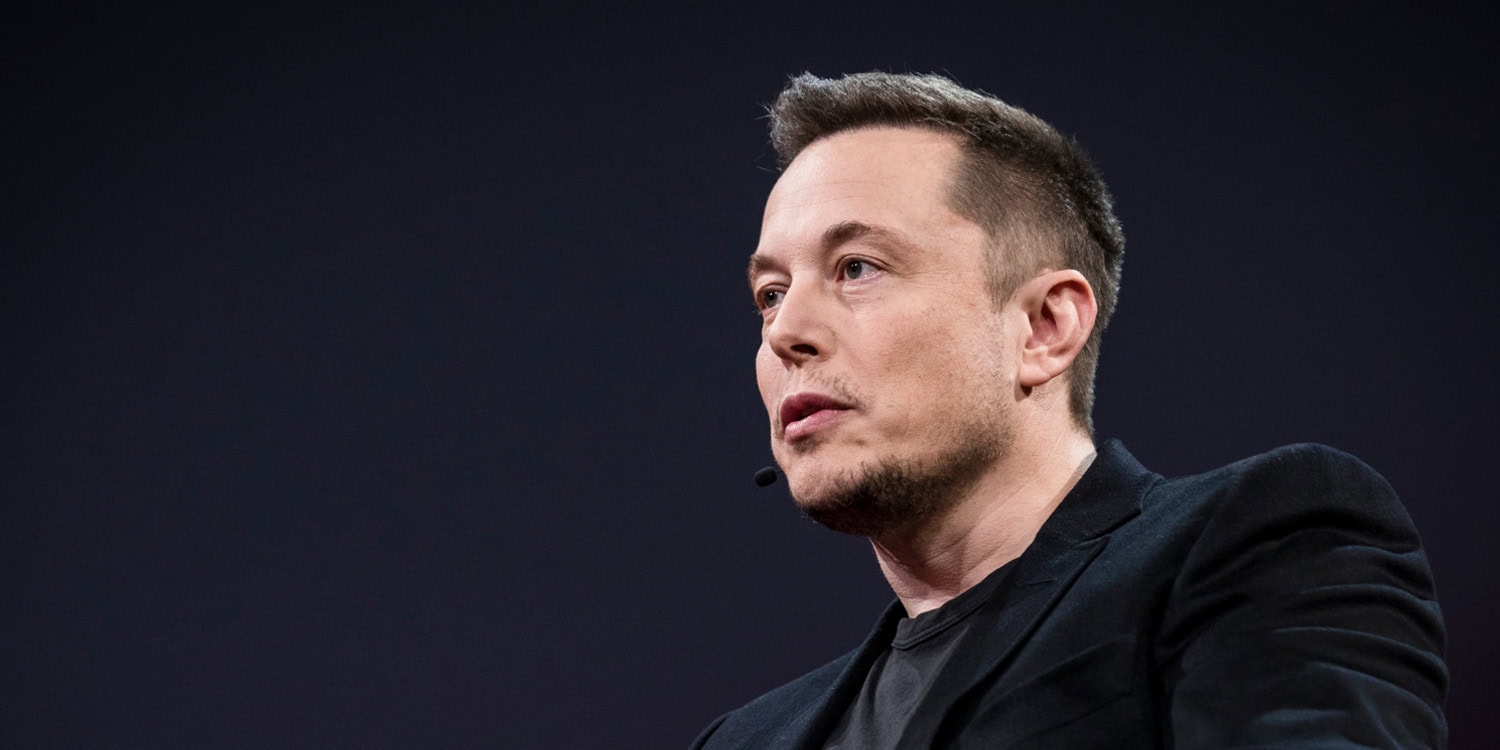
(Photo credit: Bret Hartman / TED)
A recent study published in PS: Political Science & Politics examined the impact of Elon Musk’s acquisition of Twitter, now known as “X,” on academic engagement with the platform. The researchers found that academics were less active on Twitter after Musk took over in October 2022, with a notable decrease in the number of tweets, including original posts, replies, retweets, and quote tweets. The drop in activity was particularly evident among verified accounts, suggesting that academics with higher profiles reduced their Twitter usage more than others.
Twitter has long served as a valuable platform for academics to communicate with their peers, policymakers, and the public. Academics used the platform to discuss research, share insights, and participate in public discourse. However, when Elon Musk acquired Twitter in late 2022, he introduced sweeping changes that affected how the platform operated.
These changes included mass layoffs, the reinstatement of previously suspended accounts, and a shift in content moderation policies. Many users, including academics, expressed concerns about the platform’s new direction, with some deciding to leave or reduce their participation.
Given the anecdotal evidence of academics abandoning Twitter, the researchers aimed to systematically investigate whether this was a widespread phenomenon and to identify when and among whom the drop in engagement occurred. The new study sought to understand how Musk’s ownership influenced academic activity on Twitter and whether different types of users were more likely to disengage from the platform.
“We were interested in this topic because Twitter has been an important platform for academic communication and networking, especially among social scientists,” said study author Kevin Munger, an assistant professor who holds the Chair of Computational Social Science in the Department of Political and Social Sciences at the European University Institute.
“Elon Musk’s takeover of Twitter in late 2022 brought significant changes to the platform, and we wanted to empirically examine how this affected academics’ engagement with Twitter. As researchers who study social media and online behavior, we saw this as an opportunity to quantitatively analyze a major shift in an important academic communications channel.”
The researchers used a snowball sampling method to compile a dataset of over 15,700 academic Twitter accounts from the fields of political science, economics, sociology, and psychology. They collected data on these accounts’ activity before and after Elon Musk’s official takeover of Twitter, focusing on changes in the number of active accounts (those displaying any activity on a given day) and the frequency of tweets, including original tweets, retweets, replies, and quote tweets.
The researchers looked at several types of engagement, including original tweets, retweets, replies, and quote tweets. To determine when changes in engagement occurred, the researchers employed a Bayesian Change-Point Analysis (BCPA). This statistical method allowed them to pinpoint when a structural shift in academic Twitter usage took place.
The results showed that academic engagement on Twitter dropped substantially following Musk’s takeover in late October 2022. The number of daily active academic accounts and the total volume of tweets declined noticeably. While overall engagement had been trending downward since 2021, a sharp drop occurred around November 19, 2022—three weeks after Musk officially took over the platform. This date coincided with Musk’s decision to reinstate former president Donald Trump’s account, which had been banned following the January 6, 2021, riots at the U.S. Capitol.
“One somewhat surprising finding was that the biggest drop in academic Twitter engagement didn’t occur immediately when Musk took over on October 28, 2022, but rather around November 19 when he reinstated Trump’s account,” Munger told PsyPost. “This suggests that specific policy decisions, rather than just the change in ownership itself, may have been the tipping point for many academics.”
The researchers found that verified accounts were more likely to reduce their engagement with the platform than non-verified accounts, particularly when it came to writing original tweets and quoting others’ tweets. This pattern suggests that more prominent academics, whose accounts were previously verified, may have felt greater pressure to distance themselves from the platform following Musk’s controversial decisions.
However, the study did not find significant differences in the behavior of verified and non-verified users when it came to retweeting or replying to tweets, suggesting that these less reputationally significant forms of engagement were less affected by Musk’s takeover. The findings indicate that while many academics reduced their activity, those whose visibility carried more weight were more likely to step back from creating new content on the platform.
“The key takeaway is that Elon Musk’s takeover of Twitter coincided with a significant decrease in engagement from academics on the platform, especially among more prominent scholars with verified accounts,” Munger said. “We found that academics reduced their Twitter activity, particularly in creating original content, following Musk’s takeover and especially after he reinstated Trump’s account. This suggests that changes in platform ownership and policies can have tangible effects on how scholars use social media for professional communication.”
Like all research, this study has its limitations. One limitation is the lack of direct evidence about the reasons why academics disengaged from Twitter. While the study shows a correlation between Musk’s takeover and the drop in activity, it does not conclusively prove that his policies or behavior directly caused the reduction in academic engagement.
Another challenge is the study’s reliance on Twitter’s free Application Programming Interface (API), which was removed after Musk took over. This presents a significant problem for future research on social media engagement, as it limits access to comprehensive data. The authors suggest that smaller-scale studies, surveys, or qualitative methods may be needed to explore the full impact of Musk’s changes on academic behavior.
“Long-term, we’re interested in understanding how changes in social media platforms affect scholarly communication and public engagement with academic research,” Munger said. “However, Twitter’s removal of free API access poses significant challenges for continuing this specific line of research. More broadly, we aim to study how social scientists adapt to changes in online platforms and find new ways to share their work and engage with peers and the public.”
“We believe this study highlights broader issues about the role of social media in academia and the vulnerability of these communication channels to corporate decisions. It also underscores the need for more robust, independent platforms for scholarly communication that aren’t subject to the whims of private owners or commercial interests.”
The study, “The Vibes Are Off: Did Elon Musk Push Academics Off Twitter?“, was authored by James Bisbee and Kevin Munger.
Digitally mature teens report feeling more socially connected, which is associated with engaging with real-life friends online and prioritizing compassionate goals.
A study of 35 million Facebook posts found that 75% of shared links were shared without users clicking on them, with political content—especially extreme or ideologically aligned headlines—being shared without reading more often than neutral content.
Reducing leisure screen time for two weeks improved children’s mental health by decreasing emotional and peer-related difficulties while boosting positive social behaviors, highlighting the benefits of taking short breaks from screen media use.
Internet use among adults aged 50 and older is associated with fewer depressive symptoms, higher life satisfaction, and better self-reported health, with benefits varying by frequency, duration, and individual or cultural factors.
During the 2020 U.S. election, online hate networks became more interconnected and reached billions in mainstream communities, spreading hate speech further and strengthening their structure through shared content and interactions.
A recent study found 92% of TikTok’s #adhdtest videos were misleading, attracting nearly all user engagement, while accurate content struggled to gain attention, highlighting the platform’s role in spreading misinformation.
YouTube videos on autism primarily provide educational content with balanced perspectives, reducing stigmatization, though viewer comments often remain negative. This highlights YouTube’s dual role in improving understanding while revealing persistent public misconceptions.
A study found that doomscrolling and celebrity worship are linked across cultures, with both behaviors associated with increased anxiety and reduced well-being, suggesting they may reflect shared psychological challenges in media consumption.
Login to your account below
Please enter your username or email address to reset your password.
About The Author


More Stories
Community Snapshot—September
Why Internet Infrastructure Decisions Rarely Stay Localized
A Safer Internet Starts with Taking Action: Introducing the Online Trust and Safety Hub