
By Dr. Mahmoud Hanafi
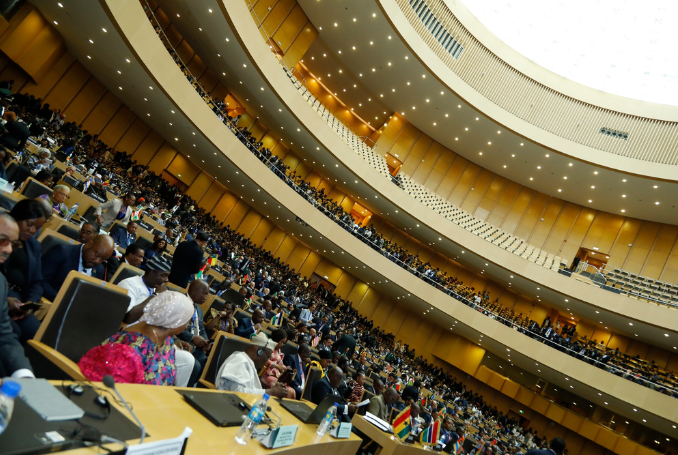
The 38th African Summit, held last month in Addis Ababa, saw African leaders adopt a firm stance toward Israel, condemning its attacks on Gaza as “genocide” and calling for an end to all forms of cooperation until the (Israeli-PC) occupation is terminated.
The final statement also rejected the forced displacement of Palestinians and emphasized the two-state solution as the only path to peace, reflecting Africa’s historical commitment to supporting the Palestinian cause, despite Israel’s attempts to enhance its influence on the continent.
This African position represents a setback for Israel, despite significant US pressure on the continent. Washington exerted intense pressure on several African capitals to prevent the issuance of harsh resolutions against Israel, including threats to reduce economic aid to some countries and pushing them to avoid escalatory positions in international forums.
However, African nations demonstrated notable diplomatic cohesion, refusing to comply with Western dictates and affirming their independent stance. This reflects a shift in the balance of power and the continent’s desire to adopt decisions aligned with its anti-colonial and anti-apartheid principles.
The African Union, comprising 54 member states, makes decisions through its annual summit held in February, which includes heads of state and government. Decisions are made by consensus or a two-thirds majority. The Executive Council, composed of foreign ministers, plays a role in drafting policies and presenting them for approval.
Relations between Israel and Africa have undergone radical shifts over the past decades. Since the 1950s and 1960s, Israel sought to strengthen its presence on the continent, capitalizing on the independence of many African nations.
Israel established diplomatic relations with countries like Ghana and Liberia and participated in development projects, particularly in agriculture, technology, and education.
However, this rapprochement faced a sharp setback after the October 1973 war, when the Arab oil embargo and diplomatic pressures led by the Arab League caused most African nations to sever ties with Israel, leading to the collapse of Israeli influence on the continent.
This isolation did not last long. The 1993 Oslo Accords marked a turning point, as Israel began restoring relations with several African nations, capitalizing on the international openness accompanying Palestinian-Israeli negotiations.
After the Oslo Accords between the Palestine Liberation Organization (PLO) and Israel, some African nations became convinced that the Palestinian-Israeli conflict was heading toward a diplomatic resolution, prompting them to reassess their relations with Israel.
As a result, many African nations, particularly in West and East Africa, reestablished diplomatic ties with Israel, focusing on cooperation in agriculture, technology, and security.
Israel benefited from this trend in enhancing its presence, offering technical and training support in several strategic sectors across Africa.
In recent years, diplomatic relations between Israel and Africa have expanded, with Tel Aviv now maintaining official relations with 40 out of 54 African nations and operating 10 active embassies on the continent, including in prominent countries like South Africa, Nigeria, Kenya, and Cameroon.
The recent wave of Arab normalization, particularly after the 2020 Abraham Accords, played a role in bolstering this expansion, as Arab countries with ties to Israel encouraged some African governments to enhance cooperation in security, investment, and agriculture.
Despite these developments, many African nations remain cautious about deepening ties with Israel due to their commitment to supporting the Palestinian cause.
Countries that have experienced colonialism and apartheid, such as South Africa, lead the rejection of closer relations with Israel, viewing its policies toward Palestinians as reminiscent of the apartheid practices Africa endured in the past. This division makes the relationship between Israel and Africa contingent on balancing economic interests with political and historical considerations.
Relations between Israel and the African Union deteriorated sharply following Israel’s attack on Gaza in October 2023, which resulted in tens of thousands of civilian casualties and widespread destruction of infrastructure, including hospitals, schools, and roads.
This aggression sparked widespread outrage across Africa, with many nations issuing strong statements of condemnation and reaffirming their solidarity with the Palestinian people and rejection of Israeli policies.
This stance was not surprising but rather an extension of Africa’s growing resistance to Israeli encroachment on the continent. In February 2023, during the African Union Summit in Addis Ababa, the Israeli delegation was expelled following strong objections from South Africa, Algeria, and Nigeria, dealing a major diplomatic blow to Israel and revoking its observer status, which it had obtained in 2021.
Despite Israel’s attempts to strengthen its presence in Africa through investments and development projects, these efforts clash with deeply rooted political and moral considerations in the African stance.
Africa has remained faithful to its history of struggle against colonialism and apartheid, viewing the Palestinian cause as an extension of its fight for freedom and justice. This has reinforced its adoption of firm positions against Israeli occupation, regardless of potential economic benefits.
Despite increasing Israeli investments in Africa and Tel Aviv’s attempts to expand its influence through projects in agriculture, technology, security, and infrastructure, many African nations continue to criticize Israeli policies, particularly regarding the Palestinian issue.
Israel has focused on developing irrigation and solar energy technologies, expanding communication and artificial intelligence projects, and selling surveillance systems and weapons to some African governments. It has also invested in infrastructure and healthcare services to broaden its regional partnerships.
However, these economic efforts have failed to bring about a fundamental shift in African nations’ positions, for several reasons:
Africa has a long history of struggle against colonialism and apartheid, which has led many of its nations to view the Palestinian cause as an extension of their fight against injustice and oppression.
This legacy fosters a deep sense of solidarity with Palestinians, who face circumstances similar to those endured by African peoples under colonialism and racial oppression.
This perspective has been evident in the positions of countries like South Africa, which has described Israeli occupation as a “new apartheid system” and filed a case against Israel at the International Court of Justice (ICJ), accusing it of committing “genocide” in Gaza.
Public awareness of the Palestinian cause has grown significantly across Africa, leading to increased solidarity campaigns and boycotts against Israel.
In countries like South Africa and Nigeria, recent years have seen large-scale demonstrations and events supporting Palestinian rights and condemning Israeli violations.
As a result, public pressure has become a key factor compelling African governments to adopt firmer positions toward Israel, despite potential economic benefits from cooperation.
Africa is increasingly diversifying its international alliances, strengthening ties with global powers like China and Russia, which reduces its reliance on Western nations that offer unconditional support to Israel.
This shift provides African nations with greater political space to adopt independent positions aligned with their strategic interests, free from Western pressure.
In this context, Russia and China generally support international resolutions condemning Israeli policies, offering diplomatic backing to African nations in taking stronger stances against Tel Aviv.
Despite Israel’s attempts to strengthen its presence in Africa through investments and economic cooperation, the effectiveness of this normalization remains limited, as Israeli efforts clash with the political and historical considerations of African nations.
Additionally, some African nations are working to strengthen alliances with global powers that rival the West, such as China and Russia, providing them with greater political leverage to adopt more independent positions on international issues, including the Palestinian cause.
Several African nations play a leading role in this regard, including:
South Africa: Took unprecedented legal steps against Israel by filing a case at the ICJ in December 2023, accusing Israel of committing genocide in Gaza. The court issued provisional measures demanding an end to military operations and allowing humanitarian aid.
Algeria: Played a key role in preventing Israel from obtaining observer status in the African Union, condemning the 2021 decision and leading efforts with South Africa and Nigeria to suspend it in February 2023. Algerian President Abdelmadjid Tebboune has stated that any rapprochement with Israel is contingent on the establishment of an independent Palestinian state.
Although Israel has succeeded in establishing diplomatic relations with 40 out of 54 African nations, the impact of this normalization remains limited, as demonstrated by the firm stance of the recent African Summit.
African nations, despite economic interests, continue to view Israel as an occupying power practicing apartheid policies against Palestinians, weakening its diplomatic effectiveness on the continent.
As Israel seeks to expand its presence, Africa remains a geopolitical balancing act, where historical positions and new alliances play a key role in shaping the future of Africa-Israel relations.
(Al-Jazeera Arabic Website – Translated and prepared by the Palestine Chronicle)
‘Stain on Humanity’: Palestinian Women Endure Unprecedented Israeli Violence
In a Show of Muslim Unity: OIC Adopts Egyptian Plan for Gaza Reconstruction
By Palestine Chronicle Staff The long-anticipated Iranian retaliation to the Israeli assassination of Palestinian leader Ismail Haniyeh and Lebanese leader Hassan Nasrallah was more decisive than expected. Hundreds of Iranian missiles rained all over […]
By Palestine Chronicle Staff Irish members of the European Parliament joined a rally in front of the International Court of Justice at The Hague in support of Palestinians in Gaza, stating that this is […]
By Palestine Chronicle Staff As expected, the Israeli shekel fell at the beginning of weekly trading on Monday, against the US dollar to reach 4.06 shekels to the dollar, the lowest level since December […]
Your email address will not be published.
*
*
What lies behind Israel’s attempts to prolong the first phase of the ceasefire in Gaza? What are the Palestinian resistance’s strategies at this stage?
Has international law collapsed in Gaza? What does US complicity mean for Palestinians under Israeli siege? Is the UN powerless in the face of genocide?
We urgently need your support to keep telling the truth on Palestine. Stand with justice—donate now and help us continue this crucial mission.
A recent New York Times made many claims about the ‘mass rape’ of Israeli women on October 7. But two leading Palestinian media organizations, The Palestine Chronicle and Friends of Palestine Network, conducted a joint investigation, the outcome of which resulted in the ‘The Black Dress’, a groundbreaking 18-minute documentary looking into allegations and the possible falsification of evidence.
Copyright © 1999-2025 PalestineChronicle.com. All rights reserved | Powered By Media Seniors
About The Author


More Stories
New ITU Report Finds Community Networks Are Key to Reaching the Unconnected
Digital Coercion: How Inaccessible Design Strips Financial Privacy
The Need to Reimagine the WSIS Forum