
Wendy Laursen has 20 years of experience as a journalist….
March 6, 2025
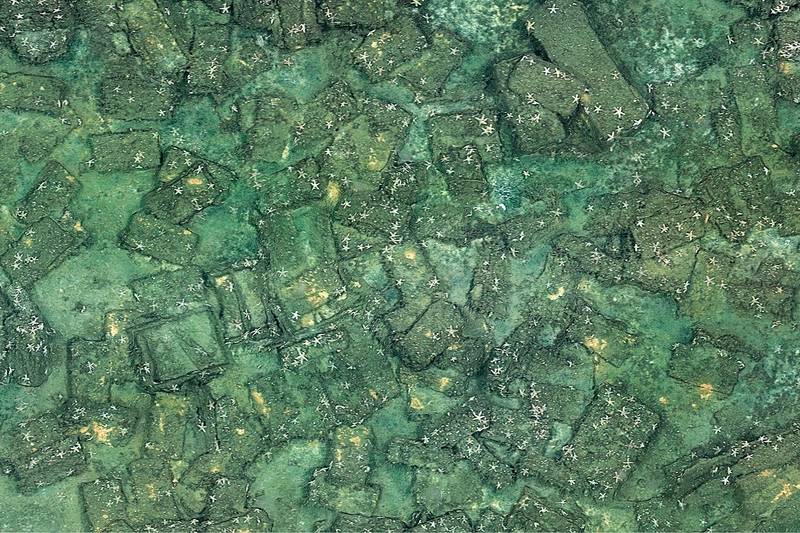
Image courtesy of GEOMAR – Jens Greinert
In 1946, the Polish cargo ship SS Kielce, loaded with munitions, sank about four miles off the coast of England. Its attempted salvage in 1967 resulted in an explosion equivalent to an earthquake measuring 4.5 on the Richter scale.
Nobody was injured that time, but others haven’t been so lucky. Over 110 people have died from unexploded ordinance (UXO) dumped in the North Sea since 1945.
A study reported in Marine Technology News this week investigated another risk such munitions pose. The south-western Baltic Sea has about 3,000 kilograms of dissolved toxic chemicals released from unexploded ordnance, according to the study by the GEOMAR Helmholtz Centre for Ocean Research Kiel. Unexploded ordnance contains toxic substances such as TNT (2,4,6-trinitrotoluene), RDX (1,3,5-trinitro-1,3,5-triazine), and DNB (1,3-dinitrobenzene), which are released into the seawater when the metal casings corrode.
The contamination is expected to increase over time as metal casings continue to corrode, releasing more and more toxic compounds – a process projected to continue for at least 800 years.
Two EU-funded projects began last year to help mitigate the threat of the estimated 1.6 million tonnes of dumped munitions in European seas. The project teams aim to advance robotics, 3D imaging and AI support for the detection and classification of UXO.
The ordinance ranges from single bullets to ammunition boxes to 500 kg bombs, and a pilot clearance project undertaken by contractors, SeaTerra, Eggers Kampfmittelbergung and Hansataucher, involves deck cranes equipped with a variety of grapples to remove ordnance boxes, a crawler equipped with a robotic arm to place small artillery shells in underwater baskets and ROVs with divers on standby.
The latest issue of Marine Technology Reporter magazine includes an in-depth look at crawler technology. Written by David R. Strachan, defense analyst and founder of Strikepod Systems, it looks at the US Navy’s development of an underwater crawler whose range of missions will include explosive ordnance disposal.
More than 1,000 demonstrators gathered outside the National Oceanic and Atmospheric Administration (NOAA) building in Boulder…
The south-western Baltic Sea has about 3,000 kilograms of dissolved toxic chemicals released from unexploded ordnance, according…
A ship that will hunt for missing Malaysia Airlines Flight MH370 has deployed to its Indian Ocean search zone, according…
British firm Zero USV has launched its Oceanus12 unmanned surface vessel (USV), marking a step closer to offering the world’s…
Orkney-based marine services firm Green Marine UK has announced a seven-figure capital investment in a new Subsea Services…
Thermoplastic composite pipe (TCP) manufacturer Strohm, and provider of subsea connection systems UNITECH Offshore have signed…
Marine Technology Reporter is the world’s largest audited subsea industry publication serving the offshore energy, subsea defense and scientific communities.
Marine Technology ENews is the subsea industry’s largest circulation and most authoritative ENews Service, delivered to your Email three times per week
Subscribe for MTR E-news
About The Author




More Stories
From Curiosity to Confidence: CodificaKids Builds Digital Trust in Rural Brazil
Community Snapshot—August
Empowering Parents in Rwanda Through Digital Literacy Training