
Resources for
academics and university staff
Everything you need for each step
of your study abroad journey
The next chief executive of UK Research and Innovation (UKRI) “ticks all the right boxes” for running the £9 billion-a-year research funder given his scientific credibility, experience in leading a major organisation and willingness to take bold strategic decisions, experts said.
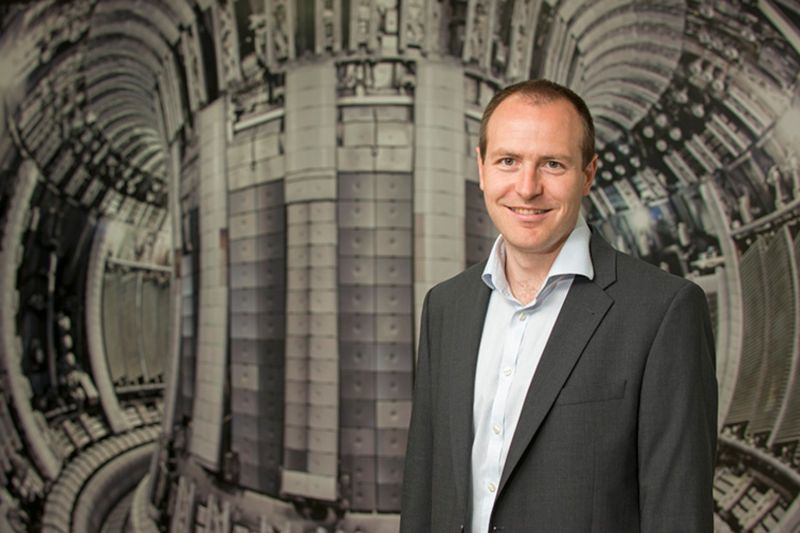
The confirmation of Ian Chapman as the new boss of UKRI follows a year-long hunt for a successor to Ottoline Leyser, who announced back in January 2024 that she would step down this summer at the end of her five-year term of office.
Chapman, who has led a 2,000-strong research team at the UK Atomic Energy Authority (UKAEA) since 2016, was described as an “exceptionally strong candidate to lead UKRI in pursuing ambitious curiosity-driven research” by science minister Patrick Vallance when the appointment was announced on 25 February.
“He is an excellent choice,” agreed John Womersley, a former chief executive of the Science and Technology Facilities Council, who has worked with Chapman.
“He is very well connected with government and crucially he has won significant amounts money from them, which is always a good sign,” said Womersley, referring to the £650 million secured by UKAEA in 2023 to lead a UK fusion research initiative, after the then Conservative government decided not to associate to the Euratom funding programme when it rejoined Horizon Europe.
“That allowed us not to get tied down by Euratom – it shows he’s not afraid to shake things up. In that sense, he’s a bit of a Dominic Cummings appointment in that he’s not bound by scientific tradition that dictates that European projects are the only way to go,” continued Womersley, who believes this call was correct in light of the repeated delays to Europe’s ITER fusion programme, whose reactor will not start producing energy until at least 2039.
At UKAEA, Chapman had stressed the importance of furthering nuclear research for domestic energy “rather than for academic publications”, continued Womersley.
“He’s quite aligned with Patrick Vallance’s mission-focused approach to research and that will be reassuring for government, even if he’s a bit of an unknown quantity for academia as he doesn’t come from a university research background,” he added.
Describing Chapman as a “doer rather than a thinker”, Womersley contrasted the 42-year-old fusion scientist to UKRI’s current leader Leyser, who was well known for her science policy work at the Royal Society, as well as her plant science research, prior to taking UK research’s top job in 2020.
“You’ll struggle to find any big speeches that he’s made on research policy or the role of research in society – his experience is running a significant-sized organisation. He won’t be a rival to Patrick Vallance with his ideas on the role of universities in research,” Womersley said.
Carsten Welsch, head of accelerator science at the University of Liverpool, one of UKAEA’s university partners, also welcomed the appointment, noting that Chapman’s “long-standing expertise in managing large-scale scientific projects should position him well to guide UKRI in supporting world-class research and innovation”.
“Large-scale facilities require a strategic and long-term vision and plan, and they rely on strong international partnerships – I have no doubt that Ian brings a deep understanding in these areas,” added Welsch, who said he had “crossed paths several times” with Chapman in his particle physics research.
Research excellence: what is it and how can universities achieve it?
While Chapman came from a “non-university [research] background” – having worked at UKAEA since completing his PhD at Imperial College London in 2008 – Welsch said he had “no doubt that he will fully recognise the critical role that universities play in training talent, driving discovery-led research, and contributing to the UK’s innovation ecosystem”.
Joe Marshall, chief executive of the National Centre for Universities and Business, said Chapman’s scientific background as an acclaimed physicist prior to taking the reins at UKAEA and as an experienced administrator at an organisation with commercial links would help him navigate the “healthy tensions within UKRI”, with missions covering basic research, innovation and commercialisation.
“You need someone who is a world-class academic in their own right, someone with experience in how research can be commercialised, and someone who has run a big organisation – Ian ticks all the right boxes in this respect,” said Marshall.
Asked how Chapman would help achieve UKRI’s “refreshed mission that puts economic growth at the heart of public investment in R&D”, as the government put it, Marshall said the key would be to “make sure UKRI is more than the sum of its parts” – namely its eight research councils and the innovation funder Innovate UK.
“That is really what missions are all about – applying multidisciplinary teams to problems rather than limiting research to different disciplinary domains,” said Marshall, who argued Chapman would be a “fresh pair of eyes from outside the academic sector” in this core role at UKRI.
jack.grove@timeshighereducation.com
Why register?
Or subscribe for unlimited access to:
Already registered or a current subscriber? Login
UK Atomic Energy Authority boss will take over at £9 billion UK research funder in the summer, when Ottoline Leyser steps down
The long-mooted Oxford-Cambridge corridor is one avenue chancellor Rachel Reeves intends to pursue in search of a way out of the economic doldrums. But where does her focus on existing strengths leave blue-skies research and levelling up? And can a sector in crisis possibly deliver? Tom Williams reports
Year-long succession process and budget delays have prompted speculation over possible reforms to £1 billion UK innovation research agency
High-profile or opinionated candidates may receive short shrift with ‘CEO in all but name’ Lord Vallance firmly in charge of UK science, experts predict
Conference also hears that proposed streamline of ARC grant schemes will give early career researchers a ‘leg-up’
UK Atomic Energy Authority boss will take over at £9 billion UK research funder in the summer, when Ottoline Leyser steps down
More transparent and democratic decision-making within UK universities could have helped institutions avoid the financial mistakes that are now resulting in mass redundancies, argue Nicholas Grant and Nadine Zubair
University Grants Commission’s move to hand power to universities to judge journal quality faces resistance from research watchdogs
Subscribe to Times Higher Education
As the voice of global higher education, THE is an invaluable daily resource. Subscribe today to receive unlimited news and analyses, commentary from the sharpest minds in international academia, our influential university rankings analysis and the latest insights from our World Summit series.
About The Author




More Stories
What Happens When a Community Wires Itself: Lessons from Colville on the Power of Indigenous-Led Connectivity
From Curiosity to Confidence: CodificaKids Builds Digital Trust in Rural Brazil
Community Snapshot—August