
Click here to sign in with or
Forget Password?
Learn more
share this!
Share
Tweet
Share
Email
February 24, 2025
This article has been reviewed according to Science X’s editorial process and policies. Editors have highlighted the following attributes while ensuring the content’s credibility:
fact-checked
trusted source
written by researcher(s)
proofread
by Mlungele M. Nsikani, The Conversation
Invasive plants and trees were introduced to South Africa from as early as the 17th century for a range of commercial, subsistence and ornamental uses. Today, every area of the country has been invaded by a variety of these plants. The most species are found in the Western Cape, Eastern Cape and KwaZulu-Natal provinces, and major urban centers.
Invasive plants such as port jackson, black wattle and gum trees threaten the country’s water security by using up too much water. They also fuel fires by adding biomass into the ecosystem, particularly those ecosystems where trees would not naturally grow. Invasive plants (including trees) can also degrade pasture lands by converting them into woodlands, full of plants that grazing animals do not eat.
As a consequence, concerted efforts have been made in projects run by government and nature organizations to clear these plants and replace them with indigenous vegetation. Clearing invasive plants can be done through various methods such as herbicide spraying or chopping them down.
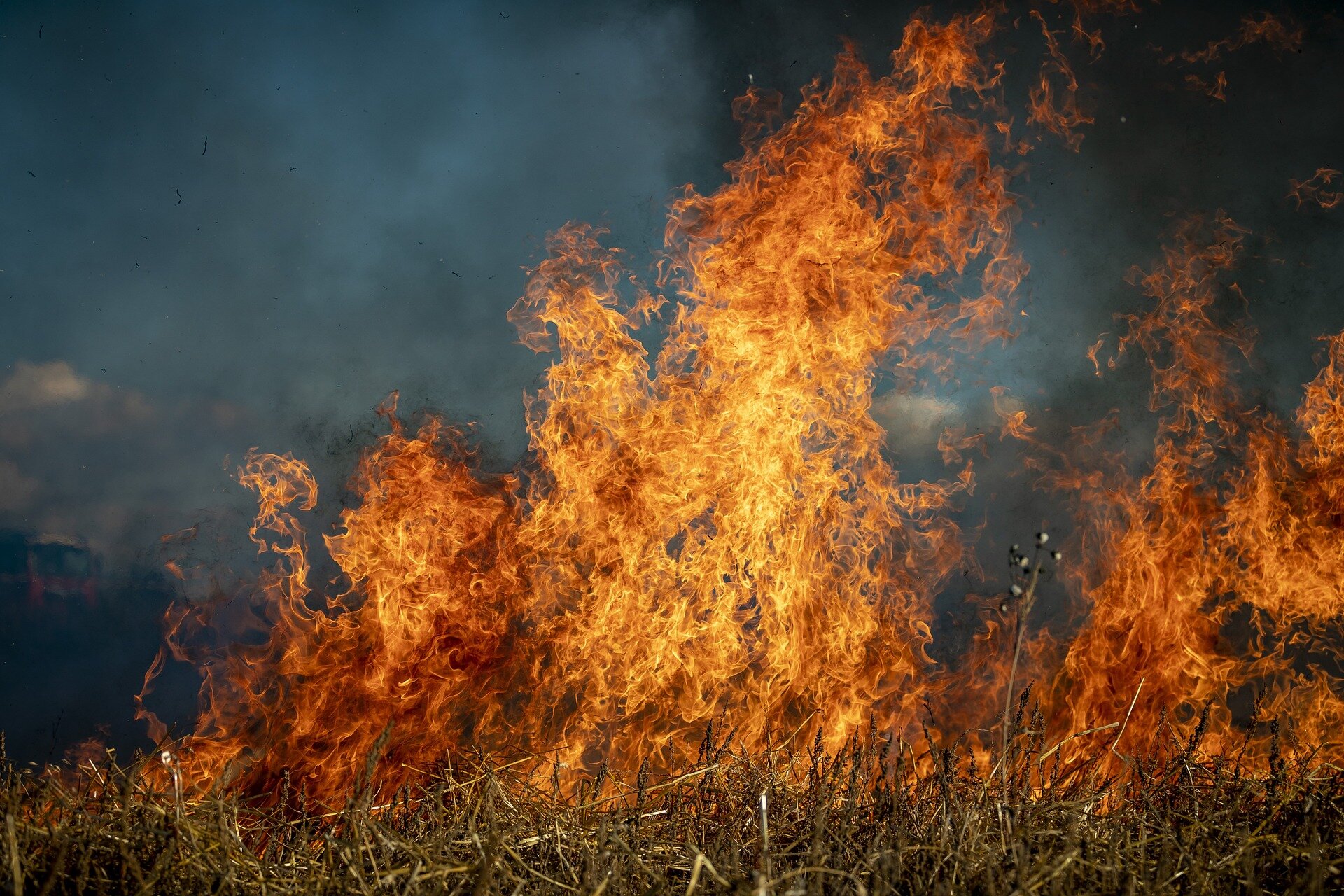
In South Africa’s Western Cape, a common feature of clearing efforts is the “stack burning” method. This is where invasive plants such as port jackson are chopped down, stacked on top of each other and allowed to dry out before being burnt.
Clearing efforts are focused on the Western Cape’s fynbos ecosystem. The fynbos is the country’s most invaded ecosystem and most of the research on invasive plants has taken place in this ecosystem. Despite the large extent of invasive plants in the fynbos, the ecosystem has exceptional biodiversity, containing a high number of endemic species found nowhere else on Earth.
But stack burning has its downsides because it leaves burn scars on the land.
I’m a land restoration specialist and environmental scientist who set out to research how stack burning affected the ability of fynbos to regenerate naturally. I visited 80 stack burn scars in two different fynbos ecosystem types in the Western Cape. I revisited the burnt sites every year for three years after the invasive plants had been removed and their biomass burnt away.
My research found that full recovery of stack burn scars remains limited up to three years after clearing. One of the key research findings was that fynbos had not grown back fully even three years after the burning took place. Furthermore, the two fynbos ecosystem types recover differently.
To reduce the effects of stack burning, wherever possible, other clearing methods should be used. This could include removing the biomass without burning or burning the biomass on existing roads within the site.
I studied two types of fynbos ecosystems in the Western Cape: mountain fynbos and lowland fynbos. These are some of the ecosystems with the highest density of invasive plants in the country.
I set up observation areas at the center and edge of each burn scar and outside it. These measured one square meter each. For three years after burning, I counted the number of species that were found each year in the center and at the edge of each burn scar.
I then compared the burnt area with plots outside the burn scar where no fire had occurred.
The heat of the fire at the center of the stack reaches over 300°C. At the edge, temperatures reach 175°C. This often leaves persistent stack burn scars on the land. Stack burn scars are areas that have been left charred and stripped of vegetation by the intense fires during stack burning.
Stack burning has negative effects on the environment. These include:
My research found that areas at the center of the stack remain severely affected and do not fully recover even three years after the stack burn. Areas at the edge of the stack recover within two years.
This shows that cutting down invasive plants and burning them on site prevents those areas from recovering naturally on their own. They will need help from humans to regrow.
Another important finding was that the two fynbos ecosystem types recover differently. Lowland fynbos recovers faster than mountain fynbos. Restoration specialists need to develop restoration plans that are tailored to the specific ecosystem.
To reduce the effects of stack burning, wherever possible, other clearing methods should be used. For example, invasive plants can be cut down and removed. They do not need to be burnt on site. Alternatively, the biomass can be removed and burnt on mountain roads, where the fires won’t damage natural fynbos.
Where stack burning is unavoidable, there may be a need to apply fynbos seeds to stack burn scars to improve native species recovery. Stack burn scars could also be covered with surrounding topsoil to encourage recovery of native soil seed banks and microbial communities. However, this is labor intensive, so it would probably only be feasible at small scales.
Provided by The Conversation
This article is republished from The Conversation under a Creative Commons license. Read the original article.
Explore further
Facebook
Twitter
Email
Feedback to editors
5 hours ago
0
5 hours ago
0
7 hours ago
0
Feb 22, 2025
0
Feb 22, 2025
0
20 minutes ago
29 minutes ago
41 minutes ago
49 minutes ago
1 hour ago
1 hour ago
1 hour ago
1 hour ago
1 hour ago
1 hour ago
23 hours ago
Feb 23, 2025
Feb 16, 2025
Feb 8, 2025
Feb 7, 2025
Feb 5, 2025
More from Biology and Medical
Jun 4, 2024
Sep 7, 2018
Jan 30, 2025
Feb 14, 2022
Oct 11, 2019
Jan 10, 2020
3 hours ago
9 hours ago
4 hours ago
Feb 21, 2025
Feb 21, 2025
Feb 21, 2025
Invasive plants in South Africa, particularly in the Western Cape’s fynbos ecosystem, threaten water security and biodiversity. While stack burning is a common method to clear these plants, it leaves persistent scars and hinders native vegetation recovery. Recovery varies between ecosystem types, with lowland fynbos recovering faster than mountain fynbos. Alternative methods, such as removing biomass without burning, are recommended to minimize environmental impact.
This summary was automatically generated using LLM. Full disclaimer
Use this form if you have come across a typo, inaccuracy or would like to send an edit request for the content on this page. For general inquiries, please use our contact form. For general feedback, use the public comments section below (please adhere to guidelines).
Please select the most appropriate category to facilitate processing of your request
Thank you for taking time to provide your feedback to the editors.
Your feedback is important to us. However, we do not guarantee individual replies due to the high volume of messages.
Your email address is used only to let the recipient know who sent the email. Neither your address nor the recipient’s address will be used for any other purpose. The information you enter will appear in your e-mail message and is not retained by Phys.org in any form.
Get weekly and/or daily updates delivered to your inbox. You can unsubscribe at any time and we’ll never share your details to third parties.
More information Privacy policy
We keep our content available to everyone. Consider supporting Science X’s mission by getting a premium account.
Medical research advances and health news
The latest engineering, electronics and technology advances
The most comprehensive sci-tech news coverage on the web
About The Author




More Stories
What Happens When a Community Wires Itself: Lessons from Colville on the Power of Indigenous-Led Connectivity
From Curiosity to Confidence: CodificaKids Builds Digital Trust in Rural Brazil
Community Snapshot—August