
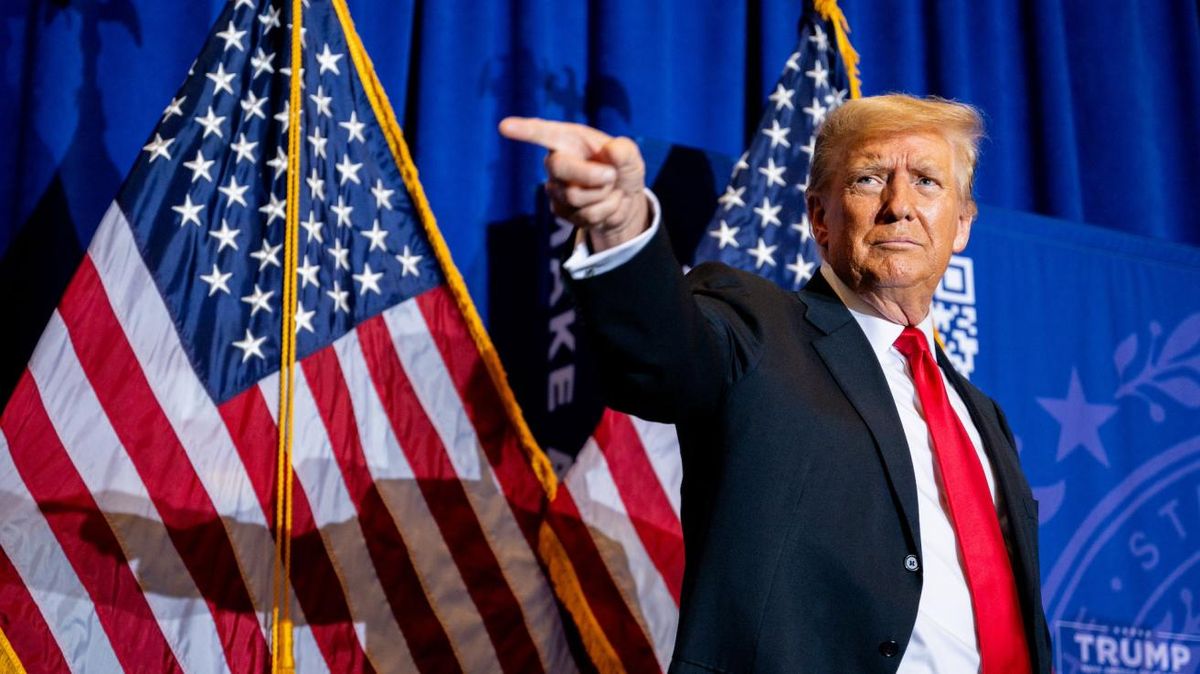
Washington, DC — A recent Council on Foreign Relations meeting held on January 29, 2025, explored how the foreign policy direction of a second Trump administration could reshape U.S.-Africa relations. Expert panelists discussed whether security, economic, and diplomatic engagement with Africa would deepen or decline, especially amid rising competition from China and Russia.
The discussion included insights from several prominent figures, including Johnnie Carson, former Assistant Secretary of State for African Affairs, Cameron C. Hudson from the Center for Strategic and International Studies, and Ebenezer Obadare of the Council on Foreign Relations. Presiding over the meeting was Shannon L. Smith, Middle East and Africa Section Manager at the Congressional Research Service.
Smith kicked off the conversation by acknowledging the growing importance of Africa on the international stage, especially with the recent turmoil observed in the Democratic Republic of Congo. “Africa is going to be on the international agenda,” she noted, indicating the potential impact of geopolitical events on U.S. foreign policy.
Cameron Hudson raised concerns about the civil war gripping Sudan, where the humanitarian crisis is described as the worst globally. “Washington has strategic interests and untapped leverage in Sudan,” he asserted, outlining opportunities for the U.S. to help resolve the conflict. He argued President Trump is uniquely positioned to influence key players involved, including several Arab nations.
The dire humanitarian situation was underscored by Hudson, who highlighted the staggering number of displaced individuals—over 13 million—seeking relief from what continues to be one of the world’s largest humanitarian crises.
Carson echoed Hudson’s concerns, stating, “We see roughly eleven to fifteen million people displaced by the fighting… the crisis is enormous, but the response has not been nearly sufficient.” He emphasized the necessity for the U.S. to take the situation seriously and proposed the appointment of a special envoy to handle the humanitarian crisis effectively.
Beyond Sudan, the panelists delved deep to explore the changing dynamics within West Africa, characterized by political coup d’états, the diminishing power of the regional bloc ECOWAS, and rising Russian and Chinese influence. Obadare pointed out the region’s shift away from traditional Western alliances, remarking, “The U.S. should recognize… there’s anti-French and anti-Western sentiment—a feeling of resentment palpably growing within the region.”
He suggested the U.S. should strive to strengthen ties with countries still maintaining democratic governance, like Ghana and Senegal. “The United States is not going to do this by insisting on America first… there has to be realism and acknowledgment of how American interests and African interests can converge,” he concluded.
The challenge of promoting democracy and stability remains key, with Carson urging for greater U.S. involvement to reaffirm support for democracy and address pressing security issues. “We cannot forget… Nigeria is Africa’s largest democracy and economy,” he noted, emphasizing the importance of maintaining democratic integrity.
Shifting focus back to the wider geopolitical climate, panelists discussed China’s increasing influence through initiatives like the Belt and Road Initiative. Carson highlighted this as both a challenge and opportunity. “Countering China’s activities… should be one of America’s priorities. But it should not be the first or second priority,” he stated. “Our objectives should be to focus on strengthening U.S.-African relations, not just viewing Africa through the lens of China’s foreign policy.”
Panelists stressed the significance of recognizing Africa as not only important in its own right but also as major partners against global challenges like climate change and extremism. Carson pointed out, “Africa has agency. It has choices. Our primary objective is to strengthen relationships with African nations.”
Reflections on U.S. foreign policy under Trump’s administration included the balance and diplomacy required to work with autocratic regimes versus democratic movements. The necessity for the United States to engage meaningfully with both sides was emphasized as pivotal for fostering stability within the geopolitical climate of Africa.
Fostering partnerships was heralded as key to addressing the continent’s strategic interests without solely focusing on countering foreign adversaries, including China and Russia. The conversation ended on the noting of the potential paths forward, which involve nurturing existing democratic frameworks across Africa and addressing the continent’s socioeconomic challenges.
With the backdrop of looming crises and shifting geopolitical allegiances, the panel’s insights underline the importance of rekindling the U.S.’s role as a proactive and engaged partner on the African continent, to prevent the vacuum from being filled by adversarial influences.
We’ve launched what we proudly call the “Intelligent Journalism” era: a bold approach to journalism that prioritizes verifiable facts, eliminates unnecessary fluff, restores the rigor of classic journalistic principles, and delivers news in a clear, compelling format—all powered by our innovative AI algorithms.
Support Intelligent Journalism with a tip to help us understand the stories you love most, so we can bring you more of what matters!
We always aim for accuracy, but we recognize that errors can occasionally slip through. We value your feedback and are committed to making corrections whenever needed. If you spot a factual mistake in our stories, please let us know, and we’ll address it promptly.
Please use this feedback form solely for reporting factual errors, rather than for sharing personal opinions. We appreciate your help in keeping our content accurate and reliable.
We always strive for thorough and accurate reporting, and we value any verified information that can help us better understand the stories we cover. If you have relevant knowledge, insights, or evidence related to a news piece we’ve reported, we encourage you to share it with us. Please remember that we require credible proof or documentation to ensure the integrity of our journalism.
When submitting your tip, explain your connection to the case and provide verifiable evidence. This can include links to documents, photographs, recordings, or other supporting materials, as long as they are securely hosted on reputable cloud-based platforms like Google Drive or Dropbox. We cannot accept direct uploads. Please include your contact information (email and phone number) if you would like us to follow up with you regarding your tip. Our editorial team will review your submission, and if necessary, we will reach out for more information. Your help plays a crucial role in helping us deliver accurate, reliable news to the public.
THE PINNACLE GAZETTE, a platform established by Tree of Evolution LLC, is your premier source for the latest news across a diverse array of topics. Our website offers comprehensive coverage on science, technology, current events, art, and sports, ensuring that you stay informed and gain fresh perspectives.
About The Author



More Stories
Closing AI’s Language Gap: Why the Internet Society Is Joining a Global Commitment
What Happens When a Community Wires Itself: Lessons from Colville on the Power of Indigenous-Led Connectivity
From Curiosity to Confidence: CodificaKids Builds Digital Trust in Rural Brazil