
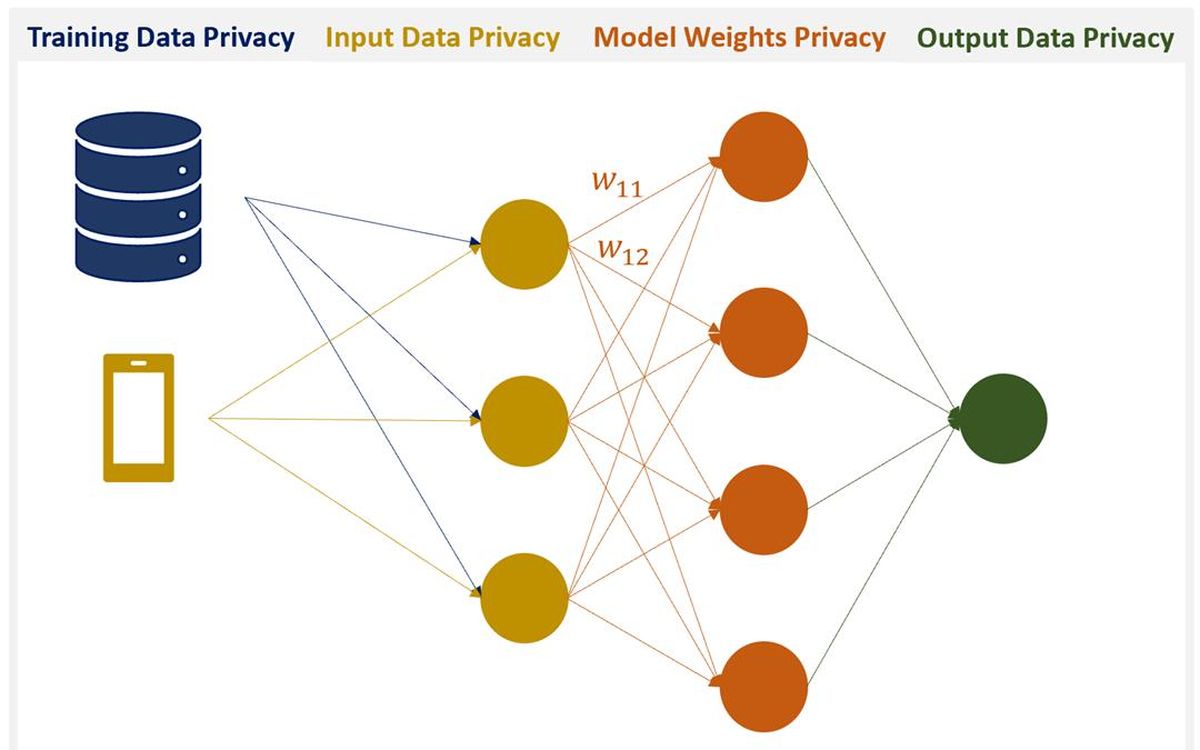
The explosion of Internet of Things (IoT) devices has generated massive volumes of high-dimensional data, leading to significant challenges concerning data privacy and security. With IoT networks becoming increasingly prevalent, ensuring the confidentiality of sensitive data without compromising data analytics capabilities is of utmost importance. A novel approach, termed Privacy-Preserving Statistical Learning with Optimization Algorithm for High-Dimensional Big Data Environments (PPSLOA-HDBDE), seeks to address these concerns by combining advanced optimization techniques and ensemble learning methods to secure data confidentiality.
The primary goal of the PPSLOA-HDBDE method is to maintain analytical effectiveness whilst protecting sensitive information collected from IoT devices. This is particularly important because many current solutions, predominantly server-assisted, fail to comprehensively address collusion attacks or the increasingly complex dynamics of the IoT environment. The research identifies the frequent inadequacy of existing methods, especially when dealing with high-dimensional data, which can obfuscate meaningful patterns and negatively impact the efficacy of privacy-preserving models.
Current research efforts highlight the urgency of heightened security measures for IoT devices, which are vulnerable to various cyberattacks such as eavesdropping, denial-of-service attacks, and privilege escalation attempts. The authors note, “The necessity to defend IoT devices from these assaults is becoming increasingly significant.” Consequently, the study proposes enhanced intrusion detection systems (IDS) capable of efficiently and reliably recognizing unauthorized intrusions and malicious actions, thereby contributing to improved overall network security.
The PPSLOA-HDBDE approach comprises several key methodologies. Initially, it employs Linear Scaling Normalization (LSN) to preprocess input data effectively. LSN plays a pivotal role by rescaling features to specific ranges (usually from 0 to 1), helping to mitigate the influence of outliers and standardizing data scaling for subsequent processing. This preprocessing step has been shown to significantly improve the convergence rates of models sensitive to feature ranges, particularly gradient-based approaches.
Following the preprocessing, the study integrates the Sand Cat Swarm Optimizer (SCSO) for feature selection, effectively tackling high-dimensionality issues. This method mimics the hunting behaviors of sand cats, exploring the feature space efficiently to identify the most relevant features without succumbing to the common pitfalls of overfitting. The efficiency of SCSO, which balances exploration and exploitation of features, leads to enhanced model performance and accuracy.
For the intrusion detection phase, the PPSLOA-HDBDE utilizes three ensemble learning techniques: Temporal Convolutional Network (TCN), Multi-layer Auto-Encoder (MAE), and Extreme Gradient Boosting (XGBoost). This integration is intended to capitalize on the strengths of each model, improving detection rates and resilience against various attack patterns. Specifically, TCNs are adept at capturing temporal dependencies within data, MAEs contribute to learning intrinsic feature representations, and XGBoost provides high performance and generalization capabilities. According to the authors, “An ensemble approach was utilized, integrating TCN, MAE, and XGBoost for superior intrusion detection.”
Validation experiments conducted as part of the research demonstrate the effectiveness of the PPSLOA-HDBDE technique, yielding remarkable accuracy rates of 99.49%, outperforming existing models. The results advocate for the efficacy of the proposed methodology, showcasing its potential adaptability for practical applications across various real-world IoT environments. The limitations of the proposed technique, including issues related to heterogeneous data across devices and computational overhead on resource-constrained systems, are also acknowledged, with the authors asserting the importance of future research to optimize model training and expand the model’s applicability beyond conventional consumer electronics.
The findings herald significant advancements within the encryption and privacy frameworks of IoT networks by utilizing cutting-edge machine learning techniques. The ability to maintain stringent data privacy and efficient analytics simultaneously is likely to shape the development of more secure IoT systems, ensuring user data safety even as network environments expand and evolve.
We’ve launched what we proudly call the “Intelligent Journalism” era: a bold approach to journalism that prioritizes verifiable facts, eliminates unnecessary fluff, restores the rigor of classic journalistic principles, and delivers news in a clear, compelling format—all powered by our innovative AI algorithms.
Support Intelligent Journalism with a tip to help us understand the stories you love most, so we can bring you more of what matters!
We always aim for accuracy, but we recognize that errors can occasionally slip through. We value your feedback and are committed to making corrections whenever needed. If you spot a factual mistake in our stories, please let us know, and we’ll address it promptly.
Please use this feedback form solely for reporting factual errors, rather than for sharing personal opinions. We appreciate your help in keeping our content accurate and reliable.
We always strive for thorough and accurate reporting, and we value any verified information that can help us better understand the stories we cover. If you have relevant knowledge, insights, or evidence related to a news piece we’ve reported, we encourage you to share it with us. Please remember that we require credible proof or documentation to ensure the integrity of our journalism.
When submitting your tip, explain your connection to the case and provide verifiable evidence. This can include links to documents, photographs, recordings, or other supporting materials, as long as they are securely hosted on reputable cloud-based platforms like Google Drive or Dropbox. We cannot accept direct uploads. Please include your contact information (email and phone number) if you would like us to follow up with you regarding your tip. Our editorial team will review your submission, and if necessary, we will reach out for more information. Your help plays a crucial role in helping us deliver accurate, reliable news to the public.
THE PINNACLE GAZETTE, a platform established by Tree of Evolution LLC, is your premier source for the latest news across a diverse array of topics. Our website offers comprehensive coverage on science, technology, current events, art, and sports, ensuring that you stay informed and gain fresh perspectives.
About The Author




More Stories
Empowering Parents in Rwanda Through Digital Literacy Training
Advancing the Safer Internet Initiative for Everyone
Youth in Action: Contributing to a More Connected and Inclusive Digital Future