
| Source: Future Market Insights Global and Consulting Pvt. Ltd.
NEWARK, Del, Jan. 21, 2025 (GLOBE NEWSWIRE) — The global IoT in healthcare market is poised for unprecedented growth, with market valuation expected to reach USD 243.40 billion in 2025. This robust trajectory is projected to continue at a compound annual growth rate (CAGR) of 15.3%, pushing the market beyond USD 1 trillion by 2035.
IoT in healthcare is transforming the landscape of medical care by integrating advanced technologies such as wearable devices, connected medical equipment, telehealth platforms, and AI-driven health monitoring systems. These innovations enable seamless data collection, real-time patient monitoring, and personalized healthcare solutions, ensuring improved outcomes and operational efficiencies.
The increased use of healthcare information systems, the rise of big data in healthcare, enhanced device accuracy and connection, and the high penetration of connected devices in healthcare are driving the IoT industry. The Internet of Things (IoT) has the potential to transform traditional paper-based healthcare treatment by facilitating real-time patient data access and remote patient monitoring. The introduction of this digital healthcare technology addressed the looming demand for improved diagnostics and focused therapy solutions.
It not only allows physicians to monitor patients remotely, but it also serves as a fitness and wellness tracker for athletes and a dosage reminder for patients. The successful adoption of IoT in the remote monitoring of diabetic and asthma patients, combined with the widespread use of fitness and wellness gadgets, has resulted in a significant demand for the IoT healthcare industry.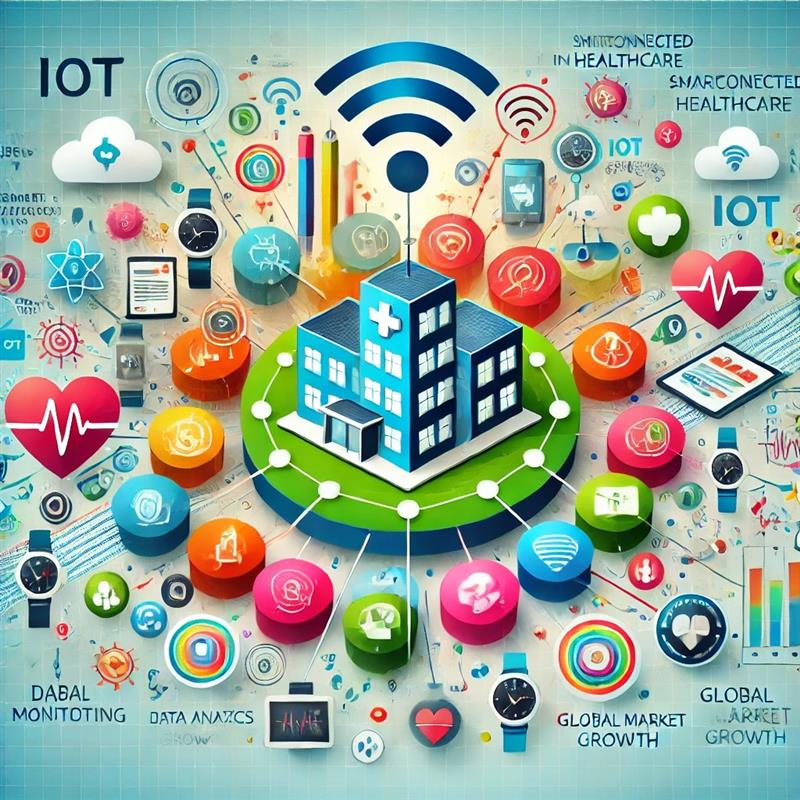 Key Challenges Influencing IoT in Healthcare Market Expansion
In healthcare, outdated infrastructure is a well-known concern. It has been demonstrated that numerous firms in the healthcare business are still encumbered by legacy healthcare IT infrastructure.
With the introduction of newer technologies, these companies require the appropriate workforce to apply them. With the increasing use of IoT, a big issue that IoT poses is data security and privacy, which increases the healthcare industry’s exposure to cyber-attacks.
Key Growth Drivers:
IoT in Healthcare Industry Outlook:
“The IoT in healthcare market represents a significant paradigm shift in how medical services are delivered. The growing emphasis on patient-centric care, coupled with advancements in AI and cloud computing, has catalyzed the adoption of IoT technologies. As stakeholders continue to invest in scalable, secure, and user-friendly solutions, the sector is set to unlock unparalleled value and redefine the future of healthcare delivery,” says Sabyasachi Ghosh Associate Vice President at Future Market Insights (FMI) analyst.
Key Takeaways: Global IoT in Healthcare Market
Regional Highlights:
As IoT continues to reshape the healthcare landscape, stakeholders are encouraged to focus on interoperability, data security, and patient privacy. Collaborative efforts between technology providers, healthcare institutions, and policymakers will be crucial in addressing challenges and unlocking the full potential of IoT in healthcare.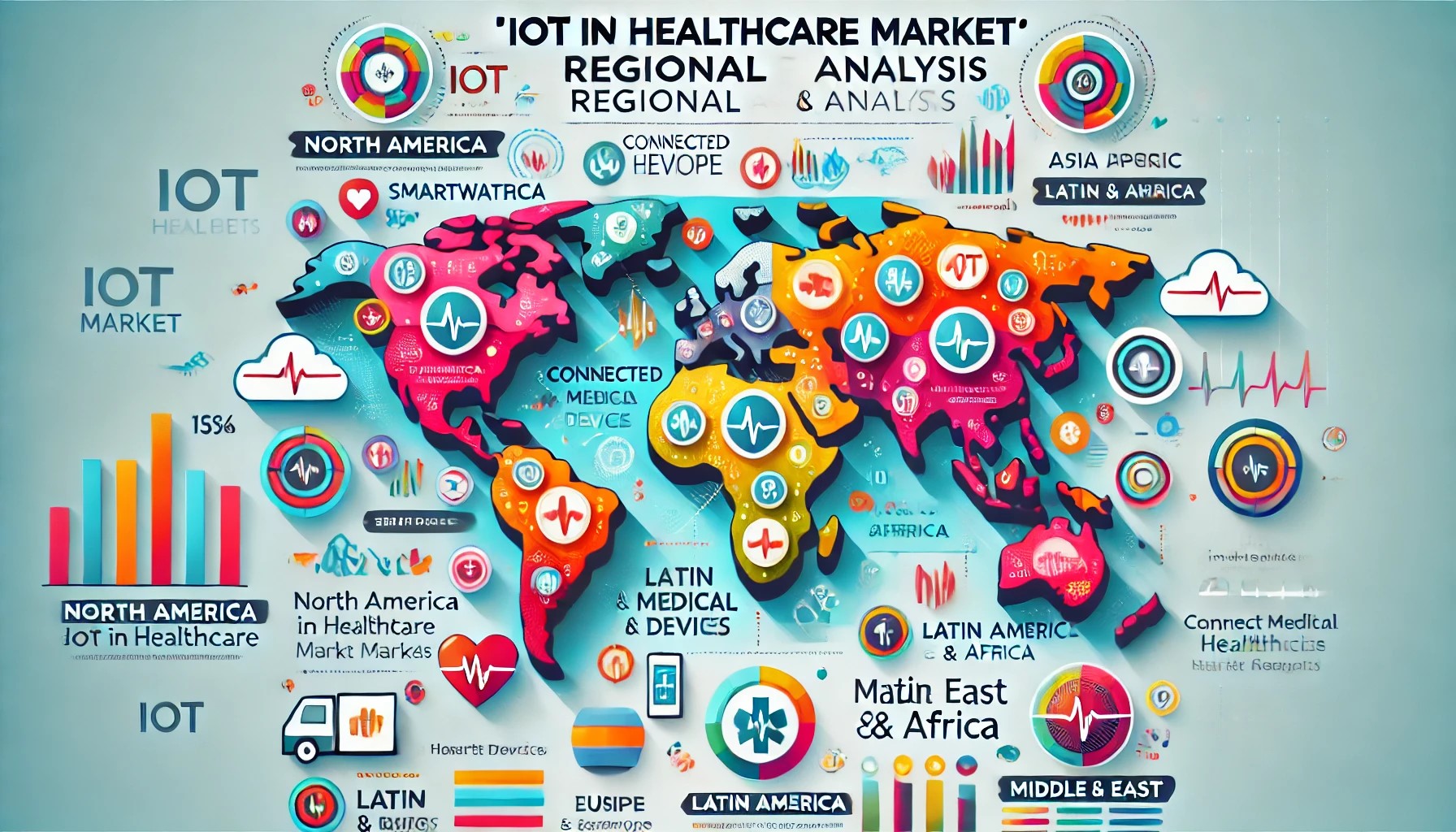 The Most Prominent Companies in the Market:
IoT in Healthcare Market Segmentation:
By Component:
The global market is segmented, according to the IoT in healthcare sector analysis, into three main components: hardware, software, and services.
By Application:
In terms of application, the market is divided into several key areas, including telemedicine, medication management, clinical operations, patient monitoring, connected imaging, and various healthcare applications.
By Technology:
The market is also categorized based on technology, which includes Bluetooth-based, Wi-Fi-based, NFC-based, Zigbee-based, RFID-based, and other emerging technologies.
By End User:
Finally, the Global IoT in Healthcare market is segmented by end user, which comprises hospitals, pharmaceuticals, and clinics & laboratories.
By Region:
The market can be segmented by region, encompassing North America, Europe, Asia Pacific, Middle East and Africa, and Latin America.
French Language:
Le marché mondial de l’IoT dans le secteur de la santé est sur le point de connaître une croissance sans précédent, avec une valorisation boursière qui devrait atteindre 243,40 milliards de dollars en 2025. Cette trajectoire robuste devrait se poursuivre à un taux de croissance annuel composé (TCAC) de 15,3 %, poussant le marché au-delà de 1 billion de dollars d’ici 2035.
L’IoT dans le secteur de la santé transforme le paysage des soins médicaux en intégrant des technologies de pointe telles que les appareils portables, les équipements médicaux connectés, les plateformes de télésanté et les systèmes de surveillance de la santé pilotés par l’IA. Ces innovations permettent une collecte de données transparente, un suivi des patients en temps réel et des solutions de soins de santé personnalisées, garantissant ainsi de meilleurs résultats et une efficacité opérationnelle.
Principaux moturs de croissance :
Perspectives de l’IoT dans le secteur de la santé :
« L’IoT sur le marché de la santé représente un changement de paradigme significatif dans la façon dont les services médicaux sont fournis. L’accent croissant mis sur les soins centrés sur le patient, associé aux progrès de l’IA et de l’informatique en nuage, a catalysé l’adoption des technologies IoT. Alors que les parties prenantes continuent d’investir dans des solutions évolutives, sécurisées et conviviales, le secteur est prêt à dégager une valeur inégalée et à redéfinir l’avenir de la prestation des soins de santé. déclare Sabyasachi Ghosh, vice-président associé chez Future Market Insights (FMI), analyste.
Principaux points à retenir : Marché mondial de l’IoT dans le secteur de la santé
Le marché mondial de l’IoT dans le secteur de la santé est évalué à 243,40 milliards USD en 2025, avec un TCAC prévu de 15,3 %. Il devrait dépasser 1 billion de dollars d’ici 2035.
Faits saillants régionaux :
Alors que l’IoT continue de remodeler le paysage des soins de santé, les parties prenantes sont encouragées à se concentrer sur l’interopérabilité, la sécurité des données et la confidentialité des patients. Les efforts de collaboration entre les fournisseurs de technologies, les établissements de santé et les décideurs politiques seront cruciaux pour relever les défis et libérer tout le potentiel de l’IoT dans le secteur de la santé.
Les entreprises les plus importantes du marché :
Segmentation du marché de l’IoT dans le secteur de la santé :
Par composante :
Le marché mondial est segmenté, selon l’analyse de l’IoT dans le secteur de la santé, en trois composants principaux : le matériel, les logiciels et les services.
Par application :
En termes d’application, le marché est divisé en plusieurs domaines clés, notamment la télémédecine, la gestion des médicaments, les opérations cliniques, la surveillance des patients, l’imagerie connectée et diverses applications de soins de santé.
Par technologie :
Le marché est également classé en fonction de la technologie, qui comprend les technologies basées sur Bluetooth, Wi-Fi, NFC, Zigbee, RFID et d’autres technologies émergentes.
Par utilisateur final :
Enfin, le marché mondial de l’IoT dans le secteur de la santé est segmenté par utilisateur final, qui comprend les hôpitaux, les produits pharmaceutiques, les cliniques et les laboratoires.
Par région :
Le marché peut être segmenté par région, englobant l’Amérique du Nord, l’Europe, l’Asie-Pacifique, le Moyen-Orient et l’Afrique, ainsi que l’Amérique latine.
Author By:
Sabyasachi Ghosh (Associate Vice President at Future Market Insights, Inc.) holds over 12 years of experience in the Healthcare, Medical Devices, and Pharmaceutical industries. His curious and analytical nature helped him shape his career as a researcher.
Identifying key challenges faced by clients and devising robust, hypothesis-based solutions to empower them with strategic decision-making capabilities come naturally to him. His primary expertise lies in areas such as Market Entry and Expansion Strategy, Feasibility Studies, Competitive Intelligence, and Strategic Transformation.
Holding a degree in Microbiology, Sabyasachi has authored numerous publications and has been cited in journals, including The Journal of mHealth, ITN Online, and Spinal Surgery News.
Explore FMI’s related ongoing Coverage on Healthcare Market Insights Domain:
The global wearable healthcare devices market size are estimated to be worth USD 19,163.1 million in 2024 and anticipated to reach a value of USD 43,327.4 million by 2034. Sales are projected to rise at a CAGR of 8.5%.
The global in vitro fertilization banking services market share valuation is estimated to be nearly USD 4,310.9 million in 2023. By expanding at a CAGR of 10.5% the overall size of the market is predicted to reach USD 11,652.7 million by 2033.
The global keyhole orthopaedic surgery market demand is estimated to create an incremental opportunity of more than USD 8 Billion by the end of 2032. The demand for keyhole orthopaedic surgery is expected to surpass USD 5.5 Billion by 2022, surging at a CAGR of 6% to 7% during the forecast period 2022 to 2032.
The MENA syringes & cannula market opportunity are estimated to be worth USD 1,592.2 million in 2024 and are anticipated to reach a value of USD 2,824.7 million by 2034. Sales are projected to rise at a CAGR of 5.9% over the forecast period between 2024 and 2034.
The carbon dioxide incubators market strategies is estimated to reach USD 752.9 million in 2024. It is estimated that revenue will increase at a CAGR of 5.1% between 2024 and 2034. The market is anticipated to reach USD 1,238.1 million by 2034.
The global HIV diagnostics market growth is estimated to be worth USD 3,497.2 million in 2024 and anticipated to reach a value of USD 7,207.7 million by 2034. Sales are projected to rise at a CAGR of 7.5% over the forecast period between 2024 and 2034.
The contact-lens induced infections market outlook is estimated to reach USD 491.3 million in 2024. It is estimated that revenue will increase at a CAGR of 4.9% between 2024 and 2034. The market is anticipated to reach USD 792.6 million by 2034.
The self-administered biologics market overview is estimated to reach USD 94,057.6 million in 2024. It is estimated that revenue will increase at a CAGR of 4.5% between 2024 and 2034. The market is anticipated to reach USD 146,068.5 million by 2034.
The global patient transportation market sales is estimated to be worth USD 22,035.5 million in 2024 and anticipated to reach a value of USD 37,639.9 million by 2034. Sales are projected to rise at a CAGR of 5.5% over the forecast period between 2024 and 2034.
The global vascular patches market forecast is estimated to be worth USD 160.3 million in 2024 and anticipated to reach a value of USD 256.2 million by 2034. Sales are projected to rise at a CAGR of 4.8% over the forecast period between 2024 and 2034.
About Future Market Insights (FMI)
Future Market Insights, Inc. (ESOMAR certified, recipient of the Stevie Award, and a member of the Greater New York Chamber of Commerce) offers profound insights into the driving factors that are boosting demand in the market. FMI stands as the leading global provider of market intelligence, advisory services, consulting, and events for the Packaging, Food and Beverage, Consumer Technology, Healthcare, Industrial, and Chemicals markets. With a vast team of over 400 analysts worldwide, FMI provides global, regional, and local expertise on diverse domains and industry trends across more than 110 countries.
Contact Us:
Future Market Insights Inc.
Christiana Corporate, 200 Continental Drive,
Suite 401, Newark, Delaware – 19713, USA
T: +1-347-918-3531
For Sales Enquiries: sales@futuremarketinsights.com
Website: https://www.futuremarketinsights.com
LinkedIn| Twitter| Blogs | YouTube
About The Author

More Stories
Carrying the Light of the Internet Forward: A Farewell Message from Board Chair Ted Hardie
Defending the Open Internet: Why Italy’s Content Delivery Network Decision Matters
Community Snapshot—June