
Work for a Member company and need a Member Portal account? Register here with your company email address.
Copyright
Courtesy of MIT LGBTQ+ Grad
Courtesy of MIT LGBTQ+ Grad
via MIT News
June 13, 2024
By Rachel Ornitz | LBGTQ+ Employee Resource Group
“My identity as a scientist and my identity as a gay man are not contradictory, but complementary,” says Jack Forman, PhD candidate in media arts and sciences and co-lead of LGBTQ+ Grad, a student group run by and for LGBTQ+ grad students and postdocs at MIT.
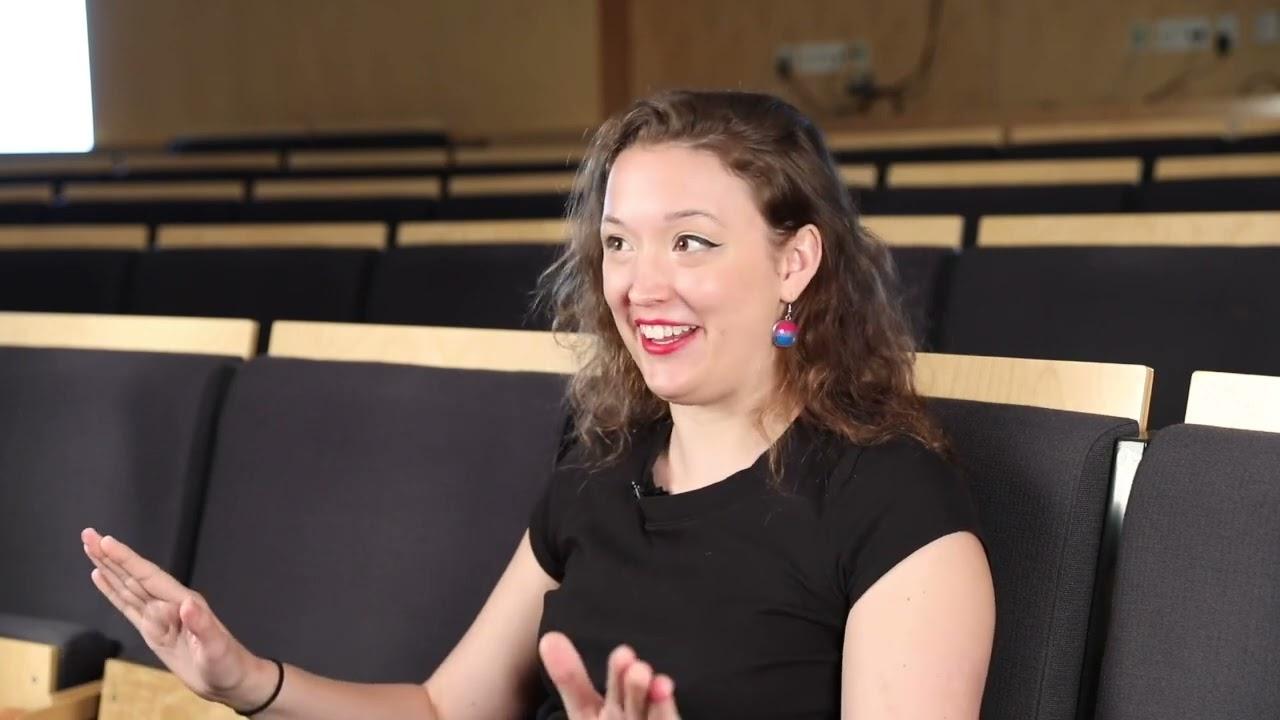
He and co-leads Miranda Dawson and Tunahan Aytas ’23 recently interviewed queer MIT faculty about their experiences and the importance of visibility in “Scientific InQueery,” a video meant to inspire young LGBTQ+ academics to take pride in the intersections of their identities and their academic work.
“In professional settings, people need to create spaces for researchers to be able to discuss their scientific work and also be queer,” says Nergis Mavalvala, the Curtis and Kathleen Marble Professor of Astrophysics and dean of the MIT School of Science. “That [space] gives a sense of safety [to say] ‘I can be successful in my profession; I can be queer; and I can be out here flying my rainbow flag.’”
“As queer graduate students, we find community in our peers. However, as one progresses up the academic ladder, it can be harder to find examples of queer people in higher positions. Bringing visibility to the queer faculty helps younger queer academics find a greater sense of community,” says Dawson, a PhD student in MIT’s Department of Biological Engineering. In her years as co-lead of LGBTQ+ Grad, she has been a visible advocate for LGBTQ+ graduate students across MIT.
“We would love it if a young queer person with curiosity and a love for learning saw this video and realized that they belong here, at a place like MIT,” says Dawson.
In addition to Aytas, Dawson, Forman, and Mavalvala, the video features Sebastian Lourido, associate professor of biology; Lorna Gibson, professor of materials science and engineering; and Bryan Bryson, associate professor of biological engineering.
The RISE LBGTQ+ Pride Award recognizes staff and students who have made significant contributions to creating an inclusive community.
Tulle-like DefeXtiles can be 3D printed with no custom software or hardware.
Jack Forman, Mustafa Doga Dogan, Hamilton Forsythe, and Hiroshi Ishii. 2020. DefeXtiles: 3D Printing Quasi-Woven Fabric via Under-Extrusion. In Proceedings of the 33rd Annual ACM Symposium on User Interface Software and Technology (UIST '20). Association for Computing Machinery, New York, NY, USA, 1222–1233. DOI:https://doi.org/10.1145/3379337.3415876
Advance incorporates sensing directly into an object’s material, with applications for assistive technology and “intelligent” furniture.
Massachusetts Institute of Technology
School of Architecture + Planning
Accessibility
Donate to the Lab
About The Author





More Stories
Advancing the Safer Internet Initiative for Everyone
Youth in Action: Contributing to a More Connected and Inclusive Digital Future
Advancing a Connected Future for Indigenous Communities