
Thank you for visiting nature.com. You are using a browser version with limited support for CSS. To obtain the best experience, we recommend you use a more up to date browser (or turn off compatibility mode in Internet Explorer). In the meantime, to ensure continued support, we are displaying the site without styles and JavaScript.
Advertisement
You can also search for this author in PubMed Google Scholar
You have full access to this article via your institution.
Some academics argue that copying and pasting parts of text from others’ work is okay — as long as it is cited.Credit: ersinkisacik/Getty
Plagiarism is one of academia’s oldest crimes, but Claudine Gay’s resignation as Harvard University’s president following plagiarism allegations has sparked a fresh online debate: about when copying text should be a punishable offence. Some academics are even advocating for a more streamlined publishing model in which researchers can copy more and write less — as long as the source of the information is clear.

Harvard president’s resignation amid plagiarism allegations leaves academics reeling
Harvard president’s resignation amid plagiarism allegations leaves academics reeling
The idea that all researchers must compose their own sentences remains a bedrock principle for many, but that view might encounter new resistance in a world with essentially limitless access to information and increasingly sophisticated artificial intelligence (AI) algorithms that can reproduce language with eerie accuracy.
“I think the idea that one should never ever copy somebody else’s words is a bit outdated,” says Lior Pachter, a computational biologist at the California Institute of Technology in Pasadena, adding that the key is to ensure that information is properly sourced. Academia has larger problems, he says, including data fabrication.
Here, Nature takes a deeper look at the ongoing debates sparked by Gay’s downfall, and how the concept of plagiarism is changing in the age of AI.
Gay, the first Black president of Harvard University in Cambridge, Massachusetts, gave a controversial testimony before the US Congress on 5 December. Along with two other university presidents — Elizabeth Magill, at the University of Pennsylvania in Philadelphia, and Sally Kornbluth, at the Massachusetts Institute of Technology (MIT) in Cambridge — Gay answered questions about antisemitism on campus in the wake of the Israel–Hamas war. Their responses, which underscored the institutions’ commitment to free speech but failed to denounce antisemitism outright, sparked widespread condemnation and increased scrutiny of the officials.
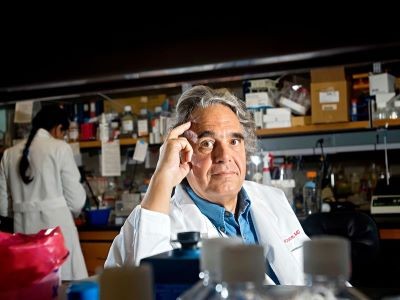
Exclusive: investigators found plagiarism and data falsification in work from prominent cancer lab
Exclusive: investigators found plagiarism and data falsification in work from prominent cancer lab
In parallel, a cadre of conservative activists and publications put forward a series of allegations that Gay had plagiarized portions of her PhD thesis and academic articles. Supporters of Gay saw the affair as a politically motivated attack in which hard-and-fast rules of plagiarism were applied bluntly, without a transparent and thorough investigation.
Academics are now bracing for more. Bill Ackman, a billionaire donor who pushed to oust Gay, has promised to scan for plagiarism in the work of all faculty and board members at MIT and potentially other institutions; the move comes just days after the website Business Insider revealed similar allegations of plagiarism against Ackman’s wife, Neri Oxman, who formerly held a faculty position researching materials and design at MIT.
Few would argue with the US government’s definition, which calls plagiarism “the appropriation of another person’s ideas, processes, results or words without giving appropriate credit”. But that seems to be where the agreement ends.
Some plagiarism scholars say that Gay clearly copied text without proper attribution. She agreed to issue several corrections to her dissertation and other papers before resigning last week. For some, this was necessary to preserve public trust in science. “We all make the occasional mistake, but once it was shown that there were more than a few problems with her research, I think it was essential that president Gay stepped down,” says Naomi Oreskes, a science historian at Harvard.
How ChatGPT and other AI tools could disrupt scientific publishing
How ChatGPT and other AI tools could disrupt scientific publishing
Others argue that the alleged violations are at most minor omissions. They say that Gay, a political scientist, merely summarized the scientific literature in line with the norms of her field, with no bearing on her own scholarship. “The day the plagiarism allegations broke, the response in the hallway was kind of like, ‘Well, I guess we’re all plagiarists,’” says Alvin Tillery, a political scientist at Northwestern University in Evanston, Illinois, who knew Gay during their time as graduate researchers.
These disputes highlight a singular challenge in evaluating plagiarism allegations: the official definition does not differentiate between what some consider the innocuous borrowing of phrases and wholesale theft of ideas and prose. Some academics are now calling for rules to provide clarity.
Moreover, plagiarism does not itself constitute research misconduct, says Lauran Qualkenbush, president of the National Association of Research Integrity Officers, who is based in Chicago, Illinois. She points to the definition of research misconduct laid out by the US National Science Foundation (NSF), a major funder of academic research. To be considered misconduct, the NSF says, there must be proof that the plagiarism was committed intentionally, knowingly or recklessly, and that it represents a “significant departure from accepted practices” of the relevant discipline. “Context matters,” Qualkenbush says.
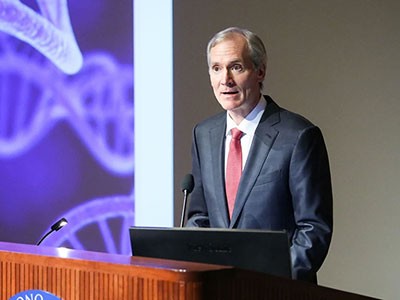
What the Stanford president’s resignation can teach lab leaders
What the Stanford president’s resignation can teach lab leaders
What happened to Gay has prompted some scientists to question the value of requiring scholars to freshly summarize known facts in the introduction and methods sections of each new paper. In one approach, dubbed ‘modular writing’, researchers could sample more liberally from the work of their peers to describe the broader scientific literature, provided that they cite the source. This could particularly benefit those whose first language is not English, theoretical physicist and author Sabine Hossenfelder wrote on the social-media platform X after Gay resigned. “It is entirely unnecessary that we ask more or less everyone to summarize the state of the art of their research area in their own words, over and over again, if minor updates on someone else’s text would do,” Hossenfelder wrote.
Pachter likens the idea to common practice in computer science, a field in which coders often build on the work of one another. “It would be weird if every time somebody built new software they had to start from scratch,” he says, pointing out that scientists are already allowed to copy and paste entire sections of papers, with attribution, under certain copyright licences.
Even if such a change comes to pass in academia, the fundamental rules about citing sources shouldn’t be altered, says Michael Dougherty, a plagiarism scholar at Ohio Dominican University in Columbus. “If we don’t have attribution, then we don’t have accountability for what’s being set forth as true and reliable,” Dougherty says. “We can’t lose accountability.”
Problematic passages in Gay’s work were identified by software that can check for matches between text and almost any digitized publication, ranging from peer-reviewed journals to Wikipedia. Qualkenbush says the decision of when to use such software — if at all — is typically up to professors, institutions and agencies, and practices vary. The NSF, for instance, runs all grant applications through such software. Many academic journals, including Nature, also use the software to check manuscripts (Nature’s news team is independent of its journals team).
Plagiarism specialists say that this software has limits. First, it won’t catch all instances of matching text, a challenge that will only increase with the use of AI, such as the chatbot ChatGPT, that can swap out words and rewrite text that is fed into it. Plagiarism-checking software also cannot account for academic norms and standardized definitions; nor can it assess whether copied text is truly plagiarism or whether it is central to the conclusions of a paper.
As AI matures, the concept of plagiarism might even one day disappear, Dougherty says. “Why copy a text, when you can just as easily generate a new one?”
Nature 625, 429-430 (2024)
doi: https://doi.org/10.1038/d41586-024-00035-6
Reprints and permissions
 Harvard president’s resignation amid plagiarism allegations leaves academics reeling
 How ChatGPT and other AI tools could disrupt scientific publishing
 What the Stanford president’s resignation can teach lab leaders
 Exclusive: investigators found plagiarism and data falsification in work from prominent cancer lab
Organize your –80 °C freezer to save time and prevent frozen fingertips
Career Column
Authors from wealthy countries cannot all pay publishing fees
Correspondence
Does generative AI help academics to do more or less?
Correspondence
Authors from wealthy countries cannot all pay publishing fees
Correspondence
Self-citations in around a dozen countries are unusually high
Nature Index
Apply publication-charge waivers across hybrid journals, too
Correspondence
Authors from wealthy countries cannot all pay publishing fees
Correspondence
New NIH chief opens up about risky pathogens, postdoc salaries and the year ahead
News Q&A
In Brazil, one in two female researchers has faced sexual harassment
Career Feature
Cardiac electrophysiology research to investigate Arrhythmias, Heart Failure and Sudden Death using animal models and donor human hearts.
University Buffalo, Buffalo
ARAS Lab
Postdoctoral associate position at the Department of Psychiatry, Yale University
New Haven, Connecticut
Seo Lab at Yale University
Institut Curie is a key player in the fight against cancer, combining an internationally renowned research center
Paris, Ile-de-France (FR)
Institut Curie
APPLICATION CLOSING DATE: 16 February 2024. About the Institute Human Technopole (HT) is an interdisciplinary life science research institute, cr…
Milan (IT)
Human Technopole
Group Leader who will use artificial intelligence, machine learning and other computational approaches to address fundamental problems in biology
Vienna (Landbezirke) (AT)
Research Institute of Molecular Pathology (IMP)
You have full access to this article via your institution.
Harvard president’s resignation amid plagiarism allegations leaves academics reeling
How ChatGPT and other AI tools could disrupt scientific publishing
What the Stanford president’s resignation can teach lab leaders
Exclusive: investigators found plagiarism and data falsification in work from prominent cancer lab
An essential round-up of science news, opinion and analysis, delivered to your inbox every weekday.
Sign up for the Nature Briefing newsletter — what matters in science, free to your inbox daily.
© 2024 Springer Nature Limited
About The Author


More Stories
Introducing a New Chapter for the Internet Society Fellowship Program
Closing AI’s Language Gap: Why the Internet Society Is Joining a Global Commitment
What Happens When a Community Wires Itself: Lessons from Colville on the Power of Indigenous-Led Connectivity