Official websites use .gov
Secure .gov websites use HTTPS
The Sahel is a semiarid region that extends east to west across Africa, separating the Sahara Desert to the north from the tropical savannas to the south.
var gih = 0; var giw = 0; var pup; var g_isDynamic = false;
function popupResize(ibox, w, h, doResize) { if ($(ibox).hasClass('dgov2popup-info')) { // This block is included once, so is shared by all media tokens. // this block is how we execute the special resize for dgov2's slideshow popup dgov2slideshowPopupResize(ibox, w, h, doResize); return; }
if (!g_isDynamic) return;
var isMobile = window.matchMedia('(max-width: 1200px)').matches;
if (isMobile) { $.colorbox.resize({ width: "100%", height: "100%" }); $(ibox).find(".img-responsive").width('100%'); $(ibox).find(".img-responsive").height('auto');
$(ibox).find(".info").css('height', 'auto'); return; }
var iw = w; var ih = h; var ww = $(window).width(); var wh = $(window).height(); var hextra = 40; var wextra = 360; var hborder = 120; var wborder = 120; var maxw = ww - wextra - wborder; var maxh = wh - hextra - hborder; var ratio = Math.min(maxw / iw, maxh / ih);
iw = Math.floor(iw * ratio); // use floor to avoid overflow scrollbar ih = Math.floor(ih * ratio);
// console.log(iw + " " + ih + " --- " + (iw + wextra) + " " + (ih + hextra))
$(ibox).find(".img-responsive").width(iw); $(ibox).find(".img-responsive").height(ih);
$(ibox).find(".info").height(ih);
if (doResize) $.colorbox.resize({ width: iw + wextra, height: ih + hextra }); }
$(window).resize(function () { if (g_isDynamic && pup !== undefined) popupResize(pup, giw, gih, true); });
$(window).load(function () { $(".popup").click(function () { giw = $(this).data('width'); gih = $(this).data('height'); pup = $($(this).attr('href')); g_isDynamic = $(this).data('dynamic') === 1 ? true : false;
popupResize(pup, giw, gih, false);
var w = "768px";
var isMobile = $(window).width() < 768 ? true : false;
w = "auto";
if (isMobile)
w = "100%";
const isDgov2Slideshow = $(this).attr("data-isdgov2slideshow") != undefined;
const isDGOV2 = true;
const slideNumber = parseInt($(this).attr('data-slide-number'));
const slideIndex = slideNumber - 1;
//console.log("slideNumber for popup", slideNumber)
const popupThis = this;
$(this).colorbox({
className: 'inline-popup', fixed: true, transition: "none", opacity: .9, inline: true, width: w, height: 'auto', maxWidth:"80%", maxHeight:"100%", close: isDgov2Slideshow || isDGOV2 ? "" : "X", onClosed: function () {
},
onComplete: function () {
var popupHeight = jQuery(this.href.substring(this.href.lastIndexOf("#"))).outerHeight(true);
if (jQuery("#colorbox").height() < popupHeight) {
jQuery("#colorbox").height(popupHeight);
}
if (g_isDynamic) {
if (!isMobile) {
bodyScrollLock.disableBodyScroll(this);
}
}
// for popup having data-isdgov2slideshow attr (see above)
if (isDgov2Slideshow) {
const popSelector = '#dgov2popup-target-3607898';
const ssSelector = '#dgov2slideshowId-3607898';
dgov2slideshowPopupInit({
numSlides: 0,
startingSlideIndex: slideIndex,
popupSelector: popSelector,
slideshowSelector: ssSelector,
slideshowMediaId: 3607898,
});
giw = $(popupThis).data('width');
gih = $(popupThis).data('height');
pup = $($(popupThis).attr('href'));
popupResize(pup, giw, gih, true);
}
$(window).resize();
},
onClosed: function () {
pup = undefined;
if (g_isDynamic)
bodyScrollLock.enableBodyScroll(this);
if (isDgov2Slideshow) {
const popSelector = '#dgov2popup-target-3607898';
const ssSelector = '#dgov2slideshowId-3607898';
dgov2slideshowPopupDestroy({
popupSelector: popSelector,
slideshowSelector: ssSelector,
});
}
}
});
});
$(".popup-slideshow").colorbox({
inline: true,
onComplete: function () {
SlideshowInit();
$.colorbox.resize();
// stop scrollbar from flashing
$("#cboxLoadedContent").css("overflow", "");
$("#cboxLoadedContent").css("overflow-y", "hidden");
},
onClosed: function () {
$('.slideshow-gallery').trigger('slideTo', 0);
}
});
});
Violent extremist organizations affiliated with al-Qaida and the Islamic State have taken advantage of weak governments and failed states across the region, she said.
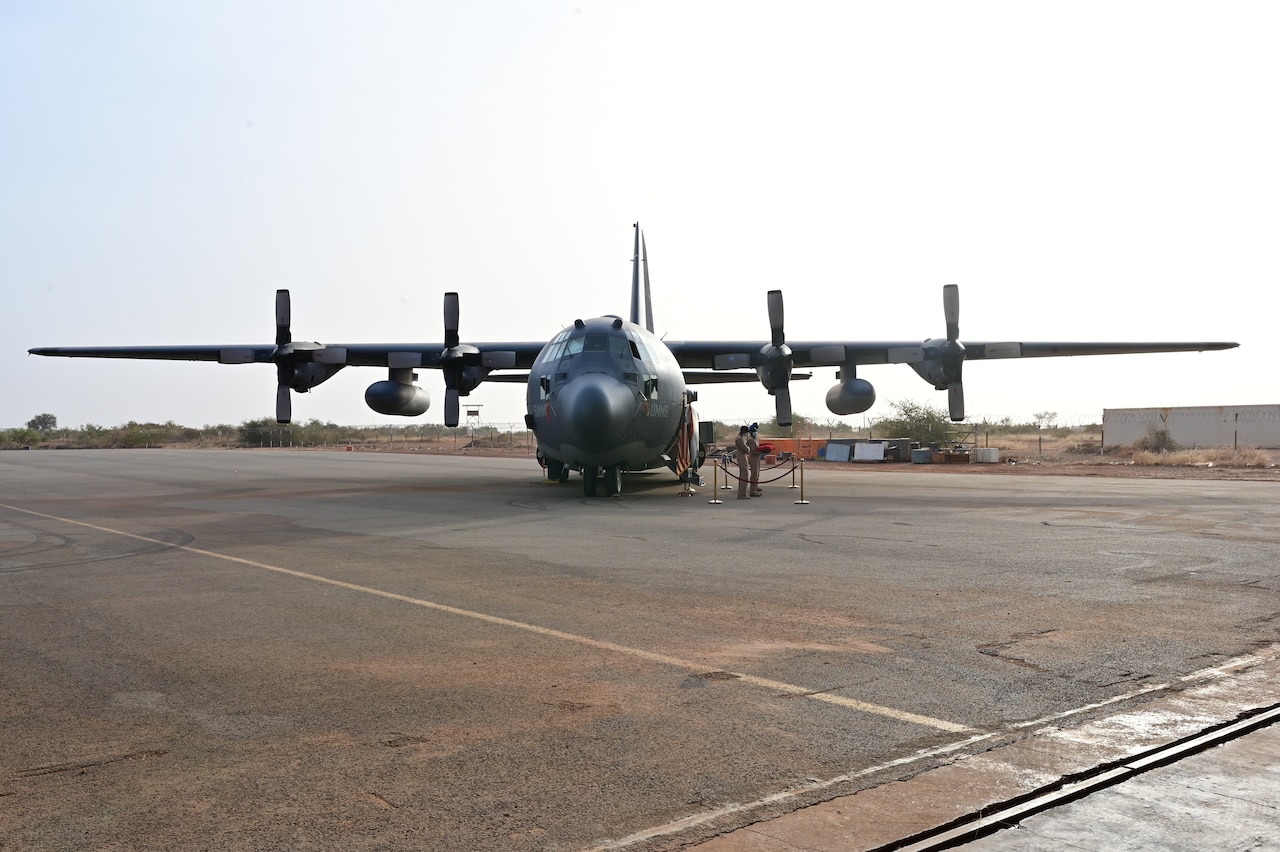
Speaking about U.S. policy options in the region, Wallander said the Defense Department's strategy focuses on two main lines of effort.
"In the short and medium term, we will support African-led counterterrorism operations to disrupt the most acute terrorist threats, with a particular emphasis on those targeting U.S. interests."
"In the long term, we will emphasize bilateral security assistance to African defense and security forces in order to build their own homegrown capacity to counter these threats without excessive external assistance," she said.
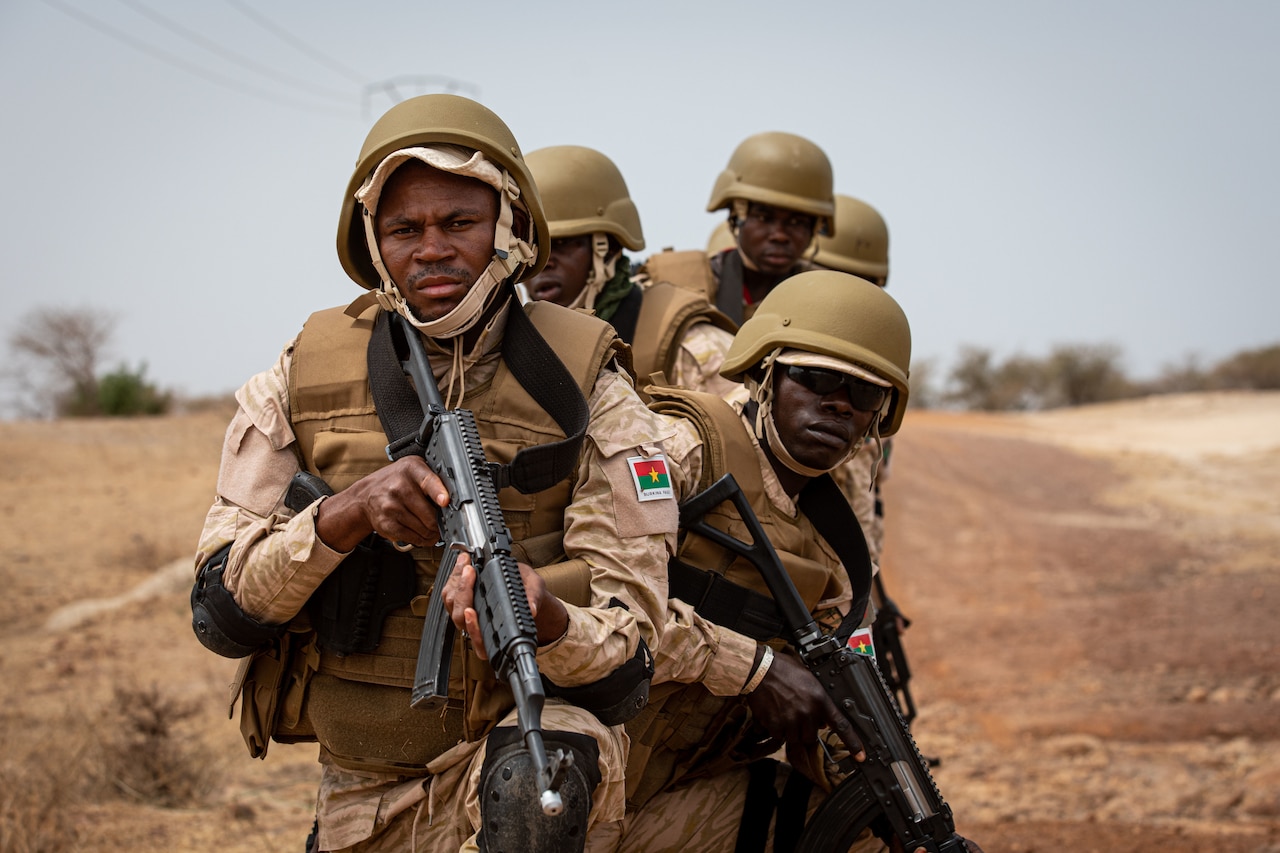
Over the last three years, significant changes in the political environment in the Sahel have affected DOD's ability to work with African and international partners, she said.
Successive military coups in Mali in 2020, Burkina Faso in 2022, and Niger in 2023 have resulted in restrictions on DOD operations and assistance programs, she said.
Other international allies and partners have also reconsidered their presence in the region, requiring DOD to reevaluate its own posture.
"Violent extremist organizations thrive in areas of instability and seek to leverage that instability for their own ends, as evidenced by the attacks we've seen in Niger since the coup," she said.
Russia has been particularly active in stoking anti-Western sentiment and presenting its private military contractors as alternatives to Western trainers, she said.
"We also cannot afford to compromise our regional influence and security partnerships, which are threatened by competitors who are less concerned with democratic values and human rights," she said.
There's also a significant risk that violent extremist organizations might expand their influence or capabilities in the region, Wallander said.
"Given this elevated threat environment, the Department of Defense is committed to working with our interagency partners to continue to monitor and disrupt the violent extremist organization threats, while constructively engaging with regional states to restore productive, democratic governance in those countries."
"In doing so, we are consistently working to strike a balance between offering the practical assistance that our African partners need to face emerging threats, while reinforcing our professional values to help them build strong, resilient institutions that will reinforce not only their physical security, but their democratic stability," she said.
Choose which Defense.gov products you want delivered to your inbox.
The Department of Defense provides the military forces needed to deter war and ensure our nation's security.

More Stories
How RightsCon Is an Unexpected Stress Test for the Multistakeholder Model of Internet Governance
From Coverage to Meaningful Connectivity: How Kenya Is Leading Africa’s Internet Future
Community Snapshot—April