
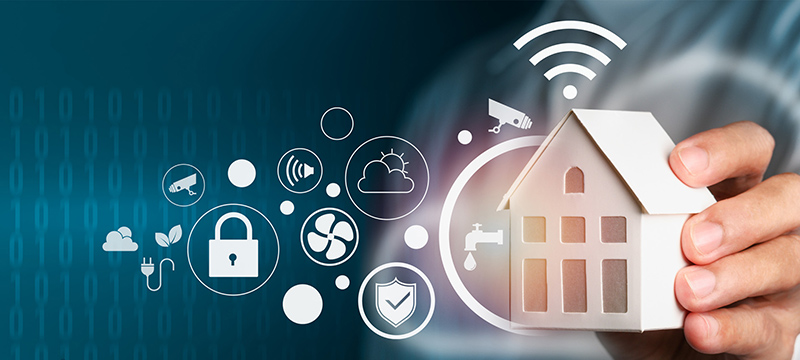
The Internet of Things is no longer a buzzword but a reality that is redefining the way we live and interact with our environment. It ranges from smart lighting systems to self-regulating traffic solutions; IoT is changing the face of smart homes and cities. This interconnectivity enables real-time data sharing, ensuring efficiency and convenience. The more advanced IoT technology becomes, the more profoundly it transforms our everyday lives.
IoT technology powers smart homes, offering automation, comfort, and security through the connectivity of lights, thermostats, and appliances to a central system. Homeowners can hence regulate their environment with a tap on their smartphone.
Perhaps the biggest benefit of IoT in smart homes is energy efficiency. Smart thermostats such as Nest or Ecobee monitor usage patterns and optimize heating and cooling while saving energy and associated costs. Similar to IoT-enabled lights, these can be configured to only turn on when a person is present to avoid unnecessary wastage of electricity.
IoT has transformed the security of homes. Smart locks can be controlled from anywhere, and doorbell cameras offer live feeds; IoT ensures a safe living space. The devices also can send alerts in real-time so that the homeowners can react promptly to any threats.
IoT has made entertainment more immersive and accessible. A smart TV can be interconnected with speakers and a home theater to give a unifying experience. Voice assistants from Amazon Alexa to Google Home also allow users to control these devices hands-free, which brings home entertainment seamlessness and convenience.
IoT devices will monitor the vital signs of an elderly resident, remind users of medication intake, and alert caregivers in case of emergencies. Such aspects of IoT bring comfort and safety to the user and his or her family.
IoT is not just restricted to homes; it goes further, boosting the development of cities with maximum efficiency in every way. Hence, IoT is much emphasized in this plan for the development of Smart cities to govern, reduce environmental burden, and improve lifestyle and quality.
IoT-enabled traffic systems can analyze real-time data to alleviate congestion. Sensors and cameras placed at intersections collect information to optimize traffic lights, reducing bottlenecks. Smart parking solutions allow drivers to locate available spaces through mobile apps, saving time and fuel.
Cities are implementing IoT solutions for waste management through smart bins with sensors. These bins notify the waste collection teams when they are full, ensuring efficient pickups and minimizing unnecessary trips.
IoT enables proper resource management, especially in water, electricity, and gas utilities. The provision of use data in real-time for providers and consumers can help optimize usage of the resource as well as minimize leakages or other problems before they occur.
IoT greatly impacts public safety in smart cities. Surveillance cameras, sensors, and other connected devices enable the government to monitor public places, react quickly to emergency situations, and even forecast crimes with the help of AI-powered analytics.
IoT devices measure environmental conditions like air quality, temperature, and noise pollution. These metrics will help city planners come up with policies to enhance urban livability and sustainability.
Although the benefits of IoT adoption are numerous, there are several challenges associated with it.
The more devices connected, the bigger the issue in terms of data security. It can be very dangerous if personal or municipal data is accessed without proper authorization. According to a stock screener, many technology companies are investing heavily in cybersecurity to avoid these risks.
The IoT solutions require high initial investment in hardware, software, and infrastructure. For cities, it often requires getting funding and budgeting.
Different manufacturers are creating IoT devices, and hence, interoperability across the platforms is required. Standardization of protocols is necessary to allow easy integration.
IoT systems require frequent updates and maintenance. For large-scale projects like smart cities, scalability can be a logistical challenge.
IoT future promises increased interoperability and invention. As innovation deepens, we see the following futures:
This will make an IoT system “smart” and self-adaptive by virtue of its artificial intelligence capabilities. Devices in such a setup will not merely collect data; they will collect and analyze it to make decision-making autonomous.
With the advent of 5G networks, IoT devices will be faster and have lower latency, which will make them more efficient and responsive.
IoT will be at the center of sustainability. From the management of renewable energy in homes to carbon footprint monitoring in cities, IoT will be driving solutions that are conscious of the environment.
IoT devices will become increasingly personalized, catering to individual preferences and habits. For instance, smart homes could adjust settings automatically based on a user’s routine.
IoT is undoubtedly a game-changer for both smart homes and cities. Its ability to connect devices, analyze data, and automate processes is transforming everyday living and urban management. However, its full potential will only be realized by addressing challenges like security and interoperability.
The further development of IoT technology will increasingly influence our lives by making homes smarter, cities more efficient, and the world a more connected place. Whether for convenience or sustainability, IoT is at the forefront of a technological revolution that’s here to stay.
About The Author





More Stories
Advancing the Safer Internet Initiative for Everyone
Youth in Action: Contributing to a More Connected and Inclusive Digital Future
Advancing a Connected Future for Indigenous Communities