

overcast clouds
Geometric Scheduling Framework Cuts Task Failures by 20x in Peer-Reviewed Trials
A research team from Tsinghua Shenzhen International Graduate School has developed a groundbreaking edge computing solution that addresses the core challenge of smart city infrastructure: processing massive IoT data flows with uncompromising reliability. Published in IEEE Internet of Things Journal, their geometrised scheduling framework demonstrated a 4.72% task deadline violation rate in large-scale simulations – 20 times more reliable than conventional methods.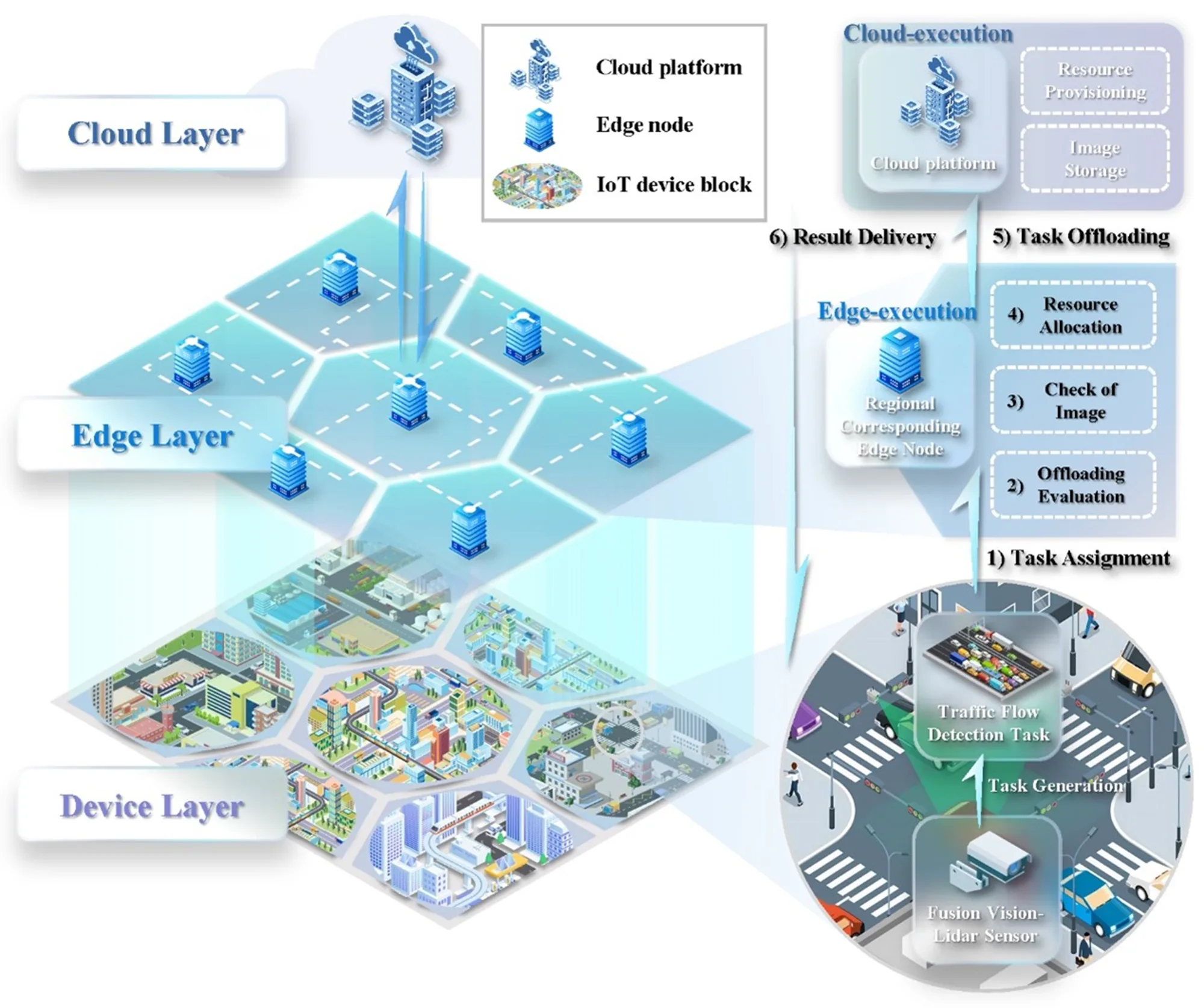
At the heart of the breakthrough lies a novel approach inspired by urban spatial organisation. The team’s framework dynamically partitions cities into adaptive computational zones using weighted Voronoi diagrams, mirroring how urban planners allocate resources geographically. In controlled tests with Melbourne’s traffic network data:
The system’s second innovation applies spatial stacking principles from puzzle games to computational tasks. Critical operations like emergency vehicle tracking receive prioritised pathways, while non-urgent data fills processing gaps. This approach:
A self-learning component analyses historical traffic patterns to predict resource demands, enabling: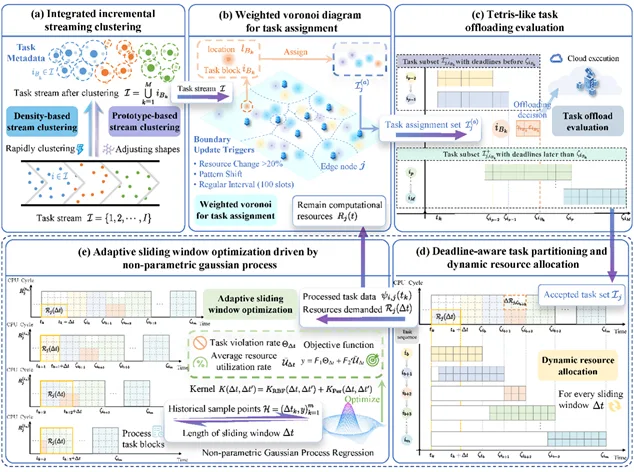
The technology has shown promise in two key domains:
Supported by China’s National Key R&D Program (2022YFC3801100), the team is now developing open-source tools for municipal IoT management and adapting the framework for port logistics optimisation.
“Cities need computational systems that grow organically with their needs,” said Prof. Zhengru Ren, senior project lead. “This isn’t just about faster processing – it’s about creating resilient digital infrastructure.”
Peer-reviewed paper:
https://ieeexplore.ieee.org/document/10820112
Feature Image by Tumisu from Pixabay
Sign up to get LondonDaily.News delivered to your inbox.
It’s a London thing…
About The Author


More Stories
Why Internet Infrastructure Decisions Rarely Stay Localized
A Safer Internet Starts with Taking Action: Introducing the Online Trust and Safety Hub
Introducing a New Chapter for the Internet Society Fellowship Program