
Sunny. High 72F. Winds SSW at 5 to 10 mph..
Clear skies. Low around 50F. Winds light and variable.
Updated: February 3, 2025 @ 10:32 am
The Red & Black publishes opinions from a number of contributors and staff columnists. Their opinions do not reflect the opinions of the editorial staff. The editorial staff is in no way involved with the opinion pieces published with the exception of editorials. Editorials are written by the editorial board consisting of the opinion editor, managing editor and editor-in-chief. Editorials are clearly marked EDITORIAL at the beginning. This article is from Contributor Mattea Brown, a freshman Journalism and classics major.
“School kills artists.”
One of my best friends said this to me when I told her that I struggled to balance creative projects and high-stress academia.
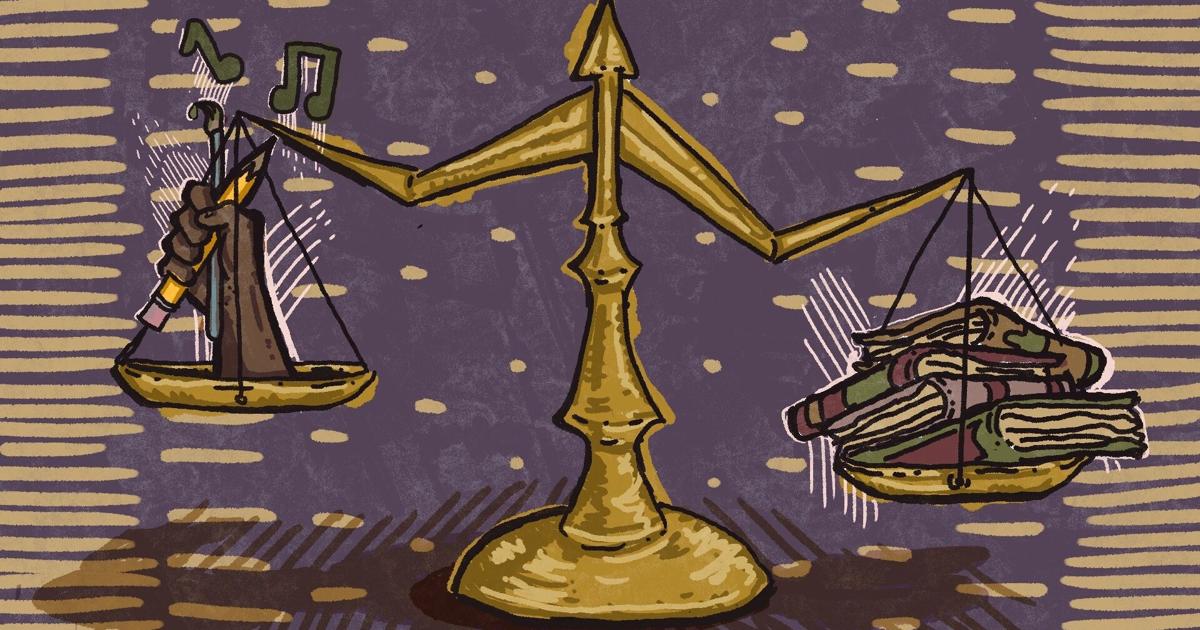
I didn’t disagree with her, especially at a school that places such an intense emphasis on research over creativity. While research is essential for grasping the complexities of your craft, it holds little value for creatives unless it’s put into practice. While the research I have completed for my major in classical culture and minor in English benefitted my writing skills, it never compared to finishing a creative work. Research for the creative is not an end, but a means to an end. If we can not apply it, what’s the point?
The creative person has one goal in mind when entering college: make as many quality creative projects as possible. Sadly, many times they discover that high expectations create burnout and lack of inspiration. But there is a way to find balance and reach success. While I will be using creative writing examples, this also applies to other creative majors like artists and journalists.
Many people discover that a community focused in their field gives them support and encouragement. UGA’S campus has a variety of clubs including the UGA Creative Writing Club where members participate in round-table discussions, workshops, and quiet write-in times. Another is the Industry, UGA’s Entertainment and Media Studies club, open to all majors and grades and is geared toward entertainment business, production and scriptwriting. Writing for The Red & Black is also an excellent opportunity to expand non-fiction writing skills.
Pursuing a creative degree takes courage and is challenging enough on its own—doing it alone makes it even harder. In spaces like these, you can connect with others who share your interests and provide valuable feedback on your work. Networking is essential when building a creative career. It allows you to exchange ideas with fellow creatives, forge friendships and work toward shared goals.
There is nothing wrong with majoring in English. Stephen King studied english in his undergrad and Brandon Sanderson got a Master’s in creative writing. Both are insanely productive and revolutionary in their genre. However, Tolkien famously wrote “Lord of the Rings” as a linguistics professor, utilizing his skills to develop a language for his fantasy novel.
In the end, a degree doesn’t define your success. The products produced during your time in college do. What can you put on your resume? What kinds of work can you submit to undergraduate journals? Pick a degree that will help you produce.
If you feel strongly against majoring, at least minor. One of the best degrees a writer could have is psychology. Psychology not only applies to developing characters, but understanding your audience. I would encourage anyone who writes in a specific genre to pursue a degree that compliments that. Pursuing a non-creative degree can help you balance your curiosity and passions while reducing the risk of burnout. You can leverage the knowledge from your major to further develop and refine your writing skills.
If you want to maximize your writing efforts while in your undergrad at UGA, I discovered a process that will allow you to take almost all of the creative writing classes offered. If you take these classes you will develop diverse skills in novel writing, screenwriting, playwriting and poetry.
Step One: Double major. Choose a degree that helps supplement the genre you write in; then double-major in either entertainment and media studies or journalism. Entertainment and media studies has classes in writing for entertainment media, screenwriting and writing for television. I suggest journalism only for those who want to pursue writing real-life stories, produce documentaries or ghost-write memoirs etc.
Step Two: Minor in English and theatre. If you minor in English you can focus in creative writing by taking introduction into creative writing, intermediate creative writing, poetry and additional classes that pique your interest. But theatre? You say. Yes theatre. The UGA theatre minor offers basic dramatic writing, dramatic writing one, dramatic writing two, dramaturgy and producing the new script.
Now that’s a lot of writing.
Step Three: Attend the creative clubs. Attend these clubs regularly so you can maintain your interests and gain new perspectives. It’s easy to get burnt out and listening to others can help inspire your next project.
Bonus Step: Honors students. If you’re a part of the Morehead Honors College, you can request to do an additional project for class. If it is not a creative writing class, you can ask your professor to approve a creative project. Many times professors will allow you to write a book or short story if it pertains to the course work. This applies to any other creative major/minor class.
Balancing creative work with your major can be tough, especially if you’re also working part-time. I’ve found it helpful to pursue a non-creative major that complements and inspires your creative process while minoring in your artistic passion. Overloading on creative classes can often lead to burnout, so it’s important to balance them with research-based courses. Overall, this approach has been incredibly rewarding, and participating in extracurricular clubs has allowed me to connect with others on a similar journey.
The way people cut, style or color their hair is a form of outward self-expression. In professional settings, employees may have certain standards or expectations that they must meet, varying from the way that they usually wear their hair.
The Red & Black compiles a weekly roundup of shows and events for the upcoming weekend. …
There are a number of ways to learn more about and become involved in the local art scenes, from free calligraphy classes to performance art workshops.
Read the digital edition of the newspaper
The Red & Black is a nonprofit, independent news organization that serves the Athens and University of Georgia communities as well as trains college students for careers in the news business.
Your browser is out of date and potentially vulnerable to security risks.
We recommend switching to one of the following browsers:
About The Author



More Stories
Closing AI’s Language Gap: Why the Internet Society Is Joining a Global Commitment
What Happens When a Community Wires Itself: Lessons from Colville on the Power of Indigenous-Led Connectivity
From Curiosity to Confidence: CodificaKids Builds Digital Trust in Rural Brazil