
“It’s about minutes.”
This is an exceptionally important story, readers. If you have a few minutes on your end to read through, I’ll explain what this is all about.
Over the past couple of years, IoT Evolution World has dedicated ample coverage to Dryad Networks and the Internet of Things-powered solutions it devises to thwart the escalating threat of wildfire disasters. Read here to learn about its large-scale, wireless (and solar-powered) network of sensors, and here for a funding-focused update.
But again, today’s story goes much deeper.
After all, “it’s about minutes.”
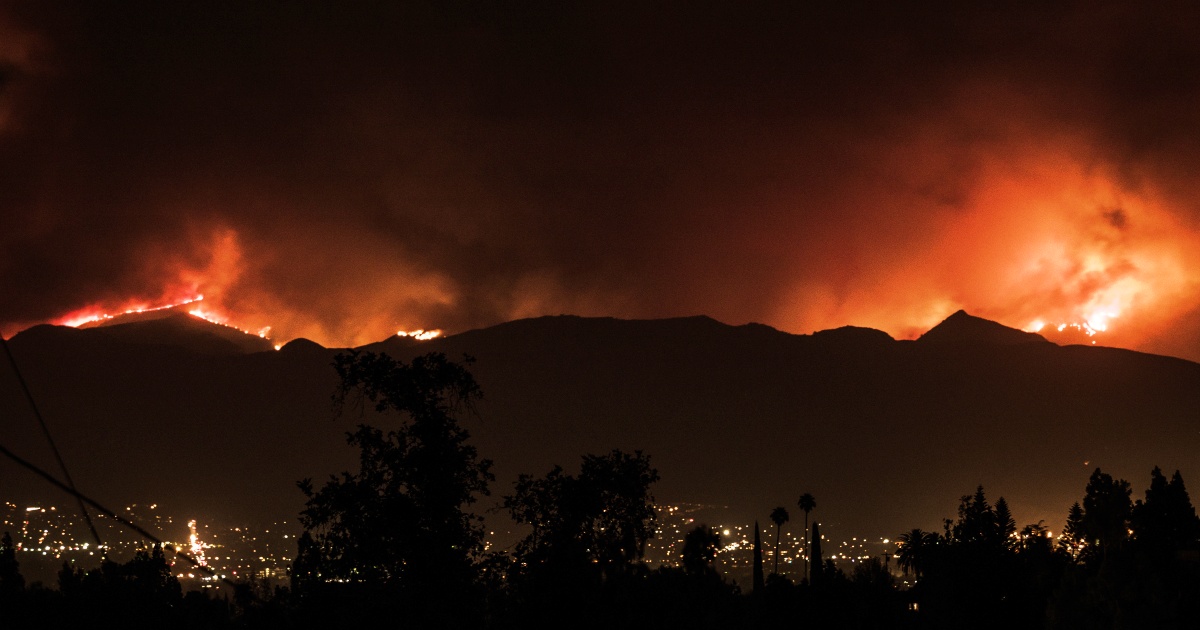
The Los Angeles wildfires have brutally razed communities — entire lives and livelihoods — to the very ground. Though more contained now than earlier this month, there’s still an ongoing disaster as fire victims seek answers about cleanup timelines and rebuilding. (They’re also urgently fighting against abhorrent rent spikes, but that’s a harrowing topic for another article.)
So, what is still going on? What actions are within reach?
I discussed these points in great detail during another interview with Carsten Brinkschulte, CEO of Dryad Networks. (Peruse our first interview here.)
“The tragedy is not over,” Brinkschulte affirmed. “We are not denying how tirelessly responders have worked (and are working) to combat the danger, but the initial containment of these wildfires-turned-conflagrations isn’t a conclusion; it is still the beginning.”
“We must face the seriousness in front of our eyes. Experts believe that, even if there were a fully stocked fire truck in every Angeleno’s driveway, the spread still wouldn’t have been preventable. The extreme winds blew embers en masse faster than any on-the-scene team could’ve reasonably handled.”
“If there is anything that could’ve potentially stopped it,” Brinkschulte stated, “it would’ve needed to be set in motion long before it reached the nigh-unstoppable point we all saw on the news.”
That’s where Dryad Networks enters the fray. Brinkschulte laid out the three pillars of Dryad’s approach to ruinous wildfires:
Prevention. Detection. Resilience.
“We must ask ourselves, ‘What will be the next LA wildfire? The next catastrophe?’ Just look at the bare-bones term ‘wildfire season’ for California, for example. Historically, this typically lasts from June through October…Yet, it’s January. To us, this signals the start of a ‘wildfire year’ trend, which is downright horrifying.”
“But as ‘local’ or previously ‘isolated’ problems recur and broaden in scope, as they become unignorable, and as official terms change in the face of such crises,” Brinkschulte expressed, “we, too, must change.”
He’s right. This is no longer a once-in-a-generation catastrophe.
“So, where do we start?” I asked.
“Active prevention and detection,” Brinkschulte answered. “We need on-tree sensors that detect a wildfire at its smoldering stage. Landowners and municipalities must have the willingness to put these in place. This includes wildfire sensors, sound sensors, and people sensors.”
“Each of these LoRa-enabled sensors are made up of sensor and radio interfaces, microprocessors, supercapacitors, memory and solar cells, but there are additional distinctions of note — the sound sensors have microphones, and the people sensors feature infrared and vibration-sensing, as well as Wi-Fi capability. When properly utilized, even under extreme conditions, these will be able to support early-stage monitoring for wildfire-susceptible areas to secure people’s safety and radically reduce time from ultra-early detection to extinguishing.”
So again — say it with me now, readers — “it’s about minutes.”
Brinkschulte continued. “Ultra-early detection leads to protecting assets and preventing financial damages, reducing insurance payments, dramatically reducing firefighting costs and, most importantly, saving lives.” 
“Bigger ‘guns’ — tankers, planes, etcetera — are valuable, yes. But when fires are already violently raging at hellish pace, proving climate change will continually up the ante, we must invest in and enact real adaptation responses, because this will happen again.”
I followed up with a question. “Let’s say Dryad was handed a blank check today,” I asked. “What would you prioritize first?”
“We’d immediately place sensors in every appropriate location,” Brinkschulte said, without missing a beat. “We would build entire defense barriers of sensor systems around vulnerable wildlands and around every town and city in harm’s way. We’d distribute hundreds of thousands, if not millions, of these low-cost sensors that can rapidly detect when even the smallest fires ignite.”
“We’d also advocate for prescribed burning,” he said. “When controlled, we can learn more about the bushes, grass, and other types of brush that become ‘insta-fuel’ for conflagrations.”
Brinkschulte then informed me about Dryad’s “Project Florian: The SpaceX of Wildfires.” This definitely goes part-and-parcel with as-early-as-possible detection efforts and the building of sustainable, resilient practices. (And for context, this codename “Florian” is clever; the word itself denotes “blossoming” or “blooming,” which is what we’d hope forests and surrounding communities are able to bounce back with following devastation.)
“The vision of Florian is to detect and extinguish a wildfire within 10 minutes, if not sooner. Florian represents a next-generation fire suppression system, featuring AI-driven drones that can navigate dense forest canopies and extinguish fires with acoustic technology, i.e. sonic cannons.”
With this info in mind, I don’t think the following is a hot take: Brinkschulte is clearly the leader Dryad Networks deserves. I listened to him detail how the autonomous drones would sit in permanent, strategically positioned hangers in a “pod” of sorts; like an IoT acorn. With Dryad’s software that responds to events (detected by their Silvanet sensors), the drones would receive the distributed geolocation data, the pod(s) would open, and the drones dispatched to that location would be able to suppress the flames until further support arrived on scene.
“This is our new reality, and it’s truly about mere minutes,” Brinkschulte concluded with both deep passion and a heavy sigh. “We must invest in proper prevention, detection, and resilience in order to confirm that areas can indeed become ‘fire-safe’ and not merely ‘fire-susceptible, but safe-for-now’ zones. The need to accelerate this development is more pressing today than it has ever been.”
As wildfires devastate (irrevocably so, it feels like, in the case of Angelenos), we are reminded that this is a global issue. Reactivity isn’t viable in 2025. Climate change is real, proactivity is the mission, and IoT innovators like Dryad Networks are continuing forward.
Learn more about real-world innovations like these at IoT Evolution Expo 2025, which will be taking place from February 11-13 in Fort Lauderdale, Florida. Part of the #TECHSUPERSHOW experience, this event combines educational conference programming with a robust exhibit hall, networking events and other activities, bringing together buyers and providers of business technology products and services that are critical to IoT.
Editor
IoT Evolution World sat down again for an interview with Carsten Brinkschulte, CEO of Dryad Networks. Read our story to learn about the company’s IoT-…
At IoT Evolution Expo 2025 (part of the #TECHSUPERSHOW experience that’s taking place from February 11-13 at the Broward County Convention Center in F…
At IoT Evolution Expo 2025 (part of the #TECHSUPERSHOW experience that’s taking place from February 11-13 at the Broward County Convention Center in F…
Soracom, Inc., a globally trusted provider of advanced IoT solutions, officially announced both the commercial launch of its iSIM and its iSIM-compati…
At the upcoming IoT Evolution Expo 2025 (part of the #TECHSUPERSHOW experience that’s taking place from February 11-13 at the Broward County Conventio…
Sing up to receive our updates and other IoT Evolution news!
© 2025 All Rights Reserved
About The Author





More Stories
Advancing the Safer Internet Initiative for Everyone
Youth in Action: Contributing to a More Connected and Inclusive Digital Future
Advancing a Connected Future for Indigenous Communities