

 Kevin Mwangi
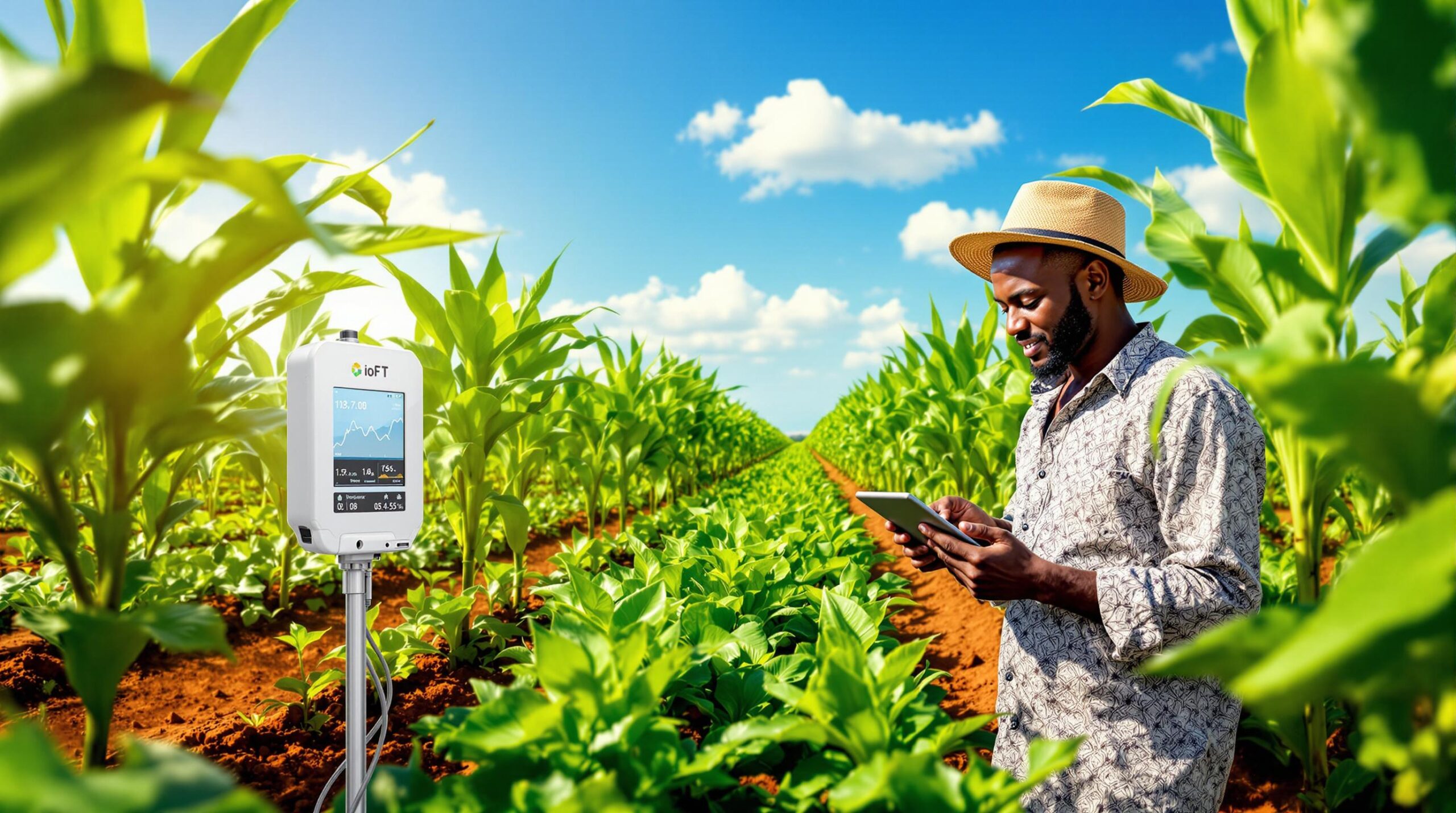
IoT sensors are transforming African farming by addressing key challenges like low yields, water scarcity, and crop diseases. Here’s how they help:
IoT is revolutionizing farming in Africa, making agriculture more efficient and sustainable.
IoT sensors play a big role in modern farming by gathering real-time data on things like weather, soil, and crop health. This data helps farmers make better decisions and improve their practices.
African farms commonly use several types of IoT sensors, each designed for specific tasks:
These sensors don’t just measure – they provide valuable insights that can transform farming outcomes.
The data from these sensors directly influences crop productivity. According to experts, IoT technology addresses critical challenges like food security while also creating financial opportunities for farmers.
"IoT serves both as a source of food security and a commercial opportunity. It provides income and meets domestic food needs", says Theofrida Maginga from the African Centre of Excellence in Internet of Things at the University of Rwanda.
For IoT sensors to deliver real value, they need to work seamlessly with farm systems. These sensors gather data from the environment and crops, send it through networks like LoRaWAN (ideal for rural areas due to its long range and low power usage), process it in the cloud, and display insights on user-friendly dashboards for farmers.
The African Centre of Excellence in IoT has created systems tailored to the region’s farming needs. These systems have proven especially useful in early disease detection, helping farmers save up to 50% of crops that might otherwise be lost to disease [1].
Installing IoT sensors on farms involves thoughtful planning and precise placement. The goal is to identify the best spots based on factors like soil type, terrain, and how crops are distributed.
Here’s how you can install soil moisture sensors:
1. Site Selection and Preparation
2. Sensor Installation
3. Calibration
Once the sensors are set up, they need to be connected to a dependable network for smooth data collection and transfer.
A strong network connection is essential for IoT systems in farming. In rural areas, LoRaWAN is a cost-effective option with a long range. In semi-urban and remote areas, cellular and satellite networks are better suited.
The Agri-IoT project combined LoRaWAN and cellular networks to provide reliable connectivity across various farming regions [2].
Once the sensors are online, the focus shifts to turning the collected data into useful insights through easy-to-use dashboards.
Dashboards allow farmers to access real-time data, including:
"The key to successful IoT implementation is making data accessible and understandable to farmers. Our dashboard system has helped farmers reduce water usage by 30% while improving crop yields", says Theofrida Maginga from the University of Rwanda [1].
To protect sensitive data, use encrypted communication and robust security measures. In areas with limited connectivity, edge computing can process data locally, cutting down on bandwidth requirements.
IoT sensors offer farmers real-time data on their soil and crops, tracking essential metrics to improve decision-making. For instance, most crops thrive when soil moisture is between 50-75% of field capacity, and soil temperature ranges from 15-25°C – data that IoT sensors can monitor continuously.
Key factors farmers should keep an eye on include:
Smart irrigation systems powered by IoT data are transforming agriculture. In South Africa, precision irrigation reduced water use by 30-50% while maintaining or even boosting yields in maize and soybean farms. This approach ensures water is used efficiently without compromising productivity.
Similarly, IoT-enabled fertilization has delivered impressive outcomes. In Kenya, farmers cut nitrogen usage by 25%, increased yields by 15%, and reduced water consumption by 30%. These systems not only conserve resources but also enhance crop quality and quantity.
IoT data also helps farmers decide the perfect time to harvest, ensuring they maximize both yield and quality.
In Nigeria, cassava farmers using IoT alongside machine learning saw a 20% reduction in post-harvest losses and a 15% increase in income. In Rwanda, coffee farmers leveraging similar systems boosted premium-grade coffee production by 50%.
These systems work by combining data from soil sensors, weather conditions, and crop maturity. To get the best results, farmers can integrate this data with local weather forecasts and market trends to pinpoint the ideal harvesting windows.
Machine learning plays a key role here, analyzing historical and real-time data to predict the best times to harvest. This approach is reshaping farming practices, making every stage – from planting to harvesting – more efficient and productive.
Connectivity remains a major hurdle for IoT adoption in African agriculture. In sub-Saharan Africa, only 46% of the region is covered by 4G networks, compared to the global average of 88% [1]. However, innovative solutions are making a difference. For instance, Liquid Telecom has deployed LoRaWAN networks across 22 counties in Kenya, enabling IoT applications even in areas with poor cellular coverage [4].
Other connectivity solutions include:
Once connectivity issues are tackled, the focus shifts to equipping farmers with the knowledge to use and maintain these technologies effectively.
The Kenya Agricultural and Livestock Research Organization (KALRO) has developed a successful model for educating farmers by blending IoT training with traditional farming practices [2].
"Empowering farmers with knowledge is as critical as the technology itself." – Dr. Abebe Chekol, Director of Agricultural Innovation, African Development Bank, AgriTech Africa Conference 2024
A well-rounded training program includes:
While training is essential, making IoT accessible also depends on affordable financial solutions.
The One Acre Fund has connected more than 1.5 million farmers with agricultural technologies as of 2023 [5]. To make IoT adoption feasible, several financing options are proving effective:
For example, Hello Tractor‘s IoT platform has increased productivity by 40% and reduced costs by 35% for 250,000 farmers in Nigeria. Additionally, the African Union’s Digital Transformation Strategy (2020-2030) supports these efforts by working toward universal access to digital technologies [3].
IoT sensors are driving data-focused farming across Africa, leading to noticeable gains in crop yields and better resource use. For example, smart systems have cut water usage by 30% and reduced pesticide application by 60%, all while maintaining crop yields [3]. This shows how these technologies can boost both productivity and conservation efforts.
In Nigeria, cassava farmers have seen yields grow by 15-25% thanks to IoT-powered soil monitoring systems [6]. Similarly, Rwanda’s coffee industry has benefited from integrating machine learning into farming practices, showcasing how technology can reshape agriculture.
These advancements align closely with the African Union’s Digital Transformation Strategy, making IoT adoption a key driver for future agricultural progress. By leveraging existing networks like LoRaWAN and proven tools such as soil monitoring systems, Africa can continue to advance sustainable farming methods across the continent.
See more
Trending
Trending
Trending
 Kevin Mwangi
 Grace Ashiru
 Sylvia Duruson
Sylvia Duruson
Grace Ashiru
Sylvia Duruson
Your email address will not be published.
Hot
Kevin Mwangi
Hot
Kevin Mwangi
Hot
Kevin Mwangi
Hot
Grace Ashiru
Trending Hot
Kevin Mwangi
Hot
Grace Ashiru
Don't worry, we don't spam
Don't worry, we don't spam
The hottest and most popular news, stories, interviews, press releases and opinions about startups, entrepreneurs and new technologies in Africa.
Don't worry, we don't spam
© 2016-2020 – Tech in Africa – Startup news, stories and interviews from in Africa
Enter your account data and we will send you a link to reset your password.
Public collection title
Private collection title
Here you'll find all collections you've created before.
About The Author

More Stories
Community-Centered Connectivity Initiatives Earn Viddy Awards Recognition
Zombie IXPs: The Four Types of Exchanges That Refuse to Die, but Fail to Live
The Shift in Peering Threatening the Internet’s Foundations