
Click here to sign in with or
Forget Password?
Learn more
share this!
Share
Twit
Share
Email
January 22, 2025
This article has been reviewed according to Science X’s editorial process and policies. Editors have highlighted the following attributes while ensuring the content’s credibility:
fact-checked
trusted source
written by researcher(s)
proofread
by Tinashe Sithole, The Conversation
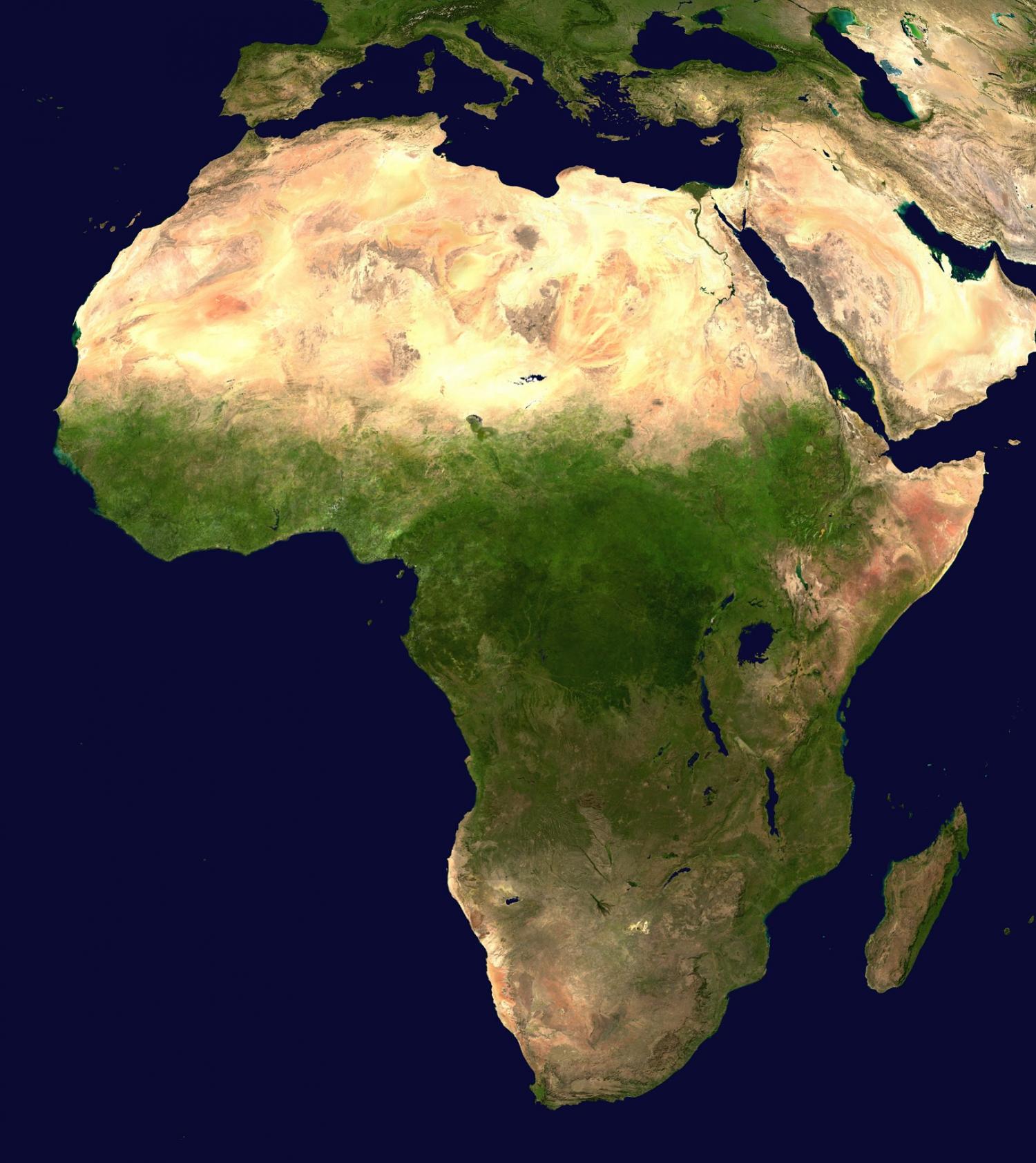
The vision of a “borderless Africa” is one of unity and shared prosperity for the continent. It is rooted in the ideals of the pan-Africanist movement.
There are contradictions, however, between those ideals and the realities of governance on the continent.
Internal divisions, structural poverty, poor governance and competing national interests have undermined pan-Africanism over the decades. Political and economic instability are on the rise. The escalating conflict in Sudan has the potential to destabilize neighboring countries. There is thus an urgent need to revive pan-Africanism to foster peace and unity.
Historically, pan-Africanism began in earnest with the first Pan-African Conference in London, in 1900. Influential leaders and movements championed it, notably in the wave of African liberation between the 1950s and 1970s.
The formation of the Organization of African Unity in 1963 marked a critical step towards uniting Africa. Leaders committed to creating a United States of Africa. But they often undermined unity through domestic authoritarian practices, power struggles and governance failures.
My academic research has examined domestic conflicts that have affected many parts of Africa. It has analyzed ethnic conflicts in Sudan, Rwanda and Kenya, state-sponsored election violence and coups in Lesotho and Mauritania. It shows that political intolerance, bad governance and social marginalization fuel instability and conflict within African countries.
My latest research paper explored pan-Africanism and Africa’s developmental challenges. I argue that unity can only be realized if African states first address critical domestic challenges.
Many regional initiatives emphasize cross-border integration and development. The African Union’s Agenda 2063, a framework for socio-economic transformation, is one.
Agenda 2063 envisions a peaceful, prosperous and globally competitive Africa. It advocates for projects focusing on infrastructure, trade and empowerment of youth and women. But bad governance and socio-economic inequality within individual nations undermines these ambitions.
For example, the poor governance of mineral resources in the Democratic Republic of Congo has fueled violent conflict. More than 5.6 million people are internally displaced. One million are exiled in neighboring countries. Armed groups exploit the country’s mineral resources, worsening instability and undermining regional integration by creating cross-border humanitarian crises.
To bridge the gap between the ideals and practice of pan-Africanism, African leaders must commit to:
Discover the latest in science, tech, and space with over 100,000 subscribers who rely on Phys.org for daily insights. Sign up for our free newsletter and get updates on breakthroughs, innovations, and research that matter—daily or weekly.
The goals of pan-Africanism are at odds with the desire of political elites to maintain power in their individual countries. They see open markets as a threat to their authority. The African Continental Free Trade Area shows this tension. It officially entered into force on 30 May 2019, and trading under its framework began on 1 January 2021.
However, Nigeria, among other countries, initially delayed participating. It feared that cheaper imports would harm domestic industries and displace local jobs.
Agricultural sectors in less industrialized African nations are particularly vulnerable. They fear that competition from more industrialized African economies would hurt local farmers and deepen inequalities. For example, Botswana and Namibia banned South African vegetable imports in December 2021.
Botswana said the ban was meant to be good for local farmers and the economy. But it restricts free trade, creates cross-border supply barriers, and puts national interests first. This blocks regional integration goals. Botswana’s new government has begun lifting the ban.
Structural poverty, governance failures and ethnic politics in some countries are barriers to national unity. Political power is contested along ethnic lines, deepening divisions.
For example, former Zimbabwean president Robert Mugabe was celebrated as a pan-African leader for his strong stance against western imperialism. His legacy, however, shows he undermined elections through state-sponsored violence.
He also weakened national unity by eroding democratic processes. Political persecution and economic collapse on his watch fueled a refugee crisis, causing resentment and tension in southern Africa.
Regionalism has been championed as a pathway to pan-African unity. Yet its benefits are uneven. The Economic Community of West African States has successfully promoted stability and peace and mediated conflicts in Liberia and Sierra Leone.
However, political instability, unequal resource distribution, corruption and weak infrastructure hinder broader progress. This includes expanded trade networks and stronger regional governance.
Mozambique, for example, is experiencing post-election unrest. And a deadly insurgency in the northern Cabo Delgado province has raged since 2017. These examples highlight how Mozambique’s political leaders have failed to address local grievances, instead fueling violence and conflict for their benefit. This is at the expense of domestic unity, peace and development.
A belated military intervention by the Southern African Development Community in July 2021 failed to end the insurgency.
A stable, inclusive and equitable domestic foundation is the basis of regional integration.
For example, countries could use a framework that makes decision making and resource distribution more inclusive. This could promote national cohesion.
Practical action to meet governance challenges together would strengthen pan-Africanism.
One approach could be to establish a “cross-border unity and action forum” to help communities, business leaders and civil society bodies share best practices. They could also develop regional projects and take on common challenges.
Lastly, a “pan-African local action network” could connect grassroots bodies, community leaders and small business forums across Africa.
Local entrepreneurs in agriculture or technology could work with counterparts in other countries through exchange programs. They could establish regional business incubators, or simplified cross-border trade agreements. These connections between citizens would drive unity, shared accountability and solidarity.
Pan-Africanism is often used to deflect responsibility for domestic failures while offering superficial solidarity.
Without addressing internal governance crises, structural poverty and ethnic divisions, African states will remain fragmented. If they cannot unite their own nations, can they ever hope to unite as a continent?
As Kwame Nkrumah, Ghana’s first prime minister and president, stated:
“If we are to remain free, if we are to enjoy the full benefits of Africa’s rich resources, we must unite…”
Provided by The Conversation
This article is republished from The Conversation under a Creative Commons license. Read the original article.
Explore further
Facebook
Twitter
Email
Feedback to editors
2 hours ago
0
2 hours ago
0
4 hours ago
0
22 hours ago
0
23 hours ago
0
21 minutes ago
22 minutes ago
27 minutes ago
30 minutes ago
30 minutes ago
30 minutes ago
31 minutes ago
33 minutes ago
33 minutes ago
38 minutes ago
40 minutes ago
4 hours ago
4 hours ago
8 hours ago
12 hours ago
12 hours ago
More from Art, Music, History, and Linguistics
Oct 3, 2024
Oct 29, 2024
Mar 20, 2018
Dec 3, 2024
Oct 9, 2024
Nov 5, 2024
Jan 21, 2025
Jan 21, 2025
Jan 21, 2025
Jan 21, 2025
Jan 20, 2025
Jan 20, 2025
The vision of a borderless Africa aims for unity and prosperity but faces challenges from internal divisions, poor governance, and competing national interests. Political and economic instability, such as the conflict in Sudan, further complicate integration efforts. While initiatives like Agenda 2063 promote socio-economic transformation, issues like governance failures and socio-economic inequality hinder progress. Resistance to open markets and uneven benefits of regionalism also obstruct pan-African unity. Addressing domestic challenges and fostering equitable development are crucial for achieving continental integration.
This summary was automatically generated using LLM. Full disclaimer
Use this form if you have come across a typo, inaccuracy or would like to send an edit request for the content on this page. For general inquiries, please use our contact form. For general feedback, use the public comments section below (please adhere to guidelines).
Please select the most appropriate category to facilitate processing of your request
Thank you for taking time to provide your feedback to the editors.
Your feedback is important to us. However, we do not guarantee individual replies due to the high volume of messages.
Your email address is used only to let the recipient know who sent the email. Neither your address nor the recipient’s address will be used for any other purpose. The information you enter will appear in your e-mail message and is not retained by Phys.org in any form.
Get weekly and/or daily updates delivered to your inbox. You can unsubscribe at any time and we’ll never share your details to third parties.
More information Privacy policy
We keep our content available to everyone. Consider supporting Science X’s mission by getting a premium account.
Medical research advances and health news
The latest engineering, electronics and technology advances
The most comprehensive sci-tech news coverage on the web
About The Author

More Stories
Community-Centered Connectivity Initiatives Earn Viddy Awards Recognition
Zombie IXPs: The Four Types of Exchanges That Refuse to Die, but Fail to Live
The Shift in Peering Threatening the Internet’s Foundations