
Radio Schuman
This is Radio Schuman, your new go-to podcast to spice up your weekday mornings with relevant news, insights, and behind-the-scenes from Brussels and beyond.
No Comment
No agenda, no argument, no bias, No Comment. Get the story without commentary.
My Wildest Prediction
Dare to imagine the future with business and tech visionaries
The Big Question
Deep dive conversations with business leaders
Euronews Tech Talks
Euronews Tech Talks goes beyond discussions to explore the impact of new technologies on our lives. With explanations, engaging Q&As, and lively conversations, the podcast provides valuable insights into the intersection of technology and society.
Water Matters
Europe's water is under increasing pressure. Pollution, droughts, floods are taking their toll on our drinking water, lakes, rivers and coastlines. Join us on a journey around Europe to see why protecting ecosystems matters, how our wastewater can be better managed, and to discover some of the best water solutions. Video reports, an animated explainer series and live debate – find out why Water Matters, from Euronews.
Climate Now
We give you the latest climate facts from the world’s leading source, analyse the trends and explain how our planet is changing. We meet the experts on the front line of climate change who explore new strategies to mitigate and adapt.
Radio Schuman
This is Radio Schuman, your new go-to podcast to spice up your weekday mornings with relevant news, insights, and behind-the-scenes from Brussels and beyond.
No Comment
No agenda, no argument, no bias, No Comment. Get the story without commentary.
My Wildest Prediction
Dare to imagine the future with business and tech visionaries
The Big Question
Deep dive conversations with business leaders
Euronews Tech Talks
Euronews Tech Talks goes beyond discussions to explore the impact of new technologies on our lives. With explanations, engaging Q&As, and lively conversations, the podcast provides valuable insights into the intersection of technology and society.
Water Matters
Europe's water is under increasing pressure. Pollution, droughts, floods are taking their toll on our drinking water, lakes, rivers and coastlines. Join us on a journey around Europe to see why protecting ecosystems matters, how our wastewater can be better managed, and to discover some of the best water solutions. Video reports, an animated explainer series and live debate – find out why Water Matters, from Euronews.
Climate Now
We give you the latest climate facts from the world’s leading source, analyse the trends and explain how our planet is changing. We meet the experts on the front line of climate change who explore new strategies to mitigate and adapt.
If Africa can find the confidence to take sentiment out of the equation and make a business pitch that makes sense, this could well be a very profitable and peaceful four years indeed, Ivor Ichikowitz writes.
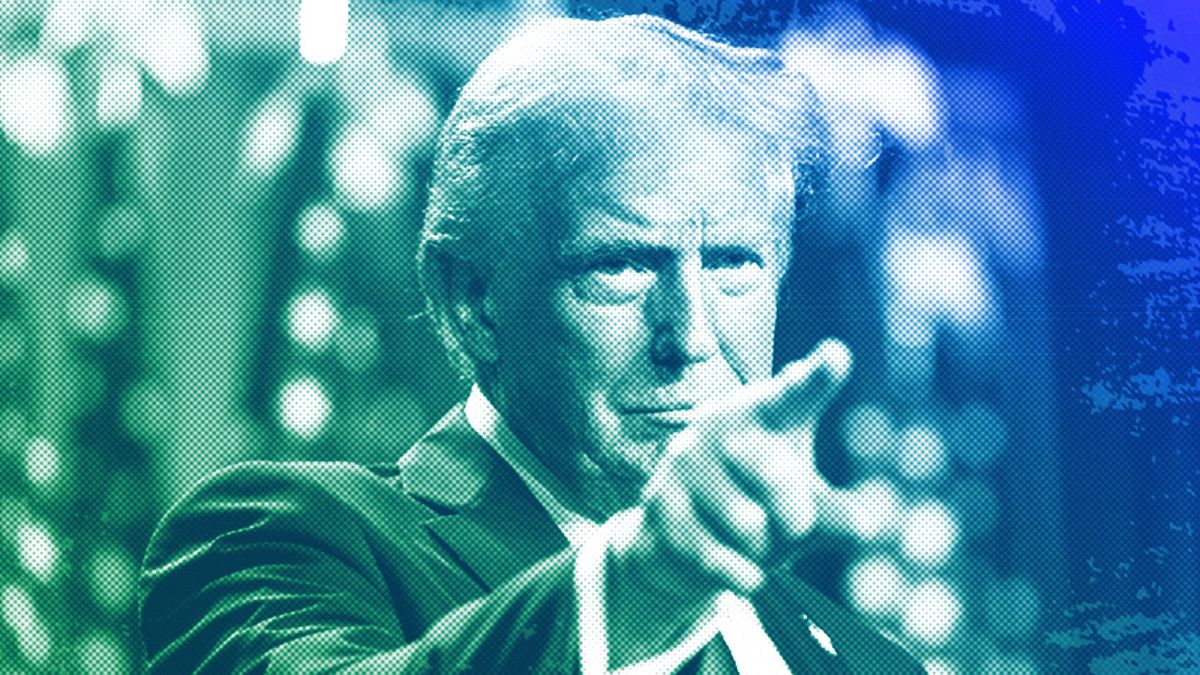
It is no overstatement to say the entire world is waiting with bated breath for the 47th president of the United States to take office and to see just what President Donald Trump will do.
Africa is especially keen — and for good reason.
The continent did not feature too highly when Mr Trump was president the last time – Indeed, his attitude towards Africa is perennially remembered through a comment that rapidly became a social media meme: sh*thole countries.
But like many things about the man who will go down in history as America’s 45th and 47th president, the only president since Grover Cleveland in 1892 to win non-consecutive terms in the White House, it’s wise to remember the context.
President Trump’s statement about Africa wasn’t a generic comment on the continent but one in response to an issue becoming an inflexion point for the entire world from the global south to the industrialised north: immigration.
Indeed, President Trump’s remarks in 2018 would find an eerie resonance, if not perhaps as publicly, among many political leaders of my own country, South Africa.
Immigration is a massive issue and especially in Africa, as subsequent editions of the unique biennial African Youth survey have shown since it was first released in 2020.
The issue is not binary, black or white (pun intended), so the solution must be more nuanced.
Ironically it is the nuances that many will ignore when approaching a Trump administration. There is no doubt that President Trump’s first term in office was disruptive, sometimes deliberately so, at other times organically. This time seems very different, the early choices of the office bearers in his administration have been a very signal statement of intent. Outside the clamour of the commentariat, there has been a real expectation that this administration will be different.
I believe the same will hold for Africa.
The continent has much to offer, from its incredible mineral and human resources – including the youngest population in the world – to its global strategic importance in a multi-polar society that sees the US jostling with China and Russia for influence.
But Africa also depends a lot on the US, especially in the form of the African Growth and Opportunity Act (AGOA) and Pepfar, which has been one of the main pillars to combating the HIV and Aids pandemic in southern Africa.
Africa needs these programs to continue, but there is a very real fear that they will be cut.
I do not believe they will. Instead, the White House will have very real and measurable expectations about the 47th administration’s return on investment.
President Trump made no secret of this when he warned in December that any de-dollarisation attempts by BRICS members would be met with punitive trade tariffs.
And there have always been expectations from the US, whether from the White House or State Department, but these have been tempered by the conventions of diplomacy and the pressures of being kind to Africa because of the century-long ravages we have borne through colonialism and post-colonial exploitation.
The Trump administration is not as burdened by the niceties of polite conversation or historical guilt — instead it is one that will be guided by its own set of principles, both domestically and on the global stage.
We know what those are; it is no longer a priority for America to play its role on the world stage, shouldering responsibilities for others when it cannot look after its own people in the manner in which it is expected.
This will have an immediate impact on the balance of trade, on the US’s re-industrialisation and, indeed, on receiving immigrants who will require US government assistance.
When the US does look beyond its borders in this administration, it will be based on relationships that make sense to the US — and provide value.
Those relationships will no longer be one-sided at the perceived expense of the American people, which of course will have significant impact on countries wishing to engage with the US.
In Africa, and South Africa in particular, this might prove difficult because of the country’s avowed policy of non-alignment, which has become an increasing point of contention with some US senators.
The war in Ukraine has been a case in point, with South Africa ostensibly seeking a resolution to the war while maintaining extremely cordial relationships with Russian President Vladimir Putin’s administration, including resolutely refusing to vote against Russia in the United Nations General Assembly.
President Trump’s accession to power — and his stated intention to end this war — might make South Africa’s prior stance very useful for the White House.
The same cannot be said for Pretoria’s position on the Middle East and especially its increasingly overt hostility to Israel, seen against Trump’s unequivocal attitude towards Hamas, effectively giving them an ultimatum via social media to release all the remaining hostages before his inauguration.
Even though these conflicts are not contiguous to Africa, the US’ impact on stopping them will be felt on the continent, especially in the case of Russia which is now the greatest arms supplier to African rulers who have dispensed with democratic processes.
I believe the Trump administration’s attitude towards Africa will ultimately be a blend of pragmatism and business sense with a leavening of altruism.
Wars cost money and lead to instability that reverberates ever outwards, across seas and ultimately to the Land of the Free as the Statue of Liberty is forced to welcome another wave of unwanted refugees.
It makes business sense to keep people in the countries where they are rather than fleeing to the US.
And the best business is the business of business itself, trade, is unsustainable in times of conflict — it is one of the reasons why President Trump’s victory was welcomed on both sides of the Middle East conflict, if not among the commentariat themselves, for the people on the ground remember a time only four years ago when peace looked like becoming a generational reality, unlike now.
People the world over, and Americans in particular, continue to make the mistake of underestimating Donald Trump. He’s a tough negotiator, but he’s a businessman. If Africa can find the confidence to take sentiment out of the equation and make a business pitch that makes sense, this could well be a very profitable and peaceful four years indeed.
Ivor Ichikowitz is an African industrialist and philanthropist.
About The Author


More Stories
Why Internet Infrastructure Decisions Rarely Stay Localized
A Safer Internet Starts with Taking Action: Introducing the Online Trust and Safety Hub
Introducing a New Chapter for the Internet Society Fellowship Program