
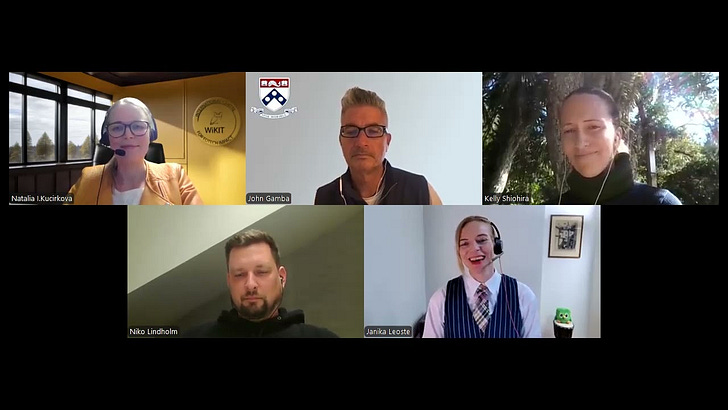
At the International Centre for EdTech Impact’s last webinar in 2024, we delved into a topic close to our core mission: partnerships between scholars and edtech producers. The webinar was a conversation among four panelists, who have each been working with knowledge brokering in edtech, and education more broadly. Here is a short summary of the key points we gathered from the webinar. If you missed it, you can watch it on our Youtube channel. Tell us your key takeaways!
Research-Driven Entrepreneurship John Gamba, Penn GSE’s first Entrepreneur-in-Residence, emphasized the integration of academic research into entrepreneurial ventures, and what this looks like for EdTech startups. He highlighted the importance of foundational research to create sustainable, impactful, and scalable solutions. However, he noted the tension between the patience required for thorough research validation and the urgency of commercialization driven by investors. His initiative at Penn GSSE focuses on connecting entrepreneurs with strategic advisors, researchers, and practitioners to foster evidence-based development. John’s reflections also touched on a paradigm shift where practice increasingly informs research, opening new opportunities for data-driven education innovation.
Building Interdisciplinary Bridges Kelly Shiohira, Director of the Global Science of Learning and Education Network, advocated for breaking down silos between learning scientists, policymakers, and practitioners. She described her work in creating interdisciplinary networks that integrate neuroscience, psychology, and cultural studies to inform education policy and practice. She emphasized ethical considerations in translating science into practice, particularly regarding data use and equity. Kelly argued for products that are designed with diverse learners in mind, ensuring that interventions are grounded in context and local needs. Her call for co-creation and action collaboratives underscored the need to engage stakeholders early and consistently in the innovation process.
Simplifying Complexity and Testbeds in Finland Niko Lindholm, Edtech Innovation Lead I Helsinki Education Hub, described the challenges of aligning diverse stakeholders within the Finnish edtech ecosystem. He noted the complexity of balancing entrepreneurial speed with the meticulous pace of academic research. Through the Helsinki Education Hub, Niko supports edtech startups by combining research insights with product development and testing solutions in public schools. He stressed the importance of building a culture of long-term collaboration between researchers, educators, and entrepreneurs. Finland’s systemic testbed environment exemplifies this approach, enabling solutions co-created with teachers and learners to align with educational needs while remaining scalable to other contexts.
Transforming Scientists into Innovators Janika Leoste, Associate Professor of Educational Robotics at Tallinn University, shared insights from the EU-funded EdTech Talents project, which trains researchers to commercialize their work. She discussed the challenge of convincing traditional academics to embrace entrepreneurial roles and the importance of providing tangible outputs like market-ready products or services. Janika also emphasized the ethical balance universities must strike when involving companies in academic settings. Her work fosters co-creation and collaboration through structured programs like hackathons and joint research projects, ensuring innovations align with both academic rigor and market needs.
This webinar illuminated the many ways in which academia-industry collaborations can be strengthened in the EdTech field as well as the ethical and practical challenges they face, and the shared goal of equitable, research-based innovation.
I am interested in Kelly Shiohira’s perspective on the implications of transitioning from home language instruction in early grades to the dominant language, particularly regarding its impact on learning outcomes. This issue is crucial in the context of ongoing accelerated basic education interventions, which have invested in this potentially precarious approach. It is essential that this topic is revisited on a broader platform to ensure that we address potential long-term consequences effectively.
No posts
Ready for more?
About The Author


More Stories
From Curiosity to Confidence: CodificaKids Builds Digital Trust in Rural Brazil
Community Snapshot—August
Empowering Parents in Rwanda Through Digital Literacy Training