
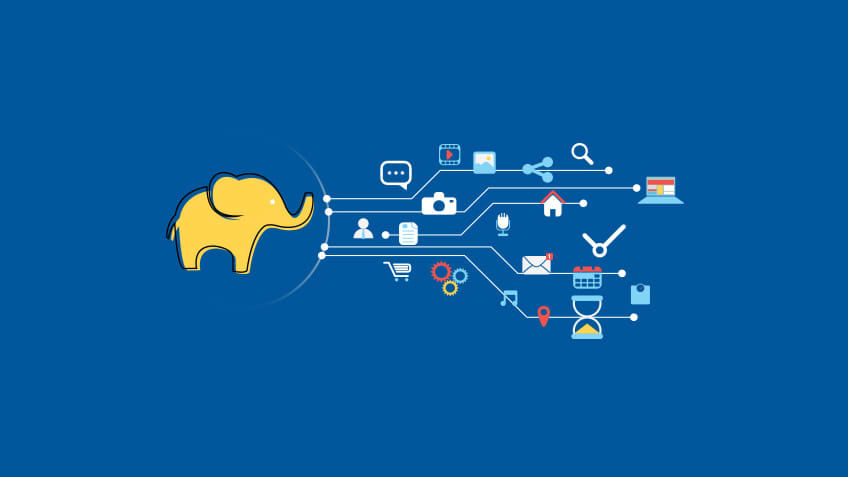
For quite a while now, a revolution of connectivity has been brewing around us. The internet in the 1990s could connect 1 billion users through shaky dial-up networks. The mobile wave of the 2000s made it possible for over 2 billion users to find information, keep in touch with friends around the word, and watch videos. And now, the Internet of Things has the potential to connect 10 times as many (28 billion) devices to the internet–from cars to bracelets–by 2020.
The emerging third wave in the development of the internet, the Internet of Things (IoT) is a network of physical objects that can be accessed via the Internet. These objects are everyday items like dishwashers and cars, which contain embedded technology that can interact with an external environment or regulate internal states.
Example: A system that plays your favorite TV program as soon as you enter the room.
According to a study by Gartner, the revenue that is generated from IoT-enabled services and products will exceed $300 billion by 2020. This, however, is only the tip of the iceberg.
There is going to be a vast amount of data that IoT will generate, and in today’s world, well-analyzed data is extremely valuable.
The impact of this will be felt all over the Big Data universe which, in turn, will force companies to quickly upgrade their current processes, tools, and technology to accommodate massive data volumes and take advantage of insights that will be delivered by Big Data.
The first thing that comes to mind when talking about Big Data and IoT is the increase in the volume of data that will hit the data storage framework of companies. Data centers will have to be set up to handle all this additional data load.
Taking into consideration the enormous impact IoT will on data storage infrastructure, organizations have begun to move towards the Platform-as-a-Service model, a cloud-based solution, as opposed to maintaining their own storage infrastructure. Unlike, in-house data systems that need to be constantly updated as the data load increases, PaaS provides flexibility, scalability, compliance, and a sophisticated architecture to store all valuable IoT data.
Cloud storage options include public, private, as well as hybrid models. If a company has sensitive data that is subject to any regulatory compliance requirements that require heightened security, using a private cloud would be the best course of action. For other companies, a public or hybrid cloud can be used for the storage of IoT data.
Most organizations will have to adapt their technologies to be able to handle the large amounts of IoT data that will be coming their way.
The most important aspect is being able to receive events from IoT-linked devices. Very soon, devices can and will be connected to each other via Bluetooth, Wi-Fi, or any other technology, and will need to send required messages to brokers using a well-defined protocol. One of the most widely used protocols is the Message Queue Telemetry Transport or the MQTT, and one of the most popular brokers is The Mosquito (as an added bonus, The Mosquito is open-source).
Once data has been received, the next step is to find the best technology platform for storing IoT data. A lot of companies use Hive and Hadoop to store data. However, NoSQL databases like Apache CouchDB are more suitable for IoT data since they offer low latency and high throughput. These types of databases are schema-less and support flexibility, while giving users the option to add new event types easily.
The devices that will make up the IoT, as well as the kinds of data they generate, will vary by nature. Data types will include raw data, processed data, communication protocols, etc, and thus will thus carry different data security risks.
IoT is still very new to security professionals, who lack the experience to handle IoT-based security threats effectively, which, in turn, increases risks. Attacks of any kind can threaten more than just data. There is the also risk of damage to the devices connected to the network.
In this type of world, it will become necessary for organizations to make crucial changes to their security landscape. IoT devices will come in various sizes and shapes and will be located outside the network, but must also be able to communicate with corporate applications.
Therefore, every device must have a non-repudiation identifier for the purpose of authentication. Enterprises need to know they are getting their details from the correct source and should be able store them for the purpose of an audit.
A multi-layered system for security, and proper segmentation of the network, will help prevent attacks and keep them from corrupting the other parts of the network. An IoT system that has been properly configured will follow a finely-tuned network access control policy to check which of the many IoT devices are allowed to connect.
Software-defined networking or SDN technologies combined with network identity and appropriate access policies are essential to ensure a dynamic network segmentation. Networks based on the SDN segmentation can, and must, also be used for point-to-point and point-to-multipoint encryption (these are based on some of the PKI/SDN amalgamations).
Once companies have a secure and efficient system to store IoT-related data, they need to be able to analyze it. Extracting and managing value from IoT is a big challenge that companies face.
A good analytics platform should be tailored according to three different parameters: right-size infrastructure, performance, and future growth. To maximize performance, a single-tenant physical server dedicated to a single customer is the best fit. To ensure future growth and the right size of infrastructure, a hybrid approach is the way to go.
Hybrid deployments consist of platforms like the cloud, managed hosting, colocation, and dedicated hosting. This deployment combines the best features from various platforms into a single, optimal environment. The managed service providers or MSPs also work on that platform to handle IoT data. MSP vendors typically work on the performance, infrastructure, and the tools side of things to cover the entire domain of IoT.
Continuous streams of data are generated by a single IoT device. Scale it up, and companies will analyze a high volume data and perform actions on the same. These actions can include event correlation, statistics preparation, metric calculation, and analytics.
My instructor was incredibly knowledgeable, bringing vast industry experience to each session. His clear delivery made the content easy to understand and apply. Thanks to this, I feel more confident as I work towards advancing my career in the United States. Simplilearn truly set me up for success!
Simplilearn United States has one of the best programs available online to earn real-world skills that are in demand worldwide. I just completed the Machine Learning Advanced course, and the LMS was excellent.
Big Data and the Internet of Things are the two most-talked-about technology topics of the last few years. This is one of the chief reasons why they occupy prominent places on analyst firm Gartner’s most recent Hype Cycle for Emerging Technologies.
These two technologies are set to transform all areas in business as well as everyday life.
In the 2015 Internet of Things predictions, IDC notes that over 50% of IoT activity is centered in manufacturing, transportation, smart city, and consumer applications, but that within five years every industry will have rolled out IoT initiatives.
Data Science Central conducted a survey that showed how widespread IoT jobs are, today.
This is a list of the top companies that are hiring for IoT related jobs:
The IoT and Data related positions that companies are hoping to fill with qualified people are:
Enroll in Simplilearn unique Professional Certificate Program in Data Engineering to grab the opportunities of tomorrow! So what are you waiting for? Get certified today!
Introduction to Big Data Tools for Beginners
Program Overview: The Reasons to Get Certified in Data Engineering in 2023
Program Preview: A Live Look at the UCI Data Engineering Bootcamp
7 Mistakes, 7 Lessons: a Journey to Become a Data Leader
An Introduction to Big Data: A Beginner's Guide
Top 35 IoT Terms You Need to Know
Top Big Data Applications Across Industries
Big Data Career Guide: A Comprehensive Playbook to Becoming a Big Data Engineer
2024 IoT Trends
How to Become a Big Data Engineer?
Introduction to Big Data Tools for Beginners
Program Overview: The Reasons to Get Certified in Data Engineering in 2023
Program Preview: A Live Look at the UCI Data Engineering Bootcamp
7 Mistakes, 7 Lessons: a Journey to Become a Data Leader
© 2009 –2025– Simplilearn Solutions.
Follow us!
Company
Work with us
Discover
For Businesses
Learn On the Go!
Trending Post Graduate Programs
Trending Master Programs
Trending Courses
Trending Categories
Trending Resources
About The Author

More Stories
The Shift in Peering Threatening the Internet’s Foundations
Remembering Alan Barrett: A Builder of the African Internet
From Email to Case Study: What We Learned About Connecting Refugee Communities in Just One Year