
Powered by 
All the vital news, analysis, and commentary curated by our industry experts.
Published: October 25, 2023 Report Code: GDTT-TR-S105-TH
The Internet of Things (IoT) has strongly influenced digitalization in the travel and tourism industry. The COVID-19 pandemic brought key IoT use cases to the attention of the travel and tourism industry. The deployment of IoT is further expected to address the ESG challenges across travel and tourism sector. For instance, IoT can address ESG concerns in a host of ways from sensor-enabled smart lighting and thermostats that monitor and adjust the environment of lodgings to improve energy efficiency to IoT-enabled smart buildings that integrate energy-efficient technology throughout cities. IoT can even assist in the burden of overtourism and the preservation of heritage sites and physical environments. Thus, IoT is an essential investment for travel and tourism companies in combatting climate change.
This thematic report provides an overview of the impact IoT has on the travel and tourism sector and the challenges it can help to address. The report further recommends how travel and tourism companies can deploy IoT solutions and where they should invest to stay ahead of this disruptive technology. Several case studies are included in this report to analyze the multiple ways travel and tourism companies have used IoT thus far. The report also features alternative datasets to highlight the impact of IoT.
· Connectivity Layer
· Data Layer
· App Layer
· Services Layer
· Carnival Cruise Line
· Hilton Worldwide
· Royal Caribbean Cruises
· Walt Disney
· Astronics
· Copeland
· SES-imagotag
· TraceSafe Technologies
Buy the Full Report for Additional Insights into the IoT in Travel and Tourism Themes, Download a Free Sample Report
IoT when combined with other emerging technologies, such as AI, 5G, and cloud computing can offer various benefits in the travel and tourism sector including increased operational efficiency, reduced costs, improved decision-making, and enhanced customer experience.
Reduced Costs: Greater automation reduces the need for workers or simply makes the workforce more efficient, resulting in cost savings. For example, IoT in the travel and tourism sector can create personalized experiences for consumers, such as in their hotel rooms, without the assistance of staff members. Travelers can control appliances or services through a centralized device, such as a tablet or mobile application or companies can use IoT sensors to store customer preferences and automatically apply them. With the help of IoT, this personalization can occur without the need for extra staff thus reducing overall costs for travel and tourism companies.
Buy the Full Report for the Complete Impact Analysis of IoT in the Travel and Tourism Sector, Download a Free Sample Report
The enterprise spending on IoT across the travel and leisure sector is set to experience steady growth over the next few years. The IoT market by software, services, and hardware spending with the total set to reach $28 billion by 2027. IoT software will dominate over the coming years and the IoT software market in travel and leisure is expected to expand at a CAGR of more than 16% between 2022 and 2027.
The report also covers –
IoT in the Travel and Tourism Industry Analysis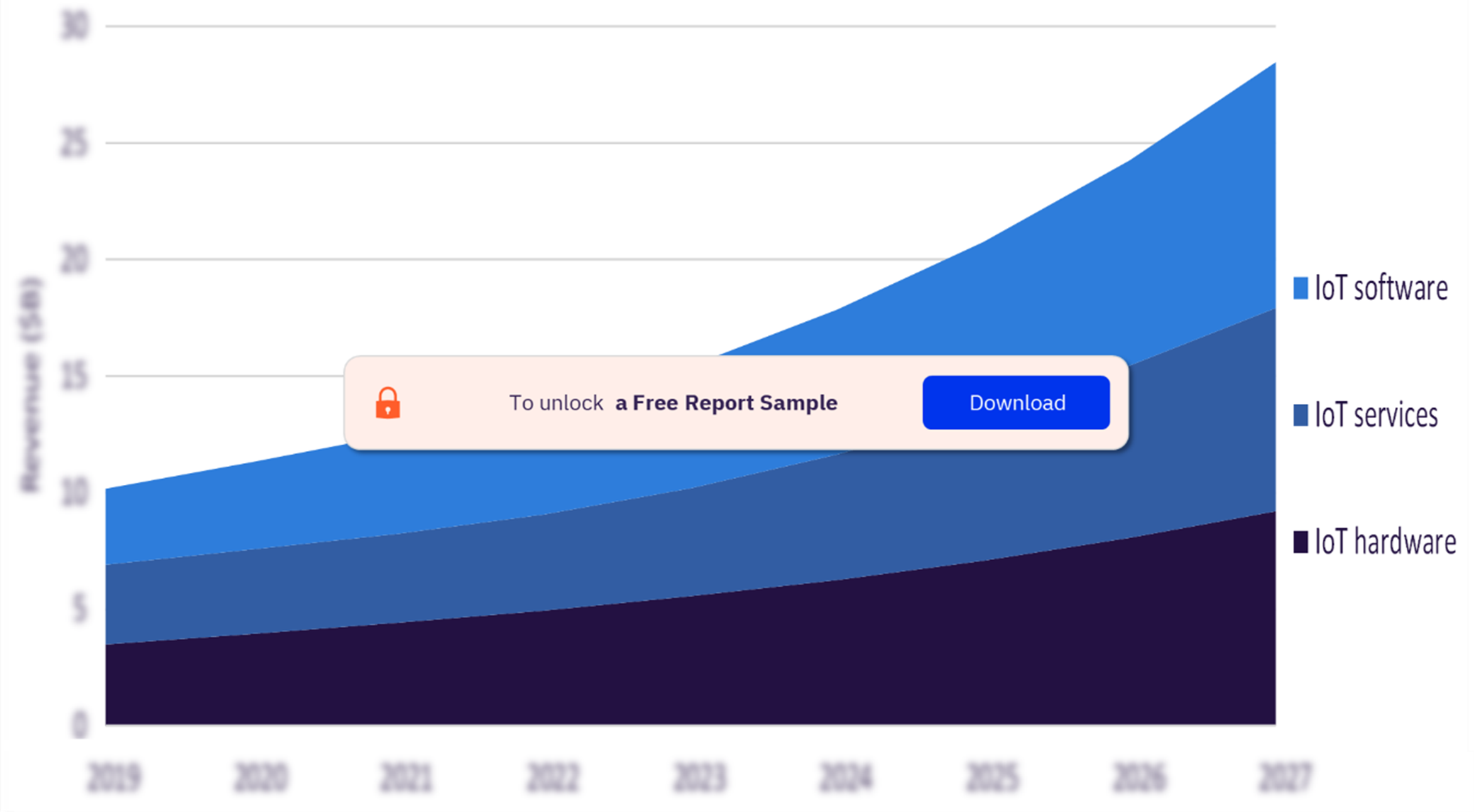
Buy the Full Report for IoT in the Travel and Tourism Industry Analysis, Download a Free Sample Report
The key components in the IoT value chain analysis are the physical layer, the connectivity layer, the data layer, the app layer, and the services layer. These layers are logically discrete, although large-scale IoT use cases will likely blur these logical boundaries. For example, while there will continue to be an identifiable data layer towards the top of the stack, a growing proportion of the data processing occurs within and at the edge of the network.
Physical Layer: Today, most connected devices—such as smartphones, tablets, and laptops—have a physical dimension controlled by humans. In the IoT, most connected things will be run by other connected things. For manufacturers of washing machines, door locks, light bulbs, aircraft engines, or cars, the key question is not whether their things should be connected to the internet—that is a given. Instead, the challenge is whether they can retain the bulk of the added value during the transition to IoT and how they can use the data collected by various embedded chips, sensors, antennae, and beacons. Some industry profits will likely be siphoned out by technology companies that increasingly provide IoT solutions as a service.
IoT Value Chain Analysis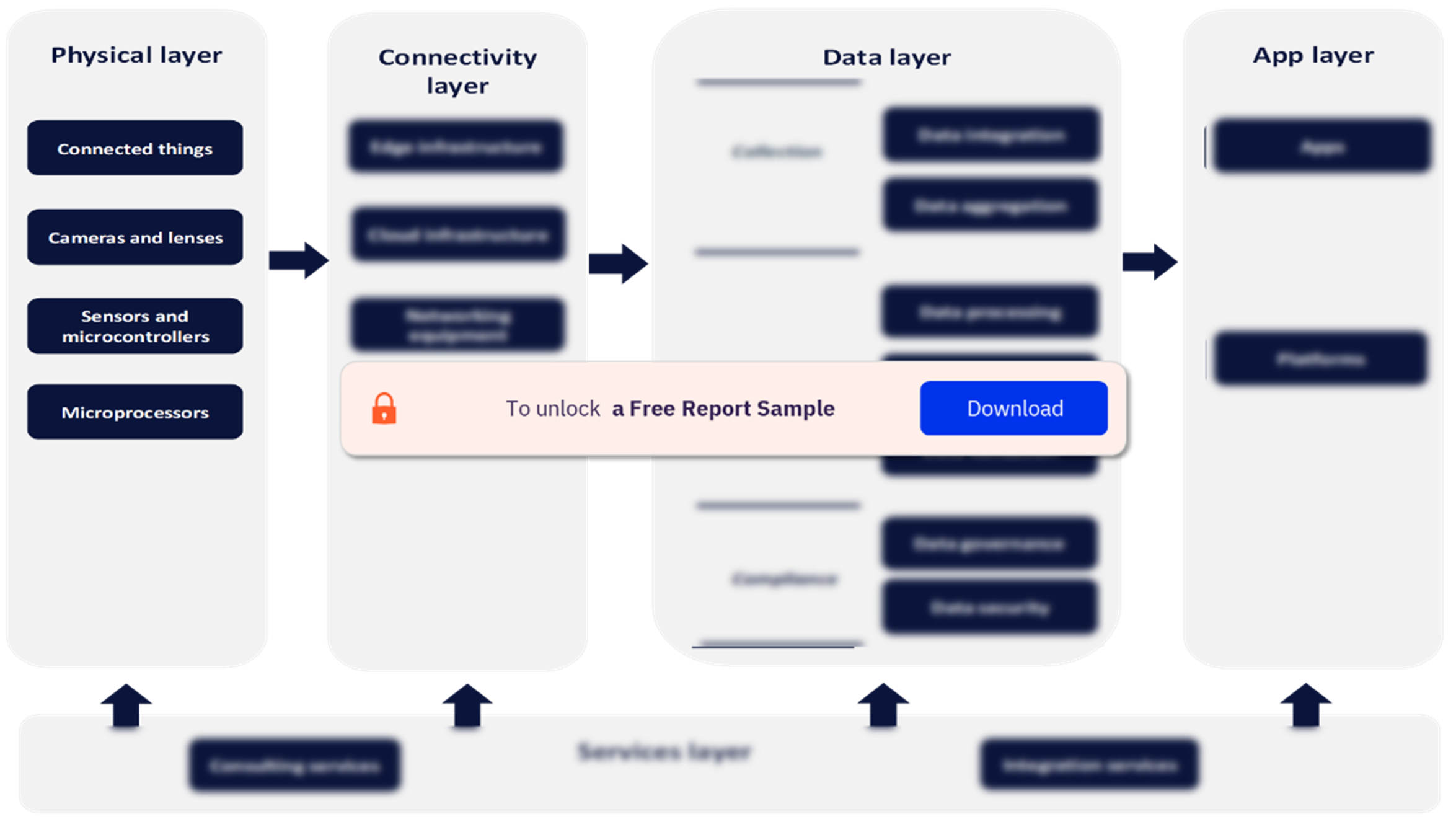
Buy the Full Report for IoT Value Chain Analysis, Download a Free Sample Report
The key companies making their market in the IoT in the travel and tourism sector are –
Leading IoT Adopters in Travel and Tourism: Air France KLM, Carnival Cruise Line, Hilton Worldwide, Royal Caribbean Cruises, and Walt Disney are some of the leading IoT adopters in the travel and tourism sector.
Specialist IoT Adopters in Travel and Tourism: Airbus, Astronics, Copeland (previously Verdant Environmental Technologies), SES-imagotag, and TraceSafe Technologies are some of the leading specialist IoT adopters in the travel and tourism sector.
Buy the Full Report for More Insights on the Leading IoT Adopters and Specialist IoT Adopters in the Travel and Tourism Sector, Download a Free Sample Report
This thematic report provides an overview of the impact IoT has on the travel and tourism sector and the challenges it can help to address. The report further recommends how travel and tourism companies can deploy IoT solutions and where they should invest to stay ahead of this disruptive technology.
Several case studies are included in this report to analyze the multiple ways travel and tourism companies have used IoT thus far. The report also features alternative datasets to highlight the impact of IoT.
Key Highlights
IoT is essential to digitalization in travel and tourism. Airlines, for example, can deploy the predictive maintenance capabilities of IoT systems to reduce the cost and downtime of aircraft repairs. This is just one of the many transformative use cases of IoT with this emerging technology ready to be employed across the travel and tourism value chain, for example, to manage crowds at popular attraction sites, personalize hotel stays, simplify airport navigation, and much more.
IoT can also assist in travel and tourism companies addressing ESG challenges. In the last decade, COVID-19 appeared as the top existential threat to the travel and tourism industry, but as companies recover, the challenge of ESG has returned to center stage. IoT can address ESG concerns in a host of ways from sensor-enabled smart lighting and thermostats that monitor and adjust the environment of lodgings to improve energy efficiency to IoT-enabled smart buildings that integrate energy-efficient technology throughout cities.
Reasons to Buy
- Understand the current IoT trends within the travel and tourism industry and the role IoT solution could play in the daily operations of your business.
- Assess how travel and tourism companies such airlines, cruise operators, and lodging providers, for example, are utilizing IoT.
- GlobalData’s thematic research ecosystem is a single, integrated global research platform that provides an easy-to-use framework for tracking all themes across all companies in all sectors. It has a proven track record of identifying the important themes early, enabling companies to make the right investments ahead of the competition, and secure that all-important competitive advantage.
- All across the travel and tourism supply chain, now have an opportunity to capitalize on IoT, and there are notable examples of this. Therefore, all should buy this report to fully understand how this theme will continue to be impactful in the future travel landscape.
Executive Summary
Players
The Impact of IoT on the Travel & Tourism Sector
The Impact of IoT on Travel & Tourism Challenges
Case Studies
Market Size and Growth Forecasts
Signals
Patent trends
Company filing trends
Hiring trends
IoT Value Chain
Physical layer
Connectivity layer
Data layer
App layer
Services layer
Companies
Sector Scorecards
Airlines sector scorecard
Airports sector scorecard
Attraction operators sector scorecard
Lodging sector scorecard
Glossary
Further Reading
Our Thematic Research Methodology
About GlobalData
Contact Us
The IoT market by software, services, and hardware spending with the total set to reach $28 billion by 2027.
The key components in the IoT value chain analysis are the physical layer, the connectivity layer, the data layer, the app layer, and the services layer.
Air France KLM, Carnival Cruise Line, Hilton Worldwide, Royal Caribbean Cruises, and Walt Disney are some of the leading IoT adopters in the travel and tourism sector.
Airbus, Astronics, Copeland (previously Verdant Environmental Technologies), SES-imagotag, and TraceSafe Technologies are some of the leading specialist IoT adopters in the travel and tourism sector.
Can be used by individual purchaser only
Can be shared by unlimited users within one corporate location e.g. a regional office
Can be shared globally by unlimited users within the purchasing corporation e.g. all employees of a single company
reportstore@globaldata.com
Tel +44 20 7947 2745
Every customer’s requirement is unique. With over 220,000 construction projects tracked, we can create a tailored dataset for you based on the types of projects you are looking for. Please get in touch with your specific requirements and we can send you a quote.
Internet of Things (IoT) in Travel and Tourism – Thematic Intelligence was curated by the best experts in the industry and we are confident about its unique quality. However, we want you to make the most beneficial decision for your business, so we offer free sample pages to help you:
Download your copy of the sample report and make an informed decision about whether the full report will provide you with the insights and information you need.
“The GlobalData platform is our go-to tool for intelligence services. GlobalData provides an easy way to access comprehensive intelligence data around multiple sectors, which essentially makes it a one-for-all intelligence platform, for tendering and approaching customers.
GlobalData is very customer orientated, with a high degree of personalised services, which benefits everyday use. The highly detailed project intelligence and forecast reports can be utilised across multiple departments and workflow scopes, from operational to strategic level, and often support strategic decisions. GlobalData Analytics and visualisation solutions has contributed positively when preparing management presentations and strategic papers.”
“COVID-19 has caused significant interference to our business and the COVID-19 intelligence from GlobalData has helped us reach better decisions around strategy. These two highlights have helped enormously to understand the projections into the future concerning our business units, we also utilise the project database to source new projects for Liebherr-Werk to use as an additional source to pitch for new business.”
Your daily news has saved me a lot of time and keeps me up-to-date with what is happening in the market, I like that you almost always have a link to the source origin. We also use your market data in our Strategic Business Process to support our business decisions. By having everything in one place on the Intelligence Center it has saved me a lot of time versus looking on different sources, the alert function also helps with this.
Having used several other market research companies, I find that GlobalData manages to provide that ‘difficult-to-get’ market data that others can’t, as well as very diverse and complete consumer surveys.
Our experience with GlobalData has been very good, from the platform itself to the people. I find that the analysts and the account team have a high level of customer focus and responsiveness and therefore I can always rely on. The platform is more holistic than other providers. It is convenient and almost like a one stop shop. The pricing suite is highly competitive and value for our organisation.
I like reports that inform new segments such as the analysis on generation Z, millennials, the impact of COVID 19 to our banking customers and their new channel habits. Secondly the specialist insight on affluent sector significantly increases our understanding about this group of customers. The combination of those give us depth and breadth of the evolving market.
I’m in the business of answering and helping people make decisions so with the intelligence center I can do that, effectively and efficiently. I can share quickly key insights that answer and satisfy our country stakeholders by giving them many quality studies and primary research about competitive landscape beyond the outlook of our bank. It helps me be seen as an advisory partner and that makes a big difference. A big benefit of our subscription is that no one holds the whole data and because it allows so many people, so many different parts of our organisation have access, it enables all teams to have the same level of knowledge and decision support.
“I know that I can always rely on Globaldata’s work when I’m searching for the right consumer and market insights. I use Globaldata insights to understand the changing market & consumer landscape and help create better taste & wellbeing solutions for our customers in food, beverage and healthcare industries.
Globaldata has the right data and the reports are of very high quality compared to your competitors. Globaldata not only has overall market sizes & consumer insights on food & beverages but also provides insights at the ingredient & flavour level. That is key for B2B companies like Givaudan. This way we understand our customers’ business and also gain insight to our unique industry”
GlobalData provides a great range of information and reports on various sectors that is highly relevant, timely, easy to access and utilise. The reports and data dashboards help engagement with clients; they provide valuable industry and market insights that can enrich client conversations and can help in the shaping of value propositions. Moreover, using GlobalData products has helped increase my knowledge of the finance sector, the players within it, and the general threats and opportunities.
I find the consumer surveys that are carried out to be extremely beneficial and not something I have seen anywhere else. They provided an insightful view of why and which consumers take (or don’t) particular financial products. This can help shape conversations with clients to ensure they make the right strategic decisions for their business.
One of the challenges I have found is that data in the payments space is often piecemeal. With GD all of the data I need is in one place, but it also comes with additional market reports that provide useful extra context and information. Having the ability to set-up alerts on relevant movements in the industry, be it competitors or customers, and have them emailed directly to me, ensures I get early sight of industry activity and don’t have to search for news.
Every Company Report we produce is powered by the GlobalData Intelligence Center.
Subscribing to our intelligence platform means you can monitor developments at Internet of Things (IoT) in Travel and Tourism – Thematic Intelligence in real time.
About The Author

More Stories
Community-Centered Connectivity Initiatives Earn Viddy Awards Recognition
Zombie IXPs: The Four Types of Exchanges That Refuse to Die, but Fail to Live
The Shift in Peering Threatening the Internet’s Foundations