
Brands
Discover
Events
Newsletter
More
The Captable
SMB Story
HerStory
Social Story
Enterprise Story
The Decrypting Story
YS life
YS Hindi
YS Tamil
YSTV
Daily Newsletter
By providing your information, you agree to our Terms of Use and our Privacy Policy. We use vendors that may also process your information to help provide our services. This site is protected by reCAPTCHA Enterprise and the Google Privacy Policy and Terms of Service apply.
Sign In
Founder first
Just In
Brands
Resources
YSTV
Events
Newsletter
Stories
Brands
Resources
Stories
General
In-Depth
Announcement
Reports
News
Funding
Startup Sectors
Women in tech
Sportstech
Agritech
E-Commerce
Education
Lifestyle
Entertainment
Art & Culture
Travel & Leisure
Curtain Raiser
Wine and Food
YSTV
The CapTable
HerStory
Social Story
Enterprise Story
The Decrypting Story
YS Life
YS Hindi
YS Tamil
practo
microsoft
ola
swiggy
zomato
uber
delhivery
amazon
cred
nykaa
Glossary
Everything AI
How-to’s
knowledge base
Opinion
Unicorns of India
DevSparks Pune
SheSparks
List Your Startup
Startup Spotlight
Pitch To Us
Browse Startups
Start your day with impactful startup stories and concise news! All delivered in a quick five-minute read in your inbox.
Subscribe
I hereby consent to the processing of the personal data that I have provided and declare my agreement with the data protection regulations in the privacy policy on the website.
Brands
Topics
Resource Hub
Upcoming Events
Discover
Volt Active Data
Monday March 17, 2025 , 6 min Read
Are we truly harnessing the power of the Internet of Things, or are we drowning in its data? In a world where every sensor, every device, every interaction generates a torrent of information, the question isn’t just about collecting data, but about transforming it into actionable intelligence—in real time. A recent roundtable, featuring industry leaders and hosted by Volt Active Data and YourStory, challenged conventional wisdom, diving deep into the complexities of building applications that can not only survive, but thrive in this hyper-connected age.
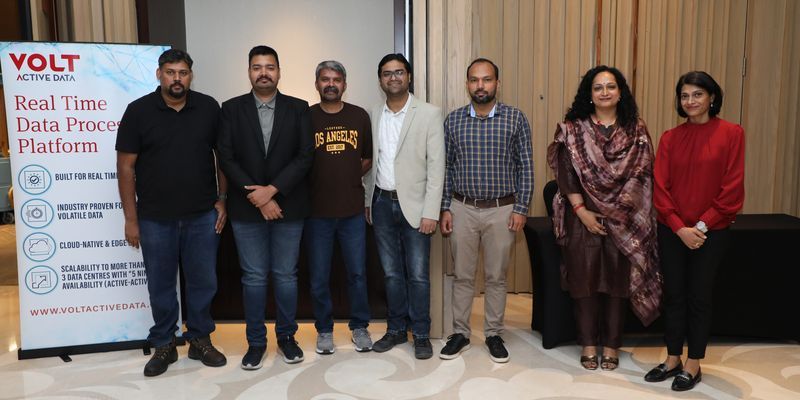
Moderated by Shivani Muthanna, Director – Strategic Partnerships at YourStory, the discussion revolved around the theme ‘Internet of Things (IoT) for the Digitally Connected World: Understanding How to Maximize Value Out of IoT.’ Bringing together industry experts from diverse domains, the session featured Abhay Pawar, Head of CurlEdge; Monalisha Thakur, Co-founder and CMO of TUMMOC; Mayank Satnalika, Director of Engineering at CloudSEK; Guharajan Sivakumar, Co-founder and CTO of Aprecomm; and Biplab Banerjee, Principal Solution Architect at Volt Active Data. These leaders shared insights on harnessing IoT’s full potential while tackling challenges related to scalability, security, and real-time data processing.
The discussion highlighted how the rapid generation of data requires organizations to effectively capture, analyze, and act upon real-time insights. Panelists emphasized the challenges of handling high-volume, high-velocity data and the importance of developing scalable and resilient IoT infrastructures to support digital transformation. With IoT devices proliferating at an unprecedented rate, ensuring secure data management has become more critical than ever. The conversation underscored the importance of robust data governance frameworks to prevent breaches and maintain data integrity.
Another key theme that emerged was the role of edge computing in transforming IoT. By reducing the need to transmit massive amounts of data to centralized cloud servers, edge computing enhances security, speeds up decision-making, and reduces operational costs. The integration of AI and stream processing was also discussed as a game-changer, enabling businesses to derive actionable insights from real-time data streams and optimize operational efficiency.
As AI adoption continues to grow, concerns about its misuse were raised. Experts highlighted the need for an accurate representation of AI capabilities to prevent unrealistic expectations. Understanding customer challenges and designing AI solutions accordingly was deemed essential to fostering long-term trust and efficiency. Large enterprises, in particular, face hurdles in AI adoption due to complex infrastructures, making education and strategic planning imperative for successful deployment.
Panelists discussed the immense volume of daily data transactions, which range between 13-15 crores, underscoring the need for robust centralized and decentralized data storage and analysis solutions. The discussion explored the balance between cloud and on-premise solutions, emphasizing that while cloud-based architectures offer scalability, they also present challenges in terms of regulatory compliance and security.
The conversation on AI and IoT security brought to light the pressing need for secure, localized networks, emphasizing private cloud infrastructure and on-device data management. Panelists discussed the critical risks of metadata exposure, particularly in cases where data is unknowingly transmitted to foreign entities. The importance of secure protocols, such as using on-device processing with solutions like Raspberry Pi equipped with GPUs, was highlighted as a measure to mitigate these risks, even if such solutions currently lack speed and efficiency.
One of the key challenges outlined was the lack of fault-tolerant and self-healing systems, as seen in IoT deployments in conflict zones. Panelists stressed that security must be a foundational aspect of system design rather than an afterthought. Additionally, the conversation shed light on the widespread lack of technical awareness among users, with many failing to change default router passwords or secure their networks. A holistic approach to budgeting for security measures, rather than treating them as an optional add-on, was deemed crucial for future-proofing AI and IoT applications.
The discussion delved into the advantages of private networks and VPNs, noting that while VPNs with robust encryption algorithms offer enhanced security, adoption remains low due to technical complexities. The risks associated with compromised VPN credentials were underscored with real-world examples, such as the Uber hack, where a single compromised credential led to a major security breach. Simplifying VPN management for non-technical users was seen as a necessary step toward wider adoption.
One of the fundamental challenges in cybersecurity is building trust in security solutions. Panelists questioned whether ISPs can be fully trusted to manage security effectively and discussed the concept of a tipping point where widespread adoption of security measures leads to greater trust. Demonstrating the effectiveness of security solutions through real-world applications was seen as key to encouraging adoption. Ultimately, a gradual, consistent approach to implementing security measures is necessary to build trust over time and drive meaningful change in the AI and IoT ecosystem.
The conversation revolved around the capabilities of Volt Active Data and its approach to addressing these pressing concerns through a unified real-time data processing platform. Volt Active Data enables enterprises to handle massive transactional and streaming workloads with ultra-low latency, ensuring real-time responsiveness and scalability. Volt Active Data provides the ability to process high-velocity data streams seamlessly supporting AI Automation, Autonomous decision making acting on opportunities and threats within milliseconds.
Volt Active Data powers large telecom operators for complex Billing and Charging systems, processing data for a 500 million subscriber base. A fintech company utilized Volt’s platform to power fraud detection algorithms, enabling real-time identification of suspicious transactions and improving regulatory compliance. Similarly, in the gaming and adtech industry, a leading company enhanced user engagement by deploying personalized in-game recommendations, processing thousands of interactions per millisecond to deliver an immersive experience.
As digital transformation accelerates, enterprises must invest in technologies that enable real-time responsiveness and scalability. Platforms like Volt Active Data equip businesses with the capability to seamlessly process high-speed data streams, ensure system uptime, and deliver superior user experiences. The roundtable concluded with a shared vision: leveraging cutting-edge technology, intelligent automation, and strategic architectural choices to build applications that are not just scalable but also future-proof.
1
2
Small Steps, Big Wins: How Tiny Efforts Lead to Massive Success
3
Empowering India’s developer community to navigate the AI economy
4
Revolutionising legal banking: How Cubictree is leveraging AI to disrupt India's legal tech cum debt recovery software market future
5
No more whispers: How women are confronting taboos in health, career, and beyond
About The Author



More Stories
Global Encryption Day Summit 2026: Five Key Conversations on the Future of Digital Trust
What Global Data Tells Us About the Economics of IXPs
We Shouldn’t Have to Give Up Our Safety Online to Be Safe