
Legal disputes and infrastructure challenges could test long-term trust
Africa has an economy worth $2.8 trillion, a population of 1.4 billion, 65 percent of the world’s arable land and a third of the world’s mineral wealth.
Unsurprisingly, the Gulf states have come to regard the mother continent as crucial to their economic, food and security interests.
However, arguably, Africa has just as much to gain – if not more – from increased collaboration with GCC governments and investors.
While Africa’s potential has been recognised for many years, governments across the region are finding it difficult to fund infrastructure projects.
The Africa Development Bank (AfDB) estimates that the continent requires $402 billion a year to meet development goals.
Foreign investment will be critical to fund large-scale transport infrastructure, energy, technology, education, housing and utility projects.
At a time when Western lenders are regarded as increasingly unreliable and even Chinese investment has reduced substantially, GCC companies – encouraged by their governments – have been happy to lend money to support African development.
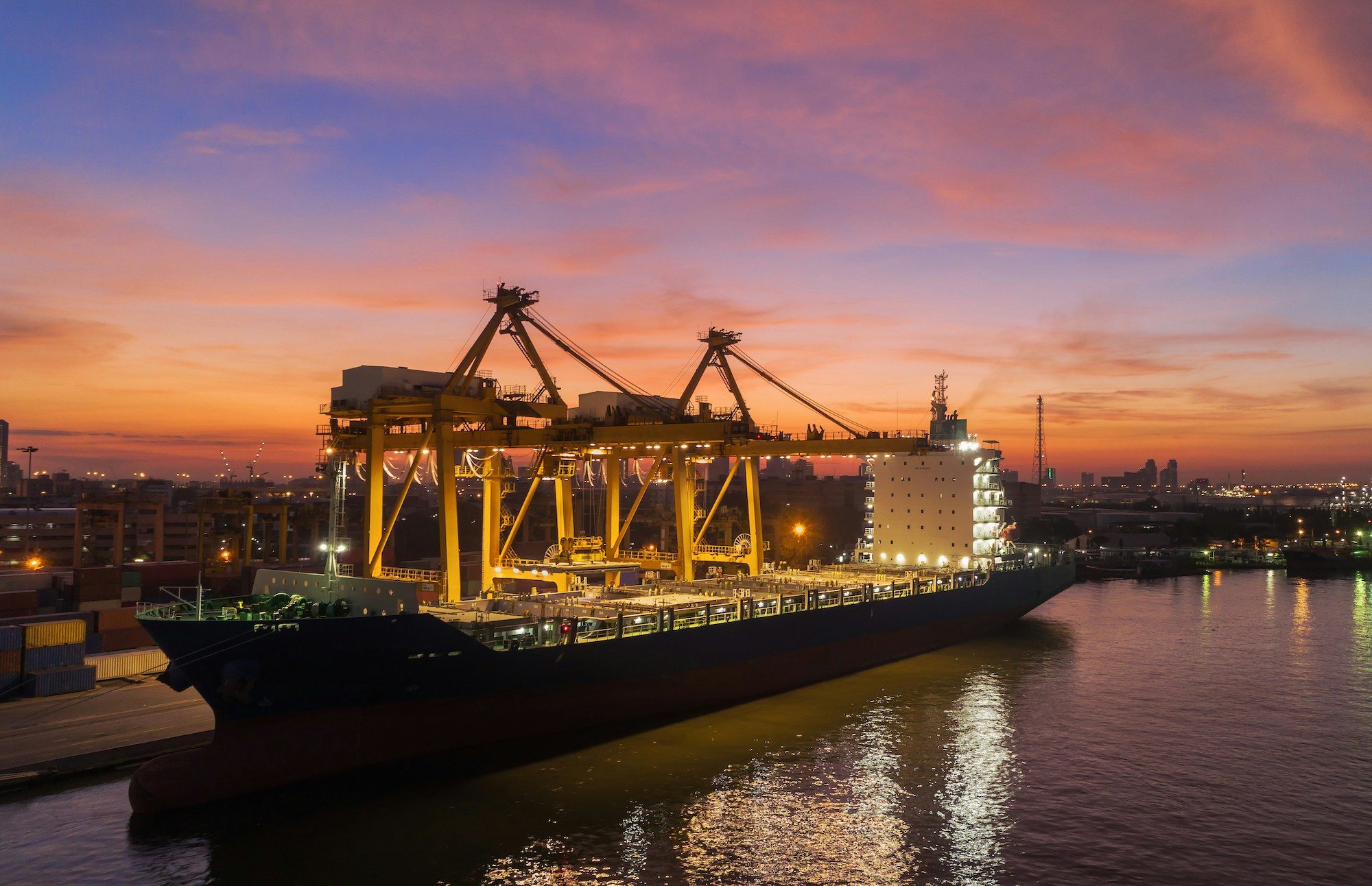
The UAE, now the fourth largest foreign investor in Africa, has made investing in transport infrastructure a priority. DP World, its port-to-logistics group, has led the charge, committing $3 billion in new infrastructure spending over the coming five years.
Rival Abu Dhabi Ports has been in Guinea since 2013 and has won concessions to run terminals in Congo and Angola. All this investment is sorely needed.
The AfDB claims that African ports are 50 percent more expensive than in other parts of the world, suffering from lack of capacity, long waiting times, congestion and slow handling.
GCC businesses not only bring capital but also know-how, technology and efficiencies, all of which are in short supply throughout the region.
In return, improving Africa’s ports has the potential to bring long-term returns to investors, not only from the economic growth that follows but also from the reduced cost of shipping critical resources and foodstuffs to the Gulf.
Consulting company PwC has estimated in the past that China has gained $13 in trade revenues for every $1 it has invested in new port infrastructure. In this respect, Gulf investors are following a well-trodden path.
Beyond building a network of ports, significant investment has been directed at the airport and airline sector, with the same aim in mind.
In Rwanda, Qatar Airways has established Kigali as its African hub and acquired a 49 per cent stake in RwandAir and a 60 per cent holding in the country’s Bugeresa International Airport.
Emirates SkyCargo has agreed with Astral Aviation, one of Africa’s leading cargo airlines, to market services across its intra-African network of 50 destinations jointly. Fresh fruit, vegetables and pharmaceuticals will be among the top products shipped.
However Gulf investors are not immune to many of the challenges that have put off western and Chinese financiers.
In 2018, Djibouti’s government seized back control of Doraleh Container Terminal, which had been built and operated by DP World, claiming that the terms of the deal had been unfair. A protracted legal battle ensued, with courts finding on multiple occasions in favour of the UAE port operator.
In 2024 damages were estimated to amount to more than $700 million and the case led DP World to accuse the country of showing contempt for the rule of law. It warned other would-be investors to steer clear.
Companies also complain of endemic corruption, lack of training, poor employee relations, weak security and unreliable technology and energy networks, all of which have compromised the region’s potential.
In an increasingly multipolar world, African governments welcome capital from outside the usual sources of the US, Europe and China to fill an ever-widening investment gap.
Many African countries see the Gulf states as a “third way”, which enables them to avoid picking sides between the west and China while offering a viable model for development.
However unless the failings of the underlying investment environment are addressed, there is the risk that Gulf investors come to view Africa with the same level of mistrust as their western and Chinese counterparts.
John Manners-Bell is CEO of Transport Intelligence Insight and founder of Foundation for Future Supply Chain
Saudi-listed Sal Logistics Services and master developer Sela have agreed to develop a logistics zone north of Riyadh. SAL Logistics Zone in Falcon City will cover more than 1.5 million square metres and will be developed at a cost of SAR4 billion ($1 billion), the companies said in a joint statement on Tuesday. The logistics […]
The cost of shipping goods through the Red Sea is expected to remain steady after the US carried out further airstrikes on Yemen on Monday. The US action added to fears of new attacks on ships by the Iran-aligned Houthis targeted by Washington, industry sources said. Responding to the Houthi movement’s threats to international shipping, the […]
Kuwaiti logistics company Agility Public Warehousing has paid out nearly KD9 million ($29.2 million) after losing a 2021 court case over leasing a plot of land in Kuwait used as a scrap site. “With this payment, the company will have fully executed the aforementioned ruling in favour of the Public Authority for Industry,” Agility said […]
Dubai-headquartered DP World intends to increase its capital expenditure this year to upgrade its global assets despite geopolitical challenges. DP World’s Capex reached $2.2 billion in 2024 compared with $2.1 billion in 2023, the state-backed ports operator said in a statement published on Nasdaq Dubai. Capex for 2025 is set at $2.5 billion, primarily targeting […]
ADQ, the third-largest of Abu Dhabi’s sovereign wealth funds, has become a majority shareholder in Dubai-listed logistics company Aramex. The fund now owns 58 percent in Aramex following a voluntary tender offer, which includes 23 percent owned by its subsidiary, AD Ports Group, and 35 percent bought from previous shareholders, ADQ said in a statement on Tuesday. […]
Economic plans have remained intact through all the geopolitical disruptions of the past year
Kuwaiti nationals earn nearly five times as much as their expatriate colleagues, and more than four in every five Kuwaitis work for the government, data from the Central Statistics Administration has revealed. Of 450,000 working Kuwaitis at the end of September, 375,000, or 83 percent, were in the public sector, with the remainder in the […]
Iraq has officially endorsed an agreement with UK energy major BP for the development of four oilfields in the northern Kurdish Kirkuk region. The cabinet gave its final approval to the multi-billion dollar contract at a meeting this week headed by Prime Minister Mohammed Al-Sudani, the official news agency said. BP expects to invest up […]
Sheikh Tahnoon bin Zayed Al Nahyan, Abu Dhabi’s deputy ruler and UAE national security advisor, met US President Donald Trump at the White House on Tuesday, holding talks on economic and technological cooperation. “Discussions included ways for our countries to increase our partnership for advancing our economic and technological futures,” Trump said in a Truth Social […]
Saudi Arabia has awarded the first exploration licences for mineralised belts at Jabal Sayid, northeast of Jeddah, and Al-Hijar in the south of the kingdom. The two sites covering a total of 4,788 sq km will accelerate the exploration of mineral resources estimated at SAR9 trillion, the ministry said in a post on social messaging […]
The Gulf consulting sector is expected to outperform the rest of the world in 2025 with growth of 12 percent, twice as fast as the United States. Although the regional market is predicted to be worth more than $8 billion, growth will be at a slightly slower pace. Last year the GCC market grew by […]
Gold rose to hit a record high on Wednesday, as Middle East tensions and trade uncertainties lifted the bullion’s appeal, while traders awaited the Federal Reserve’s decision later in the day. Spot gold held its ground at $3,035.12 an ounce, as of 04:15 GMT, after hitting an all-time peak of $3,038.90 earlier in the session. US […]
Abu Dhabi renewable energy company Masdar and Spanish power utility Endesa are closing in on a deal that would see Masdar pay around $200 million for a 49.9 percent stake in a solar portfolio controlled by Endesa, according to two sources familiar with the deal and a document seen by Reuters. The deal for the […]
Businesses operating in Dubai’s free trade zones will be able to expand their activities into the emirate’s mainland areas after a government ruling. The new legislation will allow the Dubai Department of Economy and Tourism to issue licences or permits granting expansion into the wider city. Dubai has more than 30 free trade zones covering […]
Emirates NBD, Dubai’s largest bank by assets, has refuted media reports that it is undertaking due diligence on a state-owned Egyptian bank ahead of potentially buying a stake in the lender. Last week, Kuwaiti and Egyptian media published articles detailing how Emirates NBD – which has an Egyptian subsidiary – had begun examining the books […]
The holiday home market is growing rapidly in Dubai, with between 30,000 and 45,000 rental listings now compared to 7,000 in 2017. While they may no longer offer the 10 percent return on investment of a few years ago, rental properties are still an attractive and flexible option for investors, according to Anna Skigin CEO […]
Gulf national oil companies (NOCs) are increasingly focusing their investment attention on petrochemicals as they seek to move up the value chain and as global demand growth for crude slows, experts say. The Paris-based International Energy Agency (IEA) expects the petrochemical industry to account for one third of global oil demand growth by 2030 and […]
Riyadh added the most office space of any Middle Eastern city last year, nearly 10 times as much as its regional rival Dubai. However, the additional supply is unlikely to ease a chronic shortage of prime commercial property in the Saudi capital in the short term. Riyadh, which has a population of seven million, added […]
Follow us on:
AGBI registered members can access even more of our unique analysis and perspective on business and economics in the Middle East.
Register Now
I’ll register later
Already registered? Sign in
Download the AGBI app today
About The Author


More Stories
New ITU Report Finds Community Networks Are Key to Reaching the Unconnected
Digital Coercion: How Inaccessible Design Strips Financial Privacy
The Need to Reimagine the WSIS Forum