
AM News
LoRa And LoRaWAN IoT Market size was USD 8.69 Billion in 2024 and is expected to reach USD 68.12 Billion by 2035, at a CAGR of 35.30% during the forecast period 2024-2031.
LoRa and LoRaWAN IoT market includes the ecosystem around Long Range (LoRa) technology and its Wide Area Network (LoRaWAN) protocol, which is specifically meant for facilitating long-range communication for Internet of Things (IoT) devices. This market encompasses hardware devices like LoRa-enabled modules, gateways, and sensors, as well as software products for application development, data analytics, and device management specifically for LoRaWAN networks. It also includes service providers providing network infrastructure, deployment, and management services for LoRaWAN implementations in different industries.
Get FREE Sample Report –
https://www.marketinsightsresearch.com/request/download/9/39269/LoRa-And-LoRaWAN-IoT-Market
LoRa and LoRaWAN IoT Market Dynamics
Network Density and Scalability to enhance the LoRa and LoRaWAN IoT Market growth
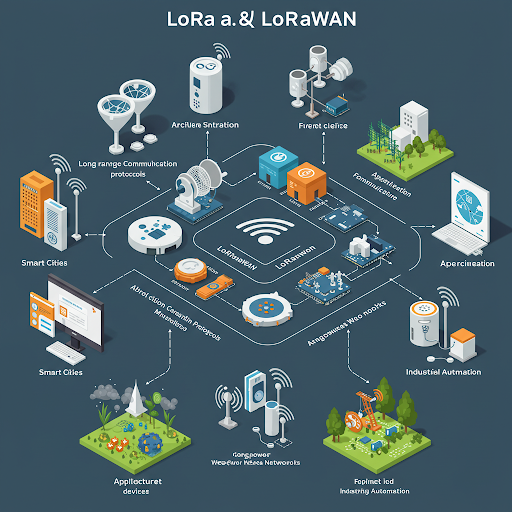
The LoRaWAN networks can scale to cover high numbers of devices, which makes it a scalable option for IoT deployments. The technology is capable of supporting multiple applications from a few devices to huge deployments, creating flexibility and adaptability. Cost-effective connectivity is provided by LoRa technology, making it a preferred choice for IoT applications. The long-range capabilities minimize the necessity of a high-density network of infrastructure, lowering the cost of deployment and propels the LoRa and LoRaWAN IoT Market. LoRa and LoRaWAN are applied in various verticals such as smart cities, agriculture, industrial IoT, logistics, healthcare, and environmental monitoring.
The technology’s versatility fuels its adoption across industries.
LoRa (Long Range) and LoRaWAN (Low Power Wide Area Network) technologies have become catalysts of change in the field of IoT (Internet of Things), propelling massive market development. Their key characteristics like extended range connectivity, low power utilization, scalability, and affordability, have made them unavoidable across multiple industries like agriculture, smart cities, logistics, and industrial automation. These features, along with other special advantages, have driven their swift adoption, and they are at the forefront of the IoT revolution. One of the most important factors behind the mass adoption of LoRa and LoRaWAN is their outstanding cost-effectiveness, which greatly enhances the LoRa and LoRaWAN IoT Market growth. In a world where companies aim to deploy IoT solutions at scale, LoRa’s capacity to connect thousands of devices over vast geographic regions is an attractive value proposition. Its affordability lowers the cost of entry for organizations willing to adopt IoT on a large scale, rendering it a first choice for organizations seeking to tap the full potential of IoT technology while minimizing operational costs.
North America (United States, Canada and Mexico) Europe (UK, France, Germany, Italy, Spain, Sweden, Austria, Turkey, Russia and Rest of Europe) Asia Pacific (China, India, Japan, South Korea, Australia, ASEAN and Rest of APAC) Middle East and Africa (South Africa, GCC, Egypt, Nigeria and Rest of ME&A) South America (Brazil, Argentina, Columbia and Rest of South America)
Global: 1. Semtech Corporation (California, USA) 2. The Things Industries (Amsterdam, Netherlands) 3. Actility (Paris, France) 4. Laird Connectivity (Ohio, USA) 5. Link Labs(Maryland, USA) 6. Cisco Systems, Inc (California, USA) 7. Huawei Technologies Co., Ltd.(Guangdong, China) 8. Bosch.IO (Stuttgart, Germany) North America: 1. Senet, Inc. ( New Hampshire, USA) 2. MachineQ (Comcast)(Pennsylvania, USA) 3. Laird Connectivity (US) Asia Pacific: 1. NEC Corporation(Japan) 2. Tata Communications (India) 3. Advantech (Taiwan) 4. Murata (Japan)
BUY THIS REPORT TODAY- (with 1 year service)
https://www.marketinsightsresearch.com/report/buy_now/9/39269/LoRa-And-LoRaWAN-IoT-Market
Your email address will not be published.
About The Author

More Stories
Community-Centered Connectivity Initiatives Earn Viddy Awards Recognition
Zombie IXPs: The Four Types of Exchanges That Refuse to Die, but Fail to Live
The Shift in Peering Threatening the Internet’s Foundations