
Browser does not support script.
Browser does not support script.
Postdoctoral Research Associate
10 February 2025
Brian Ching, a PhD student in the Department of Child & Adolescent Psychiatry explains more on new research into the mental health impact of the COVID-19 pandemic in children and young people.
In 1985, scientists sifting through Antarctic data archives stumbled upon something alarming – the ozone layer was thinning. At first, they assumed it was an error. But after cross-checking with other sensors, the shocking truth became clear. Without this discovery, the world might have remained unaware of a crisis that could have had profound consequences for human health.
This story is a powerful reminder of how critical data is to our understanding of the environment, especially as we face the climate emergency. But gathering this data often requires travel. In today’s world, some might argue this is unnecessary – with satellites and advanced models, do we really need to be out in the field? The answer is yes. Even the most sophisticated models and satellites rely on ground-truth data to assess their accuracy, ensuring that they reflect real-world conditions.
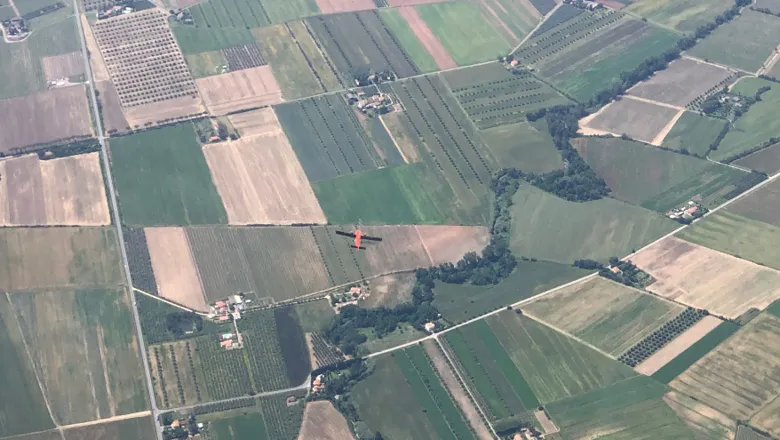
This process, known as validation, is a core part of the work we do at the King’s Earth Observation and Research Group in the Department of Geography. For example, we’ve collected data over wildfires in Canada to evaluate how well satellites capture fire activity in real time, information that has since proved invaluable for monitoring the devastating wildfires in Los Angeles. My own research took me to Italy for three months to collect data supporting the development of a future European Space Agency satellite, the Land Surface Temperature Monitoring mission. This mission will provide detailed insights into surface temperatures and crop health – data that will be crucial as climate change drives more frequent heatwaves and droughts, threatening global food security.
Fieldwork remains an essential piece of the puzzle. Without it, our ability to monitor and respond to environmental changes would be severely compromised.
Fieldwork is also at the heart of our teaching in the Geography Department at King’s College London. Alongside staff research trips, we also organise field trips for undergraduate students – an invaluable experience that helps bridge the gap between classroom theory and real-world application. In fact, a recent student survey confirmed how crucial these hands-on experiences are to their learning.
However fieldwork for researchers in our Department often means travelling abroad. This might be because the environmental phenomena we study simply don’t occur in the UK – like my colleague’s research on the impact of extreme wildfires on air quality and health, which required travel to a place where such fires are a major threat. Other times, the reason is more practical. Some satellites, for example, cannot see through clouds, so to reliably collect validation data we need to work in areas with clearer skies. Unfortunately for us, the UK isn’t exactly known for its sunshine!
But while travel is essential for much of our research, it also contributes to carbon emissions, particularly through air travel. This presents a difficult paradox: how do we balance the need for fieldwork with our responsibility to the environment? For geographers, this raises an additional question: can we truly study the environment ethically if our research also contributes to its harm?”
King’s College London’s new Sustainable Travel Policy recognises this tension, acknowledging that while some travel is unavoidable, we must rethink when and how we travel. In the Geography department, we’re taking this a step further by developing a Sustainable Fieldwork policy, focusing on ways to reduce emissions from staff research and student field trips. The goal isn’t to eliminate travel entirely, but rather to be more strategic – prioritising essential trips while cutting down on unnecessary ones.
What could this look like in practice? For researchers, it might mean consolidating fieldwork into a single trip rather than making multiple journeys. For student field trips, it could involve choosing locations accessible by train rather than flights. We’re also engaging students in these discussions, ensuring that those who will be most affected by climate change have a voice in shaping more sustainable academic travel.
Our journey towards low-carbon field research is an ongoing process. But by adopting innovative practices, supporting institutional policies, and regularly reflecting on our impact, I believe we can continue to advance our understanding of the planet – while also doing our part to protect it.
If you would like to be part of the conversation around sustainable academic travel, come along to our event Sustainable academic travel: balancing global research with climate responsibility to hear from industry experts at a panel discussion and Q&A.
Postdoctoral Research Associate
Ripple Effects is the blog from King's Climate & Sustainability, showcasing perspectives from across the King's community.
12 February 2025
The AI-driven startup decyte is developing a technology with the aim to enable the early diagnosis…
12 February 2025
King’s has joined the Menus of Change University Research Collaborative (MCURC), as a result of…
12 February 2025
Professor Sebastien Ourselin has been appointed to a new role of Assistant Principal (Innovation).
11 February 2025
New research calls for investment to address LINAC device shortages which are essential for…
Browser does not support script.
+44 (0)20 7836 5454
King's College London Strand London WC2R 2LS United Kingdom
Browser does not support script.
Browser does not support script.
Browser does not support script.
Browser does not support script.
About The Author

More Stories
Community-Centered Connectivity Initiatives Earn Viddy Awards Recognition
Zombie IXPs: The Four Types of Exchanges That Refuse to Die, but Fail to Live
The Shift in Peering Threatening the Internet’s Foundations