
GE HealthCare’s OEC 3D C-arm
Mobile C-arms continue to revolutionize medical imaging, offering versatility, mobility and real-time visualization crucial for various surgical and interventional procedures. As technology advances, these tools continue to evolve, incorporating innovations that enhance imaging quality, efficiency and patient outcomes. Here are just a few of the emerging advances reshaping mobile C-arm technology and their impact on modern healthcare practices.
One notable development in mobile C-arm technology is miniaturization, driven by the demand for compact, lightweight systems that can be easily maneuvered within crowded operating rooms or transported between rooms or facilities. These portable systems enable greater flexibility in procedural settings, facilitating minimally invasive surgeries and interventional procedures.
In March, Siemens Healthineers announced its US Food and Drug Administration (FDA) clearance of the CIARTIC Move, a mobile C-arm with self-driving capabilities. The system accelerates and standardizes 2D fluoroscopic and 3D cone-beam computed tomography (CT) imaging for surgeons and operating room teams in hospitals and outpatient facilities, bringing consistency to automated workflows and reducing imaging time during operations. In addition, the CIARTIC Move has the potential to address challenges related to intraoperative imaging caused by staff shortages.
Advancements in imaging sensor technology and image processing algorithms have led to significant improvements in image quality and resolution in mobile C-arms. Today’s systems boast higher spatial resolution, enhanced contrast resolution and reduced noise levels, providing clinicians with clear, detailed visualization of anatomical structures during procedures. This enhanced imaging capability contributes to more accurate diagnoses, precise surgical guidance and improved patient outcomes.
High-definition 3D and 2D images covering a large field of view for surgical suites and integrating into existing surgical workflows are key benefits of GE HealthCare’s OEC 3D C-arm. According to the company, the system provides value in a range of procedures, from spinal fusion or orthopedic fractures to angiogram and stent placement, and offers 19 cm3 CT-like images presented intraoperatively in minutes.
The integration of artificial intelligence (AI) capabilities is helping to transform mobile C-arms into intelligent imaging systems. AI algorithms are used to assist clinicians in real-time image interpretation, anatomical landmark detection and procedural guidance. These AI-enabled features enhance workflow efficiency, reduce radiation exposure and improve the accuracy of interventions. The AI-driven image reconstruction techniques enable rapid processing of volumetric data, facilitating 3D visualization and image-guided navigation during complex procedures.
Body Vision Medical recently announced the successful validation of its LungVision system with Fujifilm Healthcare Americas Corporation’s Persona line of C-arms and FDR Cross two-in-one fluoroscopy C-arm and portable digital radiography solution. The system uses artificial intelligence to transform X-ray images from any C-arm into real-time, intraoperative CT scans.
Radiation dose management remains of paramount concern in medical imaging, particularly in procedures requiring fluoroscopy guidance. Mobile C-arm manufacturers are implementing dose optimization technologies such as pulsed fluoroscopy, dose monitoring systems and automatic exposure control to minimize radiation exposure to patients and healthcare personnel without compromising image quality. In addition, advancements in flat panel detector technology enable dose-efficient imaging with improved dose-to-image quality ratio, enhancing radiation safety in interventional procedures.
Seamless connectivity and integration with clinical networks and information systems are becoming standard features in modern mobile C-arm platforms. Wireless communication capabilities enable real-time image sharing, remote consultation and integration with electronic medical records (EMR), facilitating comprehensive patient care and collaboration among multidisciplinary teams.
In April, Philips announced that its Zenition 30 mobile C-arm received FDA clearance, making image-guided surgical procedures available for more US patients at a lower cost. By giving surgeons greater flexibility, control and personalization of C-arm movement and user settings, the system reportedly reduces dependency on support personnel, helping minimize staff shortages that limit patient access and increase waiting times.
The landscape of mobile C-arm technology is continuously evolving, driven by innovations aimed at enhancing imaging quality, workflow efficiency and patient safety. Miniaturization, high-resolution imaging, AI integration, dose reduction and connectivity are among the key trends shaping their future. As these technologies continue to advance, mobile C-arms will play an increasingly pivotal role in modern healthcare, enabling clinicians to perform minimally invasive procedures with greater precision, confidence and patient-centric care.
View the Mobile C-Arms comparison chart here

Melinda Taschetta-Millane is Editorial Director for Imaging Technology News, and is an award-winning medical editor, including three Jesse H. Neal Awards, the most prestigious editorial honor in the field of journalism. She has led the editorial direction of ITN for the past 13 years, and has extensive experience covering the medical field, focusing on radiology, radiation oncology, medical information technology, cardiology and women’s health issues.
Across the healthcare industry, and, notably, throughout the radiology community in just the past few years, the focus …
Find actionable insights to achieve sustainability and savings in radiology in this newest of ITN’s “One on One” video …
July 9, 2024 — Lunit, a provider of Artificial Intelligence (AI)-powered solutions for cancer diagnostics and …
Investing in women’s health should not merely be a metric on the equity dashboard — it should drive policy and tactical …
In the ever-evolving landscape of medical imaging, computed tomography (CT) stands out as a cornerstone technology …
ITN conducts a bi-monthly survey to its readers on a variety of topics, which is used to create the Last Read, a unique …
The ITN team wishes you a safe and happy 4th of July!
July 3, 2024 — A new Harvey L. Neiman Health Policy Institute (HPI) study found that radiologists interpreted 72.1% of …
Here is a look at what viewers were reading during the month of June on itnonline: 1. GE HealthCare Introduces …
June 28, 2024 — As experts from around the globe gather at the annual Society for Informatics in Medicine (SIIM) …
See All Webinars
See All Videos
See All Blogs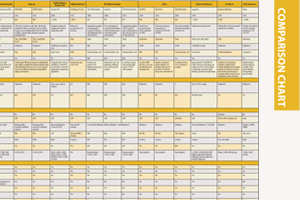
See All Comparison Charts
About The Author




More Stories
What Happens When a Community Wires Itself: Lessons from Colville on the Power of Indigenous-Led Connectivity
From Curiosity to Confidence: CodificaKids Builds Digital Trust in Rural Brazil
Community Snapshot—August